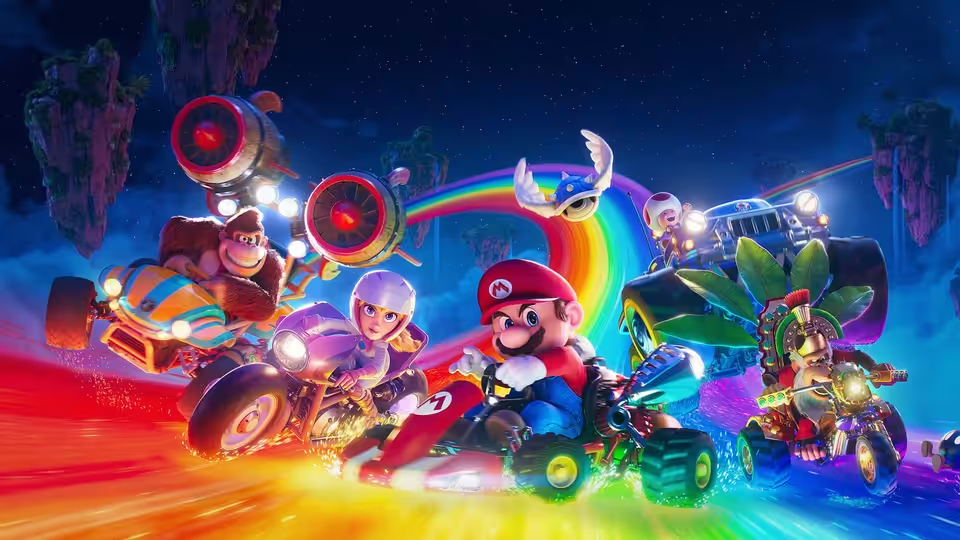
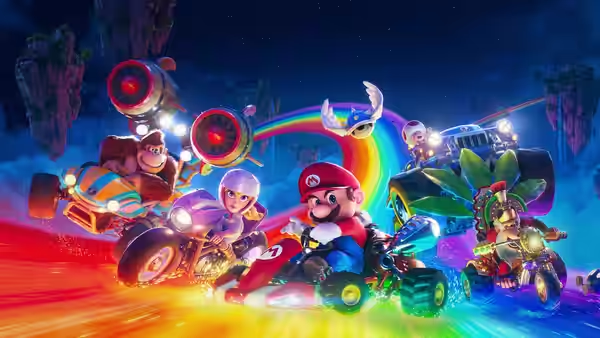
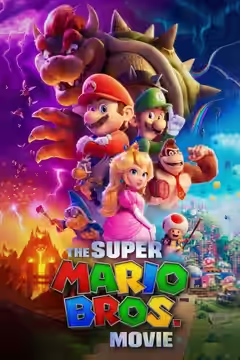
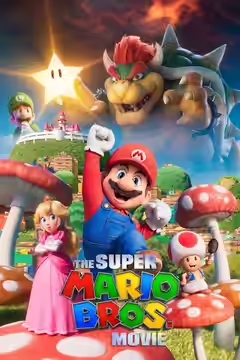
Bright, brisk and dutiful, Horvath and Jelenic’s Mario gets every pipe and mushroom right and gives Jack Black a lava castle to sing in. Children will be happy for ninety minutes, and it has almost nothing to say about the two plumbers in the title.
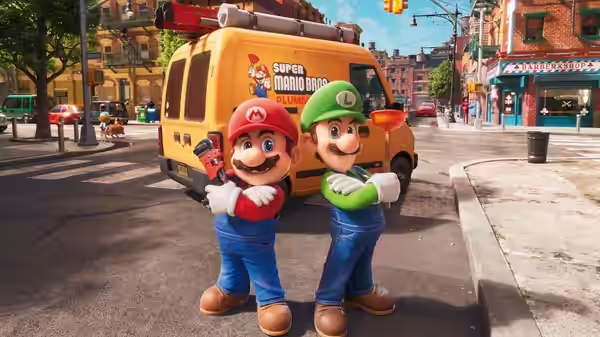
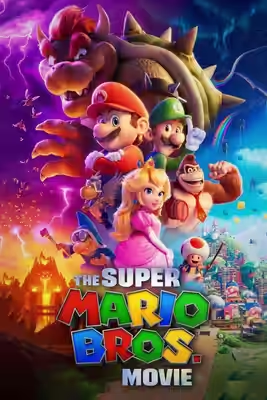
Aaron Horvath and Michael Jelenic direct 93 minutes of animation from a script by Matthew Fogel, with Nintendo’s Shigeru Miyamoto producing alongside Chris Meledandri, and that last credit tells you most of what the film is. It is the version of Mario that the people who own Mario wanted. Every pipe, coin, block and mushroom is where it should be, the colours are the right colours, and nothing has been risked. It gets everything right except a reason to care about the brothers.
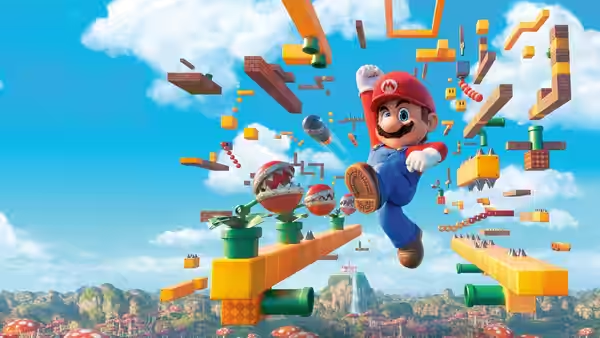
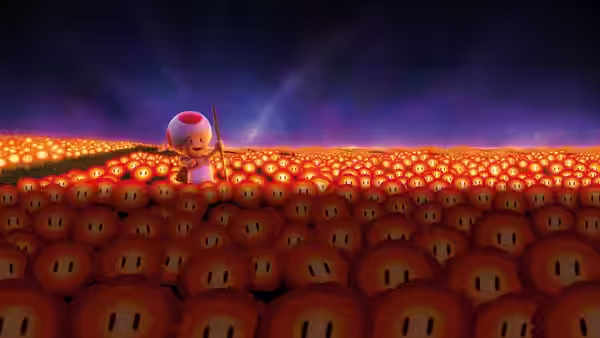
The world is the best of it. Guillaume Aretos’s production design gives the Mushroom Kingdom a nursery look, all stacked rounded shapes and pastel roofs, and Bowser’s territory the opposite: black rock, orange lava, the light coming from below. The film’s best idea arrives early, when Peach puts Mario through a training course and the camera swings side-on so that the platforms, the gaps and the timing read as a level. Eric E. Osmond cuts it to the rhythm of a run rather than a fight. We felt, for about two minutes, the particular pleasure of a jump landed cleanly, which is the thing the games have and films usually cannot borrow. Then it was over, and the film did not find that feeling again until a sequence much later that we will not describe.
Jack Black is the other reason to be here. His Bowser is a lovesick tyrant, spoken in a growl that keeps cracking into anxiety, and there is a scene at a piano that made us laugh out loud. It was the only time we did, and we then noticed the rest of the film waiting for us to laugh again. Keegan-Michael Key’s Toad is cheerful noise, Seth Rogen’s Donkey Kong is Seth Rogen with more hair, and Fred Armisen gives Cranky Kong a good weary grumble. Chris Pratt plays Mario as an ordinary, mildly nervous man, and Fogel’s script has a line to explain why he does not sound like the games. Charles Martinet, who voiced the character in those games for years, turns up as Mario’s father, which is the film’s one joke with any patience behind it.
Brian Tyler’s score works Koji Kondo’s game themes into a full orchestra, and this is done with more care than anything in the story. When the underground theme or the coin chime comes through the strings, children in the cinema react before they know why. It is the closest the film gets to the games’ spirit, and it comes from a composer who wrote the tunes in the 1980s rather than from anyone on the picture.
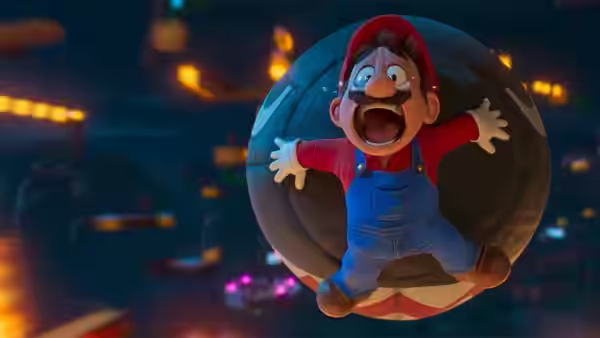
The story is where it comes apart. Fogel gives the brothers a warm opening in Brooklyn and then separates them, so that Charlie Day’s Luigi spends most of the running time off-screen, and the relationship the film says it is about is something we are told about rather than shown. Anya Taylor-Joy plays Peach capable and dry, which is welcome, but she is a mentor with a costume, not a person. At 93 minutes the film has to fit a kingdom, a jungle, an army, a villain, a fight and a race, and so no scene is allowed to last. By the hour mark we were tired of being hurried, and then slightly cross that so much care had gone into the backgrounds and so little into the two men in front of them.
Horvath and Jelenic keep everything on its best behaviour, and there is no cheek in it anywhere. Against the 1993 live-action version the film is obviously a great improvement, but that is a bar you could trip over. Against the best animated films built from toys and games, it is the one that never worked out what the toy was for.
The reviews split roughly down the middle, some finding it charmless, some finding it the ideal children’s film, and we sit between them. It is a PG, it is short, and a child under ten will be delighted and quiet for the whole of it. Take one if you have one. If you do not, the film has made no plans for you.