The brothers go to space and the film goes with them at a sprint, never holding a shot long enough for a joke to land. Handsome to look at, tiring to sit through, and most critics have said so. Poor.
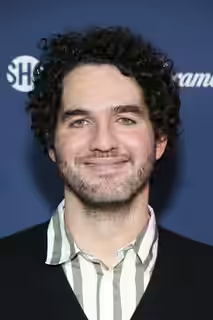
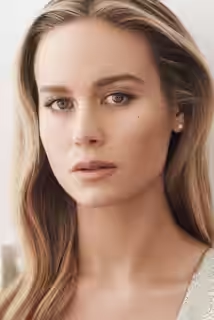
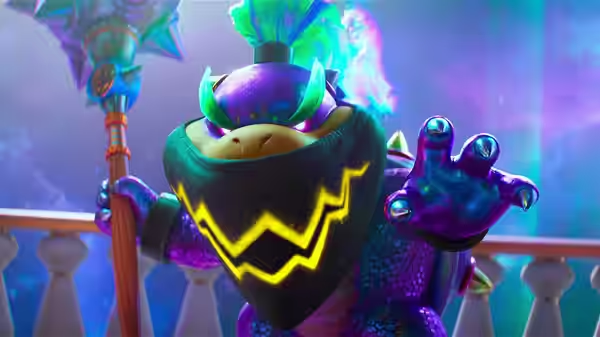
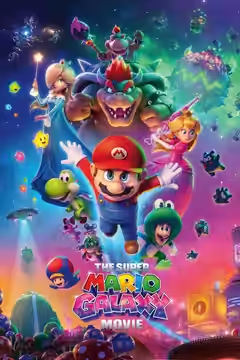
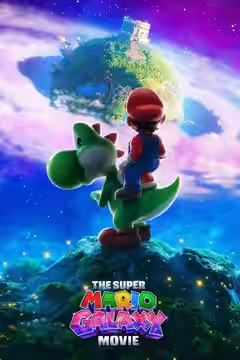
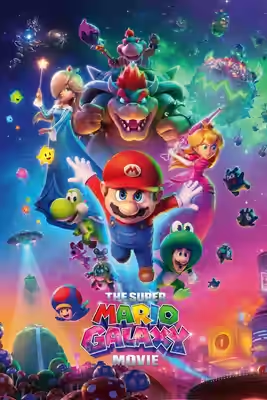
Aaron Horvath and Michael Jelenic directed the first Super Mario Bros. film in 2023, and they are back for the sequel with the same producers, Shigeru Miyamoto and Chris Meledandri, and a screenplay by Matthew Fogel. The idea, taken from the 2007 game, is to send the brothers off the ground: Mario (Chris Pratt) and Luigi (Charlie Day) leave the kingdom for the stars, meet Rosalina (Brie Larson), and chase Bowser (Jack Black), who now has a son, Bowser Junior (Benny Safdie), to prove himself to. It is a quest, with stops. It is also poor, and most critics have said so. We are not going to be the ones to disagree.
The trouble is not the idea but the speed. Eric E. Osmond’s cut does not hold a shot long enough for anything to land, a joke, a fall, a look between brothers. A planet appears, is run across, and is gone; a villain arrives, is bested, and is replaced by another. We were tired by the half-hour mark, and by the end we were cross about being tired, because a film for children has no business wearing out an adult in 98 minutes. There is a difference between energy and hurry, and this film has only the second.
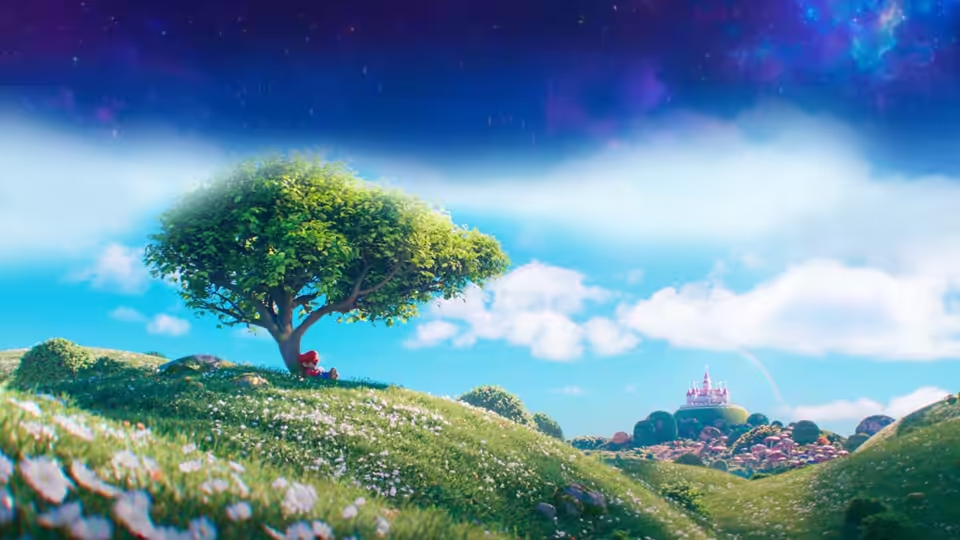
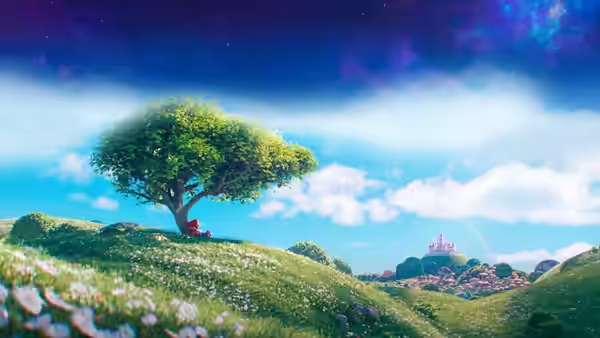
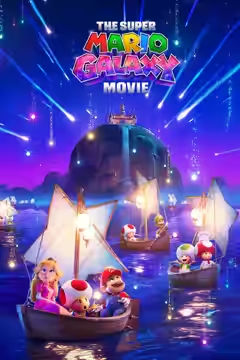
Guillaume Aretos’s production design is the best thing here. His little worlds hang in black space like sweets on a tray, each a single colour, each with one gimmick, and in the few seconds before Osmond cuts away they are pleasant to look at. Brian Tyler’s score pushes on every one of them, brass over every jump and strings over every reunion, so that we are told what to feel a good while before we are given a reason. It works on small children. It worked on the small children around us, who were loud, and we do not blame them.
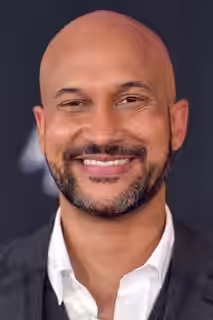
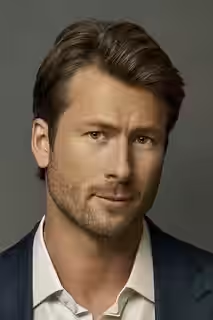
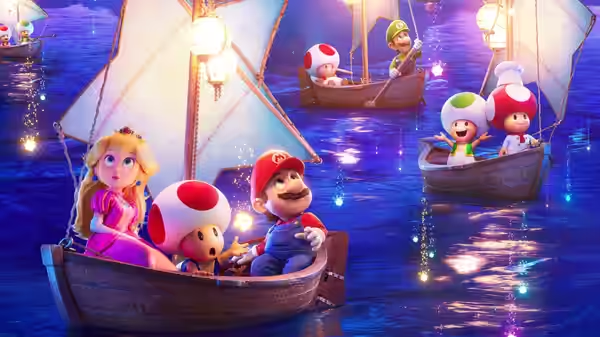
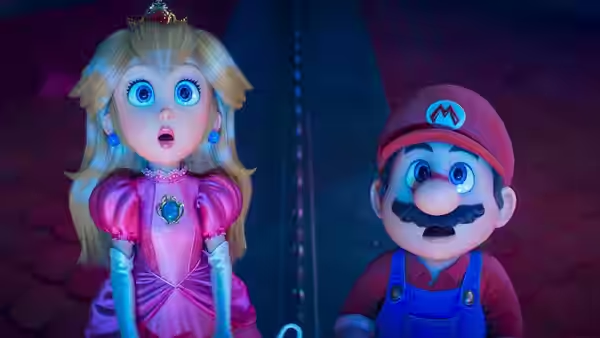
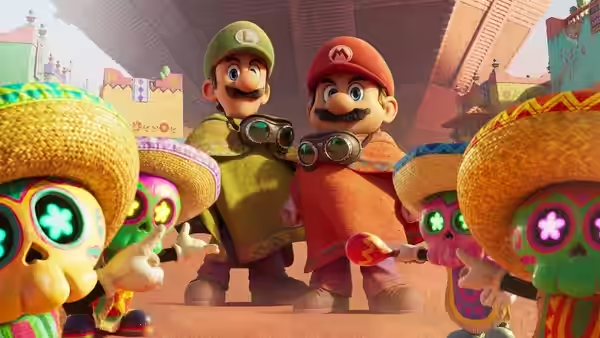
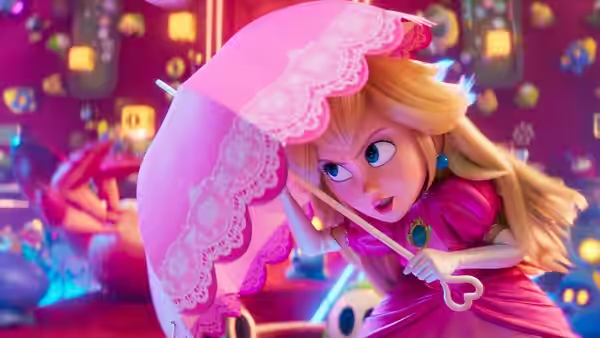
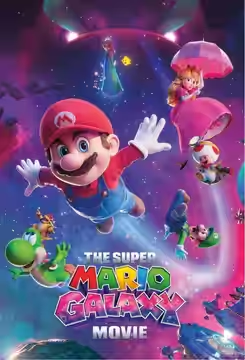
Pratt and Day play the brothers as they did last time, and the film’s one attempt at feeling is between them, a quarrel about who looks after whom that the script raises and then drops to make room for another planet. Anya Taylor-Joy’s Peach is along for the ride, and mostly it is a ride. Jack Black’s Bowser is still the only performance that seems to know it is in a comedy, and his scenes with Safdie’s sulking Bowser Junior are the closest the film comes to a story with a middle. Donald Glover’s Yoshi is a pleasure for the minutes he has. Keegan-Michael Key’s Toad talks fast. Glen Powell turns up as Fox McCloud, a pilot borrowed from a different game altogether, does a flourish and leaves; the part of the audience that knew who he was cheered, and the rest of us waited.
Then there are the references. Luis Guzmán’s Wart, Roxana Ortega’s Ukiki and Kevin Michael Richardson’s Kamek are villains most viewers will not know, and the film does not need us to know them; it needs us to notice them. Every scene has something in the corner of it to recognise, and the recognising is offered in place of a joke. Several critics have called the film an advert, and that is fair, though not quite for the reason they give. It is not that it sells things. It is that it cannot stop pointing at them, and 98 minutes of being pointed at is a long time.
The first film had the same habits and was a good deal calmer about them, and calm turned out to matter. Set against what a family animation can be, one that lets a shot breathe, one that trusts a child to follow a face, this is well below the line. It carries a PG certificate, and there is nothing in it a child should not see. There is also nothing they will remember by the weekend.
It opened in Britain on 1 April 2026, in time for the school holidays, and it will fill cinemas whatever we say. If you have a child who plays the games, they will be happy, and you will be able to close your eyes for stretches without missing a plot point. If you do not, wait, and then perhaps keep waiting.