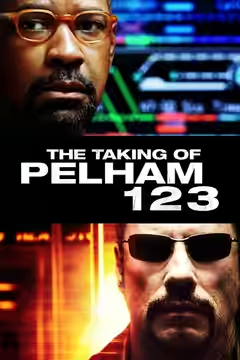
Washington and Travolta talk each other down a radio line for most of a hundred minutes and are worth hearing. Tony Scott, though, will not let a shot sit still long enough to listen, and a plain, good hostage picture is buried under the commotion.
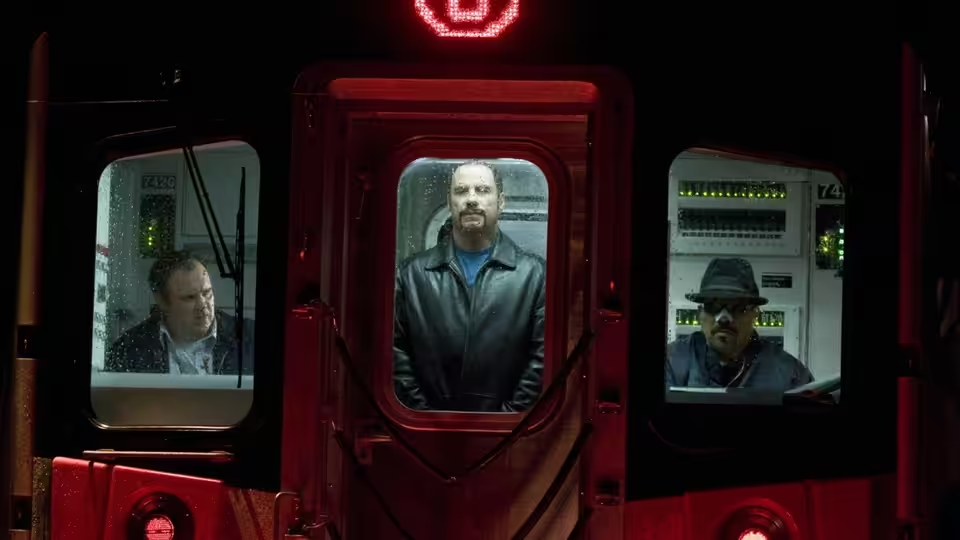
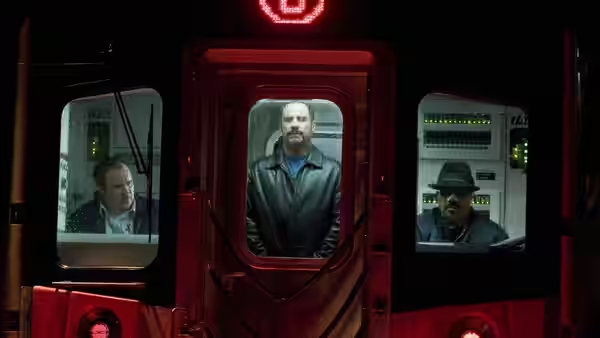
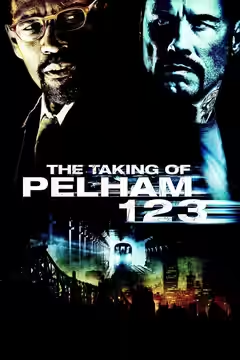
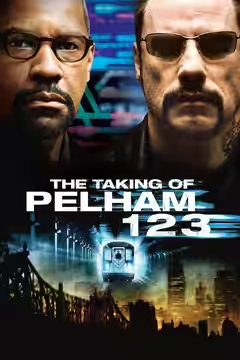
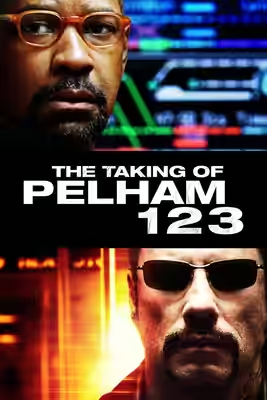
Tony Scott’s remake of the 1974 hijack picture is a two-hander conducted down a radio line, and the idea is sound. Brian Helgeland’s screenplay, from John Godey’s novel, puts Walter Garber (Denzel Washington) at a console in the subway’s control centre and Ryder (John Travolta) in a stalled carriage under the city, and lets them talk. Garber has just been demoted and is waiting to hear whether he keeps his job. Ryder has a gun, a carriage of passengers and a clock. For an hour neither man can see the other, and the best of the film is the sound of two voices working each other out.
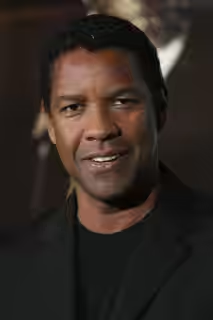
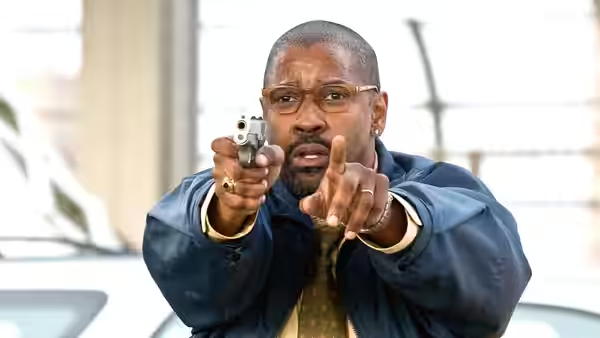
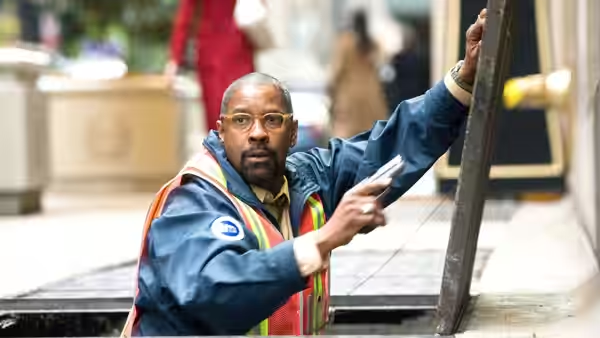
Washington plays Garber as a man in a cardigan with a moustache and a lot on his mind, and he does almost nothing, which is the point. Renee Ehrlich Kalfus dresses him like a middle manager and Washington lets the clothes do the work: he hunches, he turns a pen over, he answers Ryder in the flat, polite voice of someone who has spent years talking motormen through signal failures. It is one of his quietest performances, and the film is at its best when Scott remembers to leave the camera on him and let him listen.
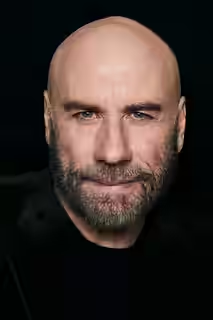
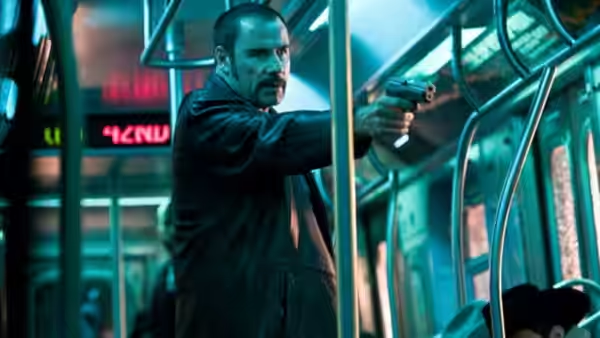
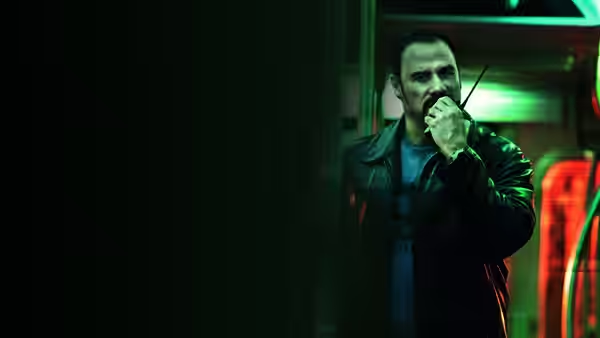
Travolta is louder. He has a goatee, a neck tattoo and a vocabulary that earns the 15 certificate on its own, and he plays Ryder as a man who enjoys the sound of his own grievances. Some of it is fun. The scenes in which he needles Garber about his pay grade, or demands to know what a New Yorker’s life is worth to the second, have a nasty wit that Helgeland writes well. But the performance has one volume, and by the halfway mark we found ourselves hoping he would run out of things to say.
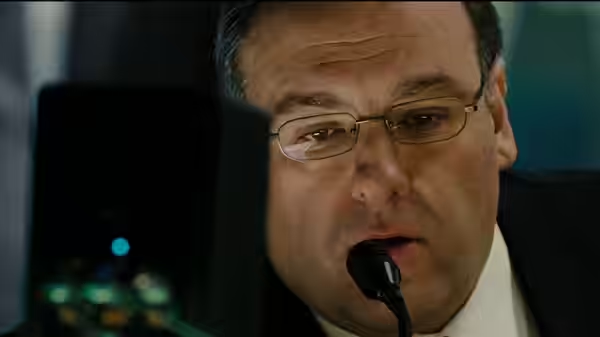
The supporting cast fare better than the noise around them suggests. James Gandolfini plays the mayor as a tired man in a bad week, more worried about the papers than the passengers until the moment he is not, and he gets most of the laughs. John Turturro is the negotiator, Lt. Camonetti, pushed aside when Ryder refuses to speak to anyone but Garber, and Turturro plays a professional’s humiliation with real care. Luis Guzmán, as Ryder’s man Phil Ramos, is given a hooded top and a handful of lines and makes a person out of them.
The trouble is Scott. Tobias A. Schliessler shoots a stationary train as if it were a getaway car: the frame rate stutters, the image smears, the camera swoops over Manhattan from a helicopter whenever a scene threatens to settle, and Chris Lebenzon cuts a conversation between two seated men as though they were trading punches. Harry Gregson-Williams’s score thuds underneath, mostly drums and treated electronics, and does not let up. Chris Seagers has built a control centre that is all glowing track maps and dim consoles, and we saw a good deal of it in the few frames per cut Scott allows.
We were irritated, and then we were bored, and the moment we can name is the money run. The ransom has to cross the city in an hour, and Scott stages it as a convoy of police cars and motorcycle outriders taking corners at speed, with the crash at an intersection you can see coming three blocks off. It is competently shot and it has nothing to do with anything. The film about two voices has become a film about traffic, and the last act, which we will not describe, carries on in that direction with guns and running and a finale any thriller could have had.
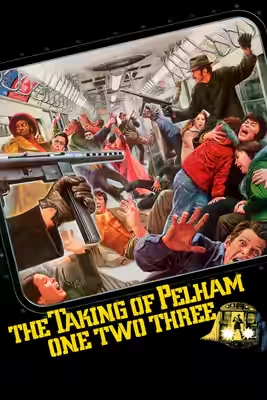
Scott and Washington have worked together before, and Crimson Tide (1995) showed how good Scott could be when he locked two men in a confined space and trusted the argument. Here he has the same set-up and does not trust it. Joseph Sargent’s original let Walter Matthau and Robert Shaw be dry and patient; this version cannot be patient about anything, and it ends up a film about a stopped train that will not stop moving.
Most critics have landed between mixed and poor, and we are not far from them. If you are in the mood for Washington being decent under pressure and Gandolfini being funny about it, there is an evening here. If you want a hostage thriller that trusts its radio, the 1974 film remains the one to see, and it has the good manners to sit still.