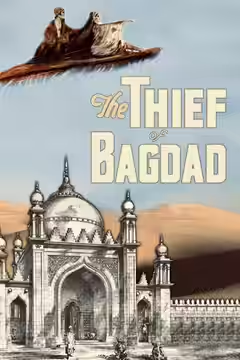
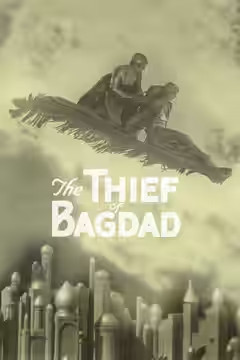
Douglas Fairbanks’s athletic charm and William Cameron Menzies’s immense sets make this fantasy adventure a pleasure. The romance is thinner than the spectacle, and 149 minutes is generous, but the physical performance remains reason enough to give it an evening.
Raoul Walsh’s The Thief of Bagdad makes a good case for building an adventure around an actor who knows how to move. Douglas Fairbanks is the attraction, and the fantasy gives his athleticism somewhere suitably extravagant to go. We recommend it, with a warning about the 149-minute running time: its pleasures are immediate, but the telling can be leisurely. There are stretches when we would happily trade some spectacle for a brisker pace.
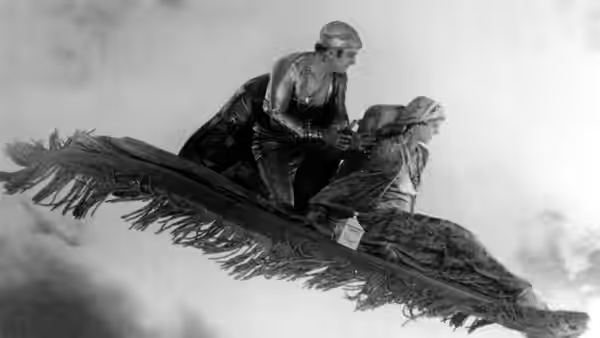
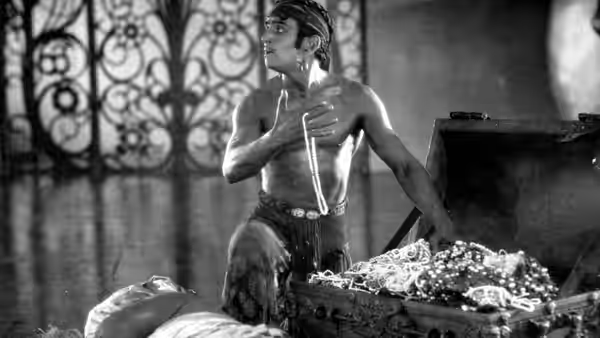
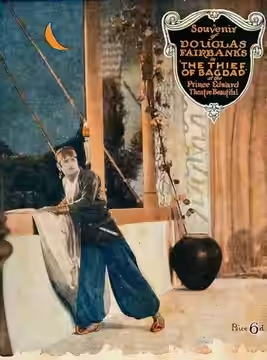
Fairbanks also takes the story and producer credits, and the film is thoroughly organised around his strengths. He gives the thief a physical confidence that feels mischievous, with a dancer’s lightness even when the scale around him becomes imposing. We found ourselves grinning at his athletic exuberance against the towering sets, because he seems so little intimidated by their size. His evident pleasure in movement keeps the performance warm; there is more here than an invitation to admire his fitness.
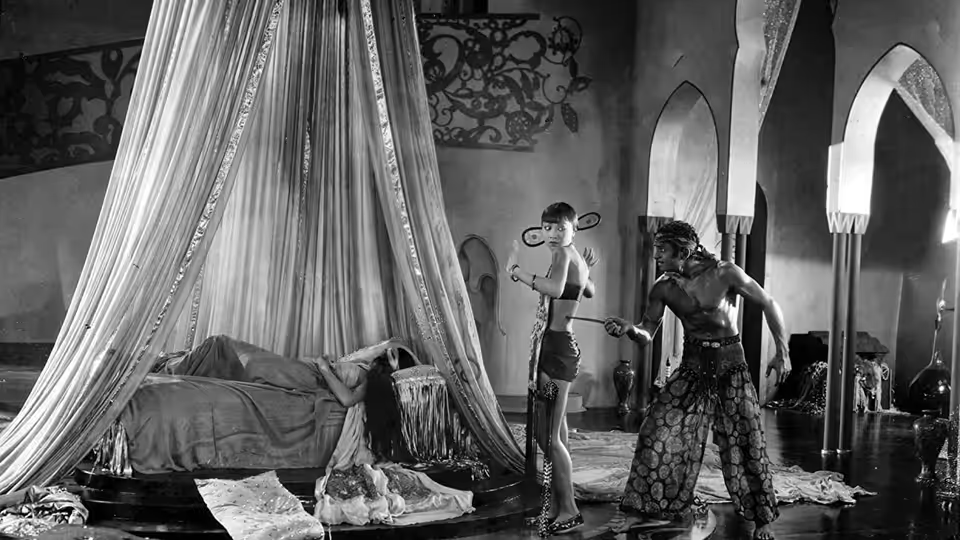
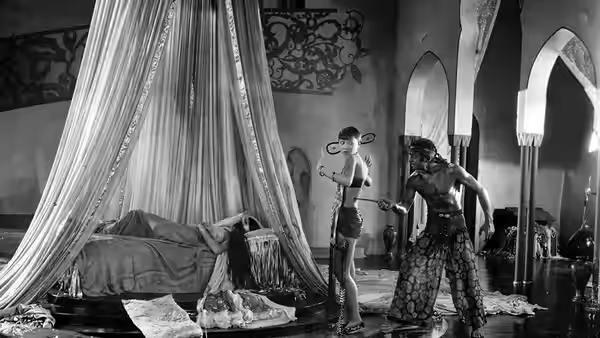
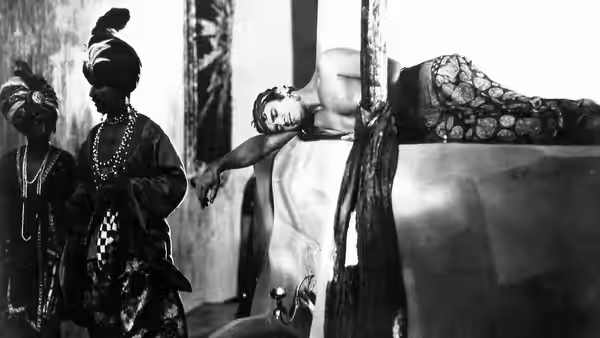
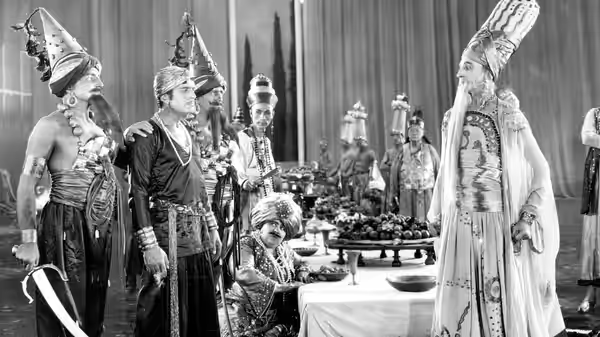
William Cameron Menzies’s production design is crucial to that pleasure. The immense sets could overwhelm an actor with less presence; here, their scale makes Fairbanks’s freedom of movement funnier and more impressive. Arthur Edeson’s cinematography allows us to appreciate the performer and the surroundings together, rather than turning the scenery into something to inspect between bouts of action. We can enjoy the buildings without forgetting the person moving through them.
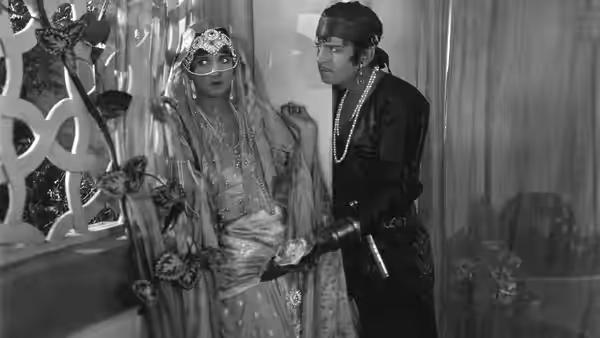
Achmed Abdullah’s screenplay is less successful at making the romance equally interesting. The Princess, played by Julanne Johnston, has nothing like the thief’s force of personality, and the difference matters in a film that asks us to spend so long in its company. Anna May Wong, credited as The Mongol Slave, holds the attention more firmly, even within a supporting role. Those character labels also make plain how readily the fantasy sorts people by rank and nationality. Its charm does not make that habit less noticeable.
Bill Nolan’s editing is most persuasive when movement supplies the momentum, less so when the adventure has to sustain our interest between its visual setpieces. The length gives us time to admire the spectacle, but also time to wish it would get on with things. Mortimer Wilson’s music leaves less of an impression than the physical rhythm of Fairbanks’s performance. We remember the body’s timing more clearly than the accompaniment.
Within fantasy adventure, Walsh’s film puts unusual faith in its leading actor’s physical ability. Its appeal does not depend on treating it as a museum piece, or on politely allowing for its age. Fairbanks keeps the enormous settings from becoming static exhibits, while their scale makes his confidence more entertaining. For all the leisurely storytelling, the pleasure of watching him has little to do with historical importance. Give it an unhurried evening, and allow for the romance to be the quieter attraction.