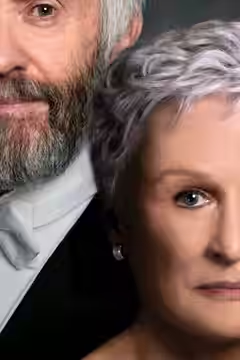
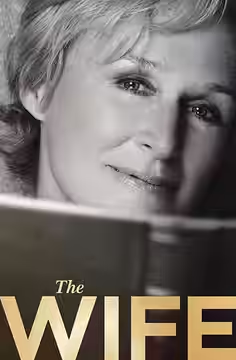
The Wife is a good marriage drama with a familiar script and two actors worth watching closely. Glenn Close and Jonathan Pryce make the relationship convincing even when the film insists on explaining too much.
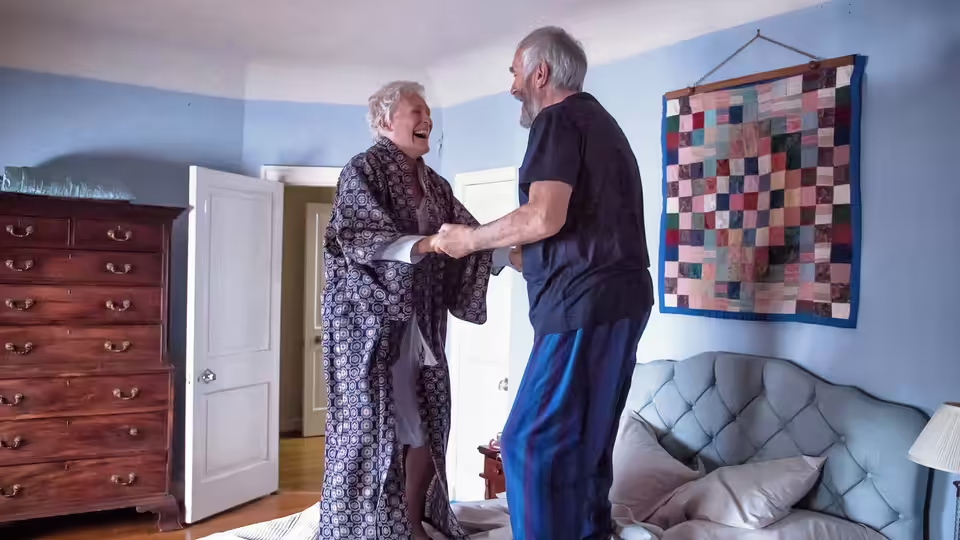
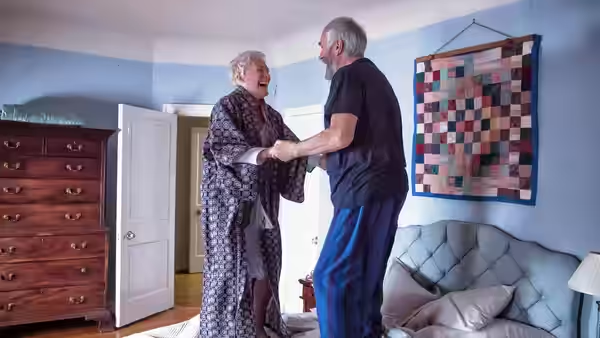
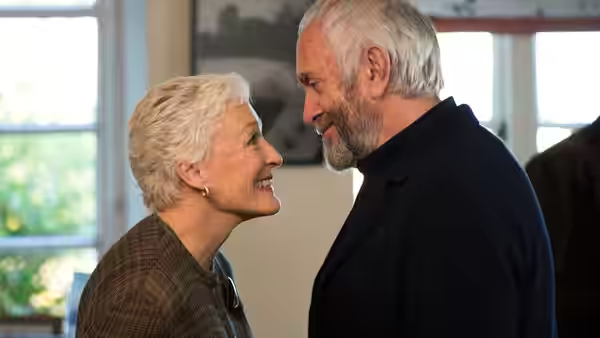
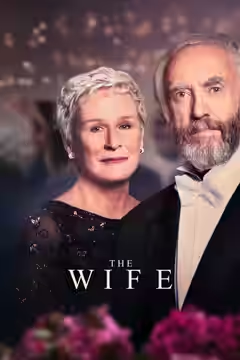
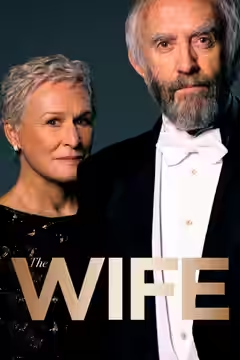
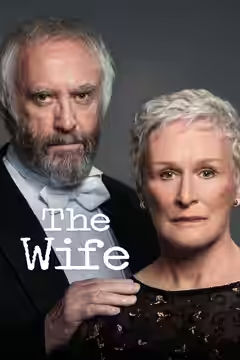
Björn Runge’s The Wife is a good marriage drama, made absorbing by two actors who suggest years of difficult accommodation. Joan Castleman has to contend with the success and neediness of her husband, Joe Castleman, and the strain is becoming harder to contain. Glenn Close and Jonathan Pryce make that relationship convincing without making it comfortable. The writing is familiar, but the attention paid to the wife beside the celebrated man gives us a reason to stay.
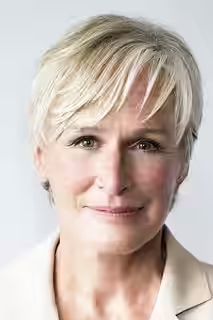
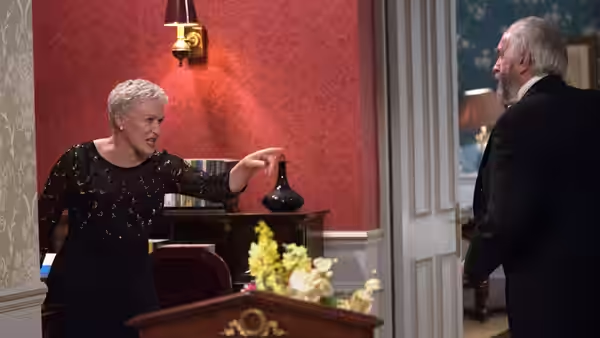
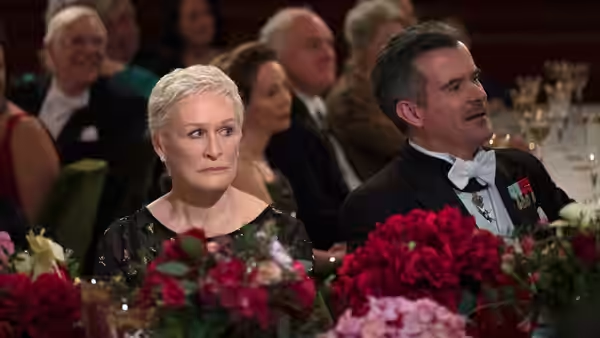
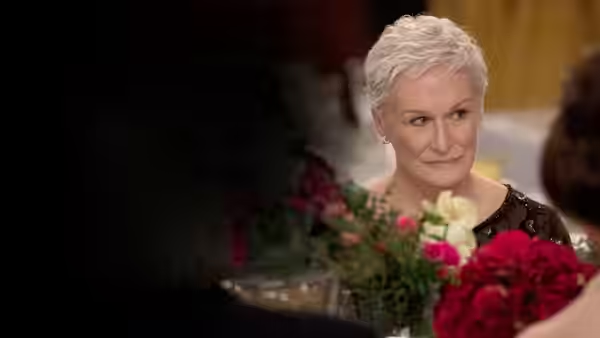
Close gives Joan a watchfulness that makes us keep checking her face, even when someone else is speaking. A small change of expression can suggest irritation, then leave us unsure how much anger sits beneath it. We felt uneasy watching her listen to Pryce, because that careful attention begins to look like work she cannot put down. Close also allows room for loyalty, which prevents Joan becoming merely an example of a woman badly treated. She makes the character’s choices worth considering even when we wish she would choose differently.
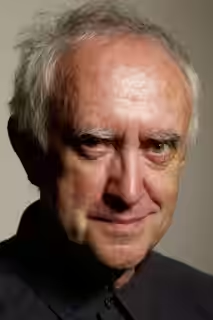
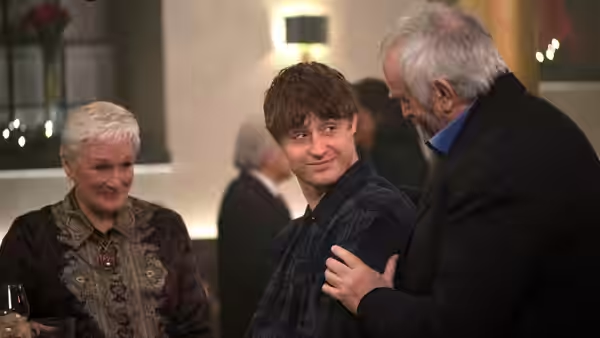
Pryce helps by making Joe needy as well as accustomed to attention. His dependence on Joan is convincing enough to complicate our impatience with him. Their shared scenes allow affection to persist alongside resentment, so there is something at stake beyond deciding who is right. Christian Slater’s Nathaniel Bone, pursuing the couple’s story, introduces a different pressure: somebody wants their private history put into words. Slater gives the intrusion a welcome sharpness.
Ulf Brantås’s cinematography gives Close’s small reactions enough attention to make them count. Mark Leese’s production design remains discreet, keeping the people more interesting than their surroundings, which suits this intimate drama. Jocelyn Pook’s music is less persuasive than the pauses between the actors, where we have time to wonder what Joan might say next. Runge’s patient approach works best when he leaves us to study her rather than pushing for a stronger response.
The trouble is Jane Anderson’s screenplay, adapted from a novel by Meg Wolitzer, which is too ready to explain what Close has already suggested. The flashbacks make the marriage easier to read, but they also interrupt the more absorbing business of watching the older couple together. Lena Dahlberg-Runge’s editing cannot quite make those returns to the past feel necessary at each point they appear. Our curiosity slackens because the film begins supplying answers too neatly. The actors have made us interested enough to tolerate uncertainty.
As a marriage drama, it understands how much can remain unsettled between people who know each other well. Loyalty need not settle a grievance, and affection does not make an unequal partnership fair. Close and Pryce keep those difficulties present without asking us to decide which spouse deserves our sympathy in every scene. That gives the film a useful awkwardness, even when the script is too keen to settle things for us.
At 100 minutes, this is a manageable commitment, though it rewards close attention more than the urge to anticipate what comes next. There is enough in the performances to keep a conversation going afterwards, particularly about the compromises Joan appears willing to make. Choose it for an evening when a difficult marriage is more appealing than an elaborate plot.