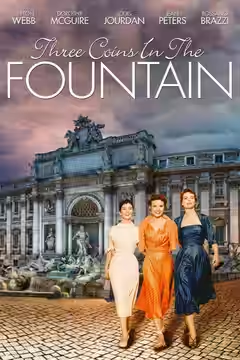
Jean Negulesco’s Roman romance is a travelogue with three love stories attached, and the travelogue is the better half. Clifton Webb and Dorothy McGuire give it a heart the script keeps forgetting to feed; the rest is pleasant and thin.
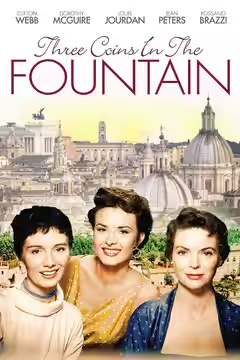
Jean Negulesco’s Three Coins in the Fountain is a film about Rome with some Americans in it. Three secretaries, three men, one fountain and a wish each; John Patrick’s screenplay, from John H. Secondari’s novel, hands out the romances like envelopes and lets the city do the rest. It is pleasant, it is handsome, and it is thin in ways that show more with every passing year. We would not send anyone out into the rain for it, but on a wet Sunday afternoon it does what it was made to do, which is to put the Trevi Fountain and the Venetian lagoon in front of you at a size the postcards could not manage.
The pictures are the point and Milton Krasner knows it. He shoots Rome in the wide CinemaScope frame from high up and far back, so the domes sit along the horizon and the people are small figures on the stairs. Frank Sinatra sings the title song over an opening tour of the city, and Victor Young’s score keeps coming back to that tune whenever the plot needs a lift. William H. Reynolds cuts these passages slowly, letting a square sit on screen long enough for you to pick out the cafe tables, which is right for the material. Once the camera comes indoors the film shrinks. The flat the three women share is a set, and looks like one.
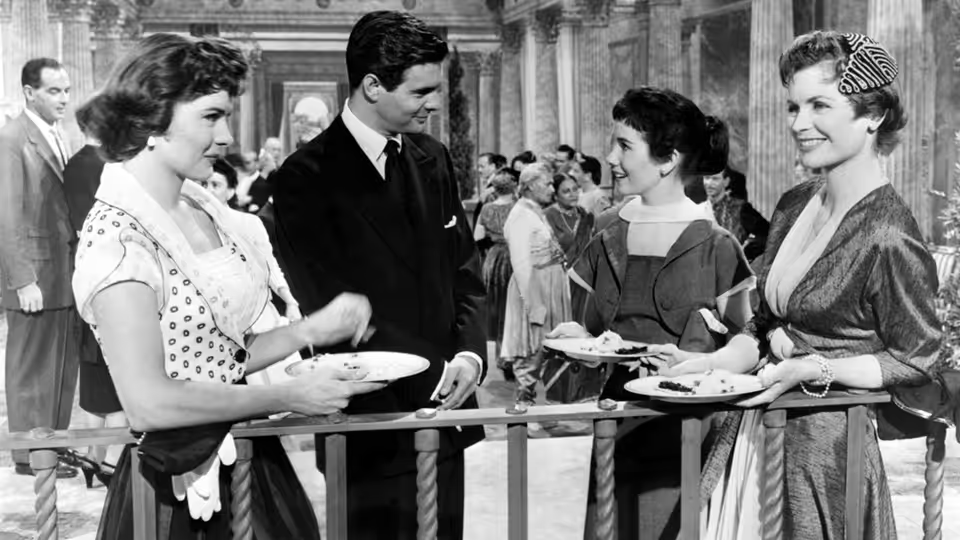
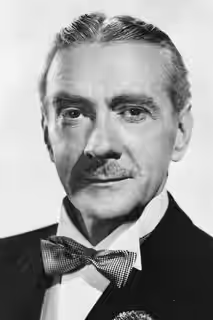
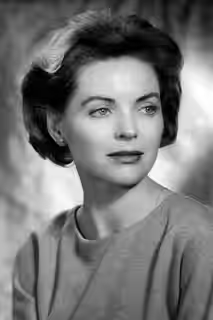
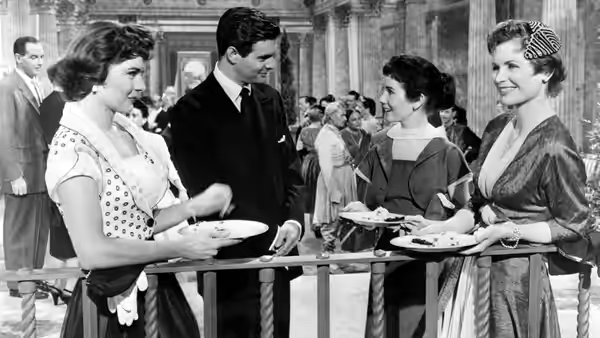
Of the three stories, the one that works is the one with the least romance in it. Miss Frances (Dorothy McGuire) has spent fifteen years typing for John Frederick Shadwell (Clifton Webb), an expatriate writer who lives beautifully and alone, and she has decided to go home. Webb plays Shadwell with the clipped, fastidious wit that was his trade, and then, in one dinner scene, lets it slip for a second. We found ourselves more moved than the film had earned, and the reason was McGuire, who had spent the previous hour being careful to want nothing out loud. Their scenes are written for adults. Nothing else here is.
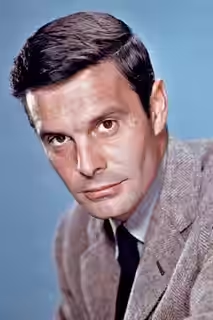
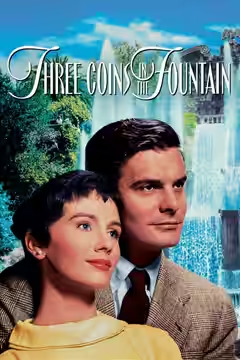
Maria Williams (Maggie McNamara) is the new girl, and her pursuit of Prince Dino di Cessi (Louis Jourdan) is farce. She reads up on his interests and pretends to share them, and Jourdan is charming enough that the lie looks almost harmless. McNamara plays it bright and quick, and the script gives her a running joke about fibbing that pays off once. Cathleen Nesbitt, as the Prince’s mother, the Principessa, gets the two best lines and delivers them as if she had been waiting all afternoon. It is fun while it is on and gone by the time you reach the kitchen.
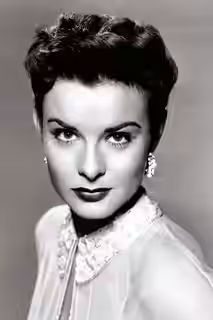
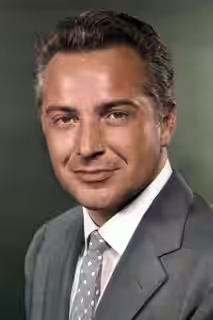
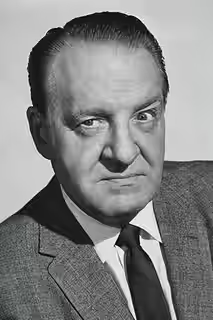
The Anita strand does not work. Jean Peters is leaving her job to go home and marry, or says she is, and she is drawn to Georgio Bianchi (Rossano Brazzi), a translator at the office, though their boss Burgoyne (Howard St. John) has forbidden staff from mixing with the Italians they work beside. A visit to Georgio’s family farm in the hills is meant to show Anita the life she is missing and instead shows us a table of extras eating. Brazzi is decent and handsome and has nothing to play. We were bored here, honestly bored, and found ourselves looking at the hills behind him, which Krasner had at least lit properly.
Dorothy Jeakins dresses each woman to a type, the new girl, the career woman, the spinster, and the clothes tell you who will get what before anyone has spoken. That is efficient, and it is also the problem: John Patrick’s dialogue rarely tells you anything the wardrobe has not. The men are types too. The prince is smooth, the translator is earnest, the writer is dry, and only Webb finds a person inside the outline.
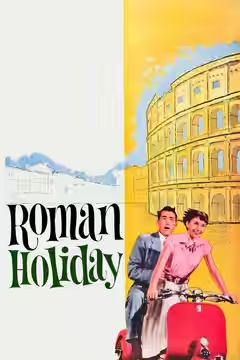
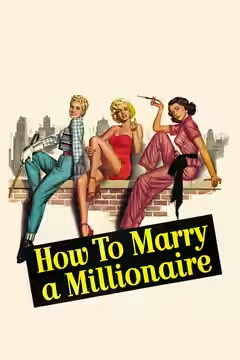
Negulesco made How to Marry a Millionaire the year before, another three-women-three-men picture, and this is the same shape with a better view. Set beside Roman Holiday (1953), which put one love affair in the same city and trusted it to fill the frame, this looks like a brochure with a story tucked into the back pages. It runs 102 minutes and carries a U certificate.
Watch it for Webb and McGuire, and for Rome. When the actors stop talking and the camera goes back outside, which is often, you will not mind.