Val Kilmer’s earnest delivery gives this erratic spoof a dependable centre. The physical comedy is often more rewarding than the story, though the failed jokes arrive almost as regularly as the good ones.
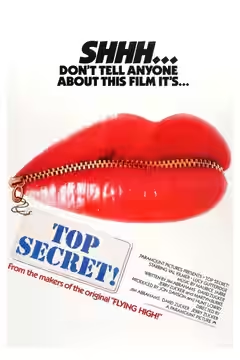
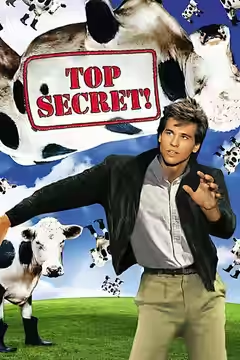
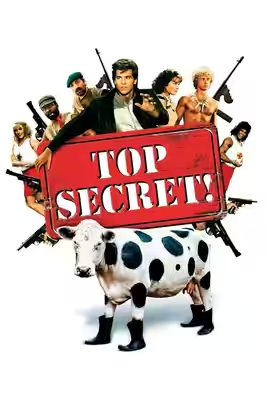
We recommend Top Secret for its physical comedy and Val Kilmer, with a warning that its appetite for jokes exceeds its judgement. Directors Jim Abrahams, Jerry Zucker and David Zucker keep reaching for another film convention to dismantle, another opportunity to make something ridiculous happen. There is pleasure in that persistence, even when the individual gag earns little more than recognition. The trouble comes when the film expects the sheer quantity of comic business to compensate for a story that struggles to hold our attention between jokes.
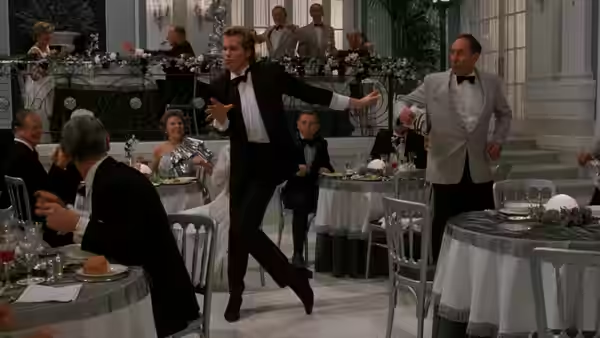
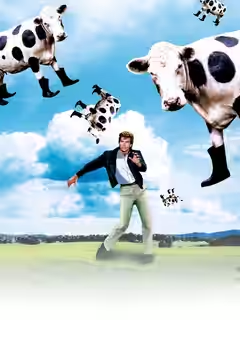
Kilmer gives it something dependable to return to. As Nick Rivers, he combines the bearing of a romantic lead with an earnestness that lets the nonsense happen around him without asking us to applaud his participation. We laughed at the physical comedy, and Kilmer’s energetic commitment was a large part of the reason: he never makes looking foolish seem like a favour he is doing the film. That willingness matters when so much of the entertainment depends on performers taking absurd material seriously.
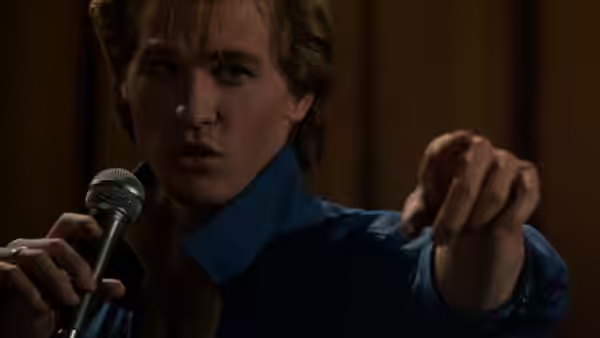
The screenplay, credited to Jim Abrahams, Jerry Zucker, Martyn Burke and David Zucker, is happiest when it can stop attending to the story and try another comic possibility. Its range of targets gives the film room to change direction before any single kind of parody becomes exhausting. The pastiche songs are particularly useful, providing a different comic rhythm and giving Kilmer’s performance more to do than maintain its composure. They also expose how little interest the connective material has in its own characters, who too often seem to be waiting for permission to get to the next joke.
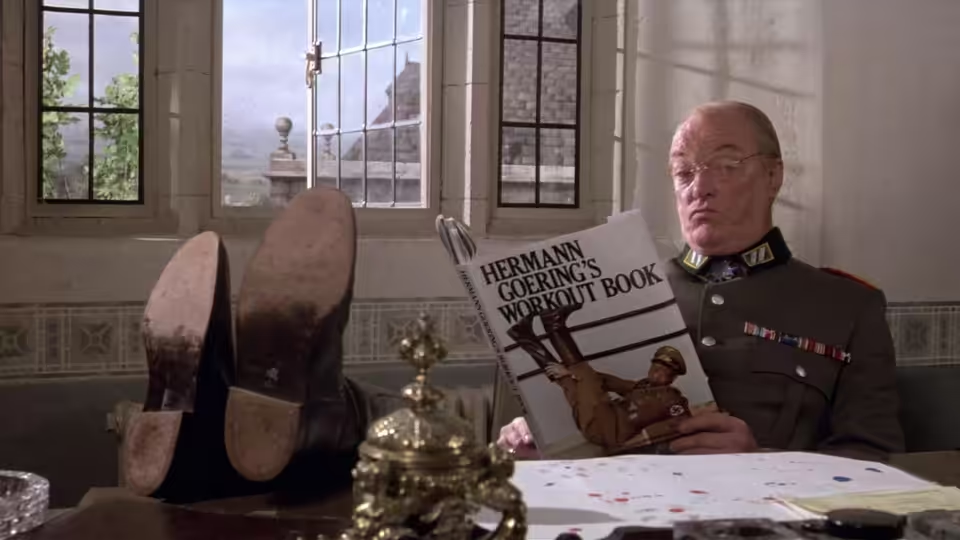
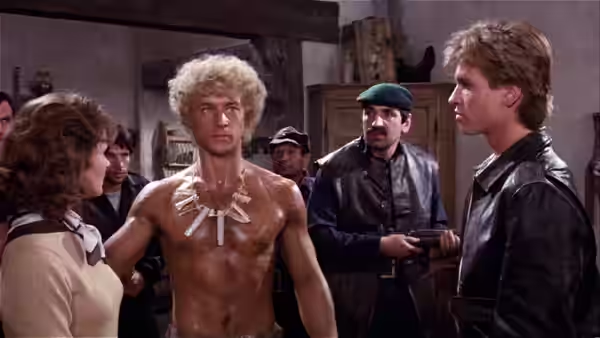
The visual comedy asks for care that the deliberately ridiculous material can make easy to overlook. Christopher Challis’s cinematography and the production design by Peter Lamont and Michael Lamont deserve credit for making the visual jokes readable; confusion would spoil the pleasure of recognising what has gone wrong. Editors Françoise Bonnot and Bernard Gribble face the related problem of leaving enough time for a gag without making us wait through its explanation. The briskness helps, although it can also make a run of weaker material feel like several unsuccessful attempts to attract our attention in quick succession.
Maurice Jarre’s music belongs to the film’s commitment to treating comic material with professional seriousness, and that approach works better than constant musical nudging would. The same principle makes Kilmer’s straight-faced performance so useful throughout. Yet seriousness of execution cannot rescue every idea, and some jokes feel finished as soon as their premise becomes apparent. When those accumulate, the loose storytelling becomes harder to forgive, because there is little else asking us to stay interested.
As a spoof, the film is more satisfying when it makes something physically absurd happen than when it merely invites recognition of a familiar convention. Its better passages reward looking closely, which gives the comedy a life beyond identifying what is being sent up. At 90 minutes, it is short enough that the unevenness remains a caveat rather than a reason to steer clear. Choose it for an evening when an enthusiastic comic performance and a supply of visual jokes will do; expecting much attachment to the characters would be making extra work for ourselves.