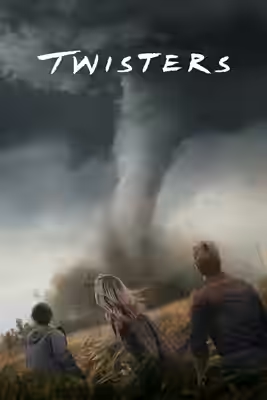
Jan de Bont’s storm-chasing film is loud, fast and still a proper thrill whenever the sky turns green. When it does not, the script has to carry it, and the script cannot hold a conversation.
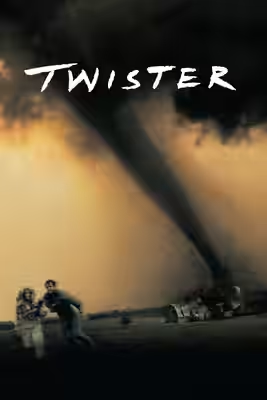
Jan de Bont’s second film as a director, after Speed, is about people who drive towards the thing everyone else is driving away from. Michael Crichton and Anne-Marie Martin’s screenplay gives them a reason, a barrel of sensors called Dorothy that has to be dropped in a tornado’s path, and a marriage to argue about while they do it. Twister is a machine for putting tornadoes on a screen, and as that it still works. As anything else it is thin.
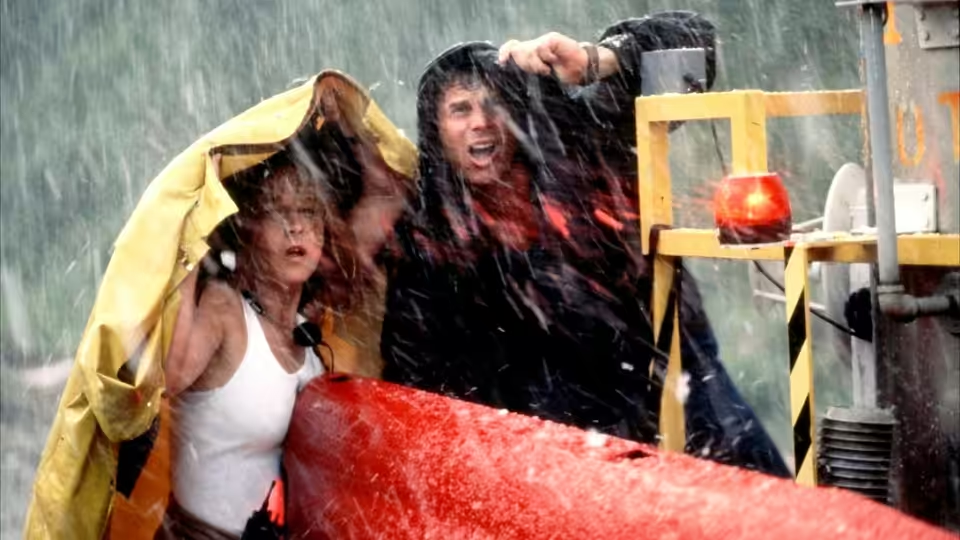
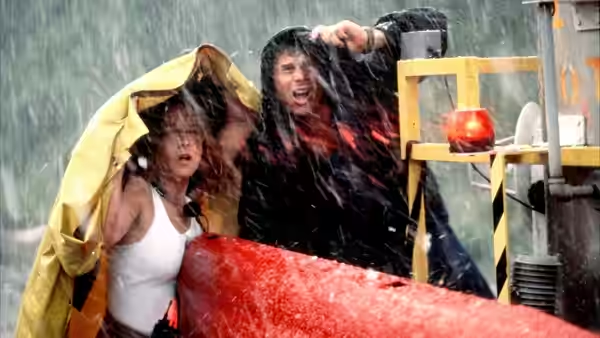
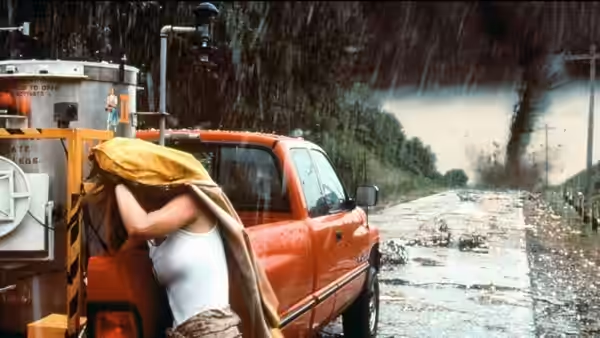
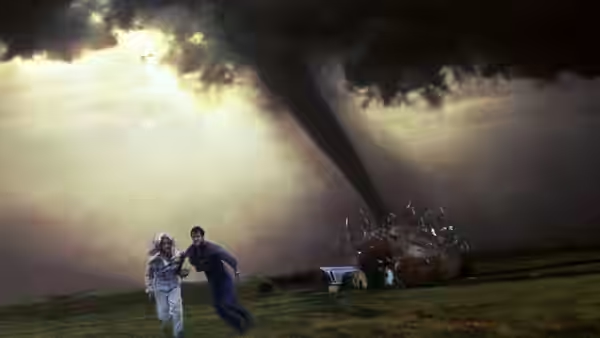
The storms are the point and the storms are good. The prologue puts a family in a farmhouse at night with a radio warning and a cellar door that will not hold, and it is the most frightening thing in the film because we see almost nothing: a wall of rain, a door, a man’s hands. Jack N. Green shoots the Oklahoma plains with the horizon low in the frame, so the sky takes up two thirds of the picture, and he lets it turn the colour of a bruise before anything arrives. When the funnels come they are grey and grainy, and the camera stays in the truck with rain smeared across the glass. Michael Kahn cuts each chase so that we always know which way the road runs and which way the storm is moving.
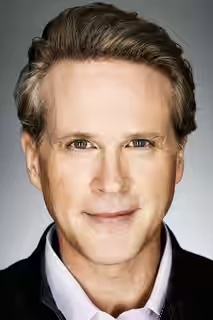
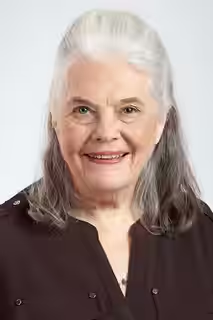
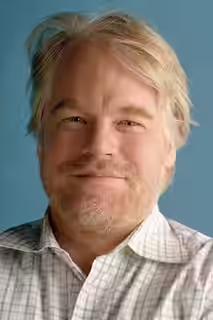
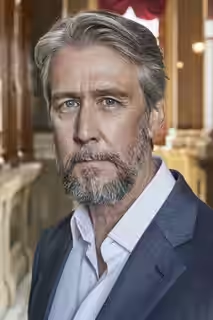
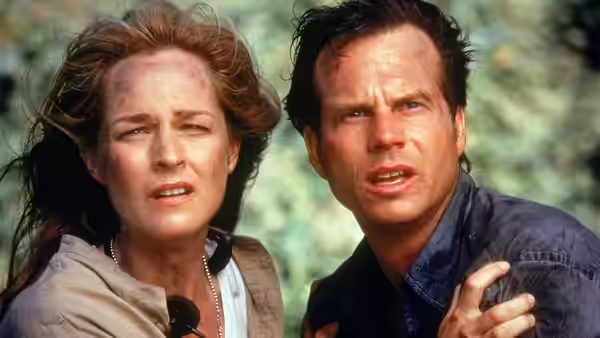
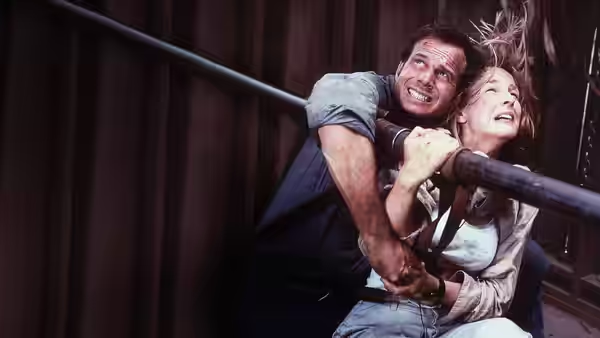
Helen Hunt plays Jo as a woman who has stopped noticing she is angry, and Bill Paxton plays Bill as a man trying hard to be the sensible one and happy to fail. They argue about the marriage in the same clipped lines they use for wind speeds, which is partly the script’s joke and partly its limit. Philip Seymour Hoffman, as Dusty, is loud, bearded and plainly delighted to be here, and he gets the biggest laughs. Cary Elwes plays Jonas, the rival with the corporate money and the black vans, as a man who has been told he is the villain and has dressed for it. Lois Smith gives Aunt Meg the only quiet scenes the film allows.
The trouble is everything between storms. Melissa exists so that the Fujita scale can be explained to somebody, and the film never finds a second use for her; Jami Gertz is handed a mobile phone and a worried expression and left in the truck. The chasers’ banter runs on nicknames and shouting. The science arrives in lumps. Nobody says anything you would remember on the way to the car park.
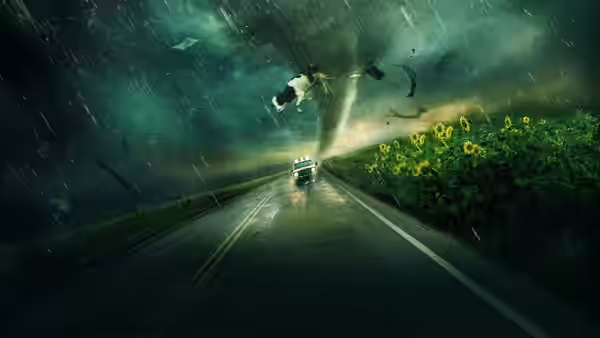
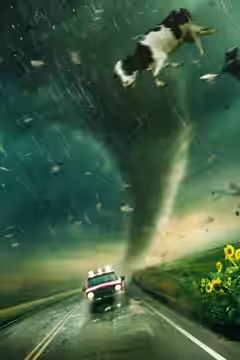
We flinched at the prologue, hands tightening on the arm of the sofa. We laughed at the cow, and again when a second one followed it across the windscreen. And somewhere around the fourth chase we noticed we were counting them, because the film had settled into a pattern of drive, shout, storm, escape, bicker, and the only thing changing was the size of the object in the air. We were never bored, but by the end we were waiting for the next one rather than dreading it.
Joseph Nemec III gives the chasers trucks that look lived in, instruments bolted to the roofs and wrappers in the footwells, and Dorothy itself looks as if it was welded in somebody’s garage, which is right. Ellen Mirojnick puts Jo in vests and jeans, Melissa in city clothes that get muddier by the hour and Jonas’s team in black from head to toe, so you can tell the sides apart from a quarter of a mile. Mark Mancina’s score mixes electric guitar with the usual orchestra and is at its best when it drops out and lets the wind take over.
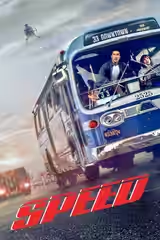
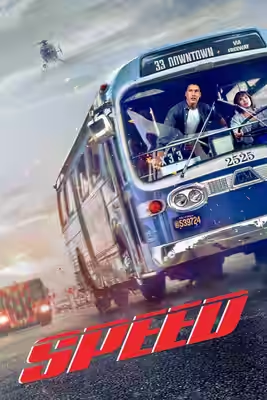
Speed had a bus, a bomb and a clock, and de Bont’s gift there was knowing where everything was at every second. He has the same gift here. What he does not have is a script that can fill the gaps, and there are more gaps than Speed had. Watch it at home with the volume up and the lights off, which is where the storms still do their job. It runs 113 minutes and carries a PG, and apart from the prologue the only things it hurts are buildings and one unlucky cow.