Lee Isaac Chung’s sequel builds frightening storms and then keeps switching them off so its characters can be sad. Glen Powell is a proper film star; the script around him is the one you have seen before, only gloomier.
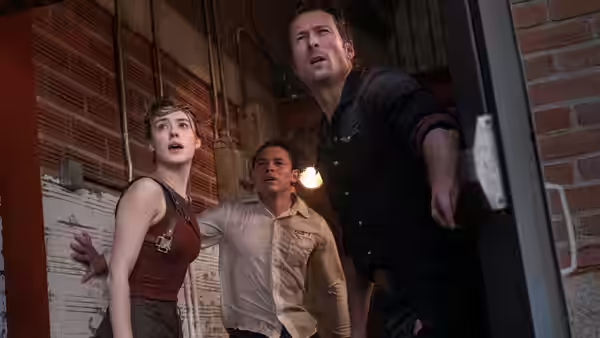
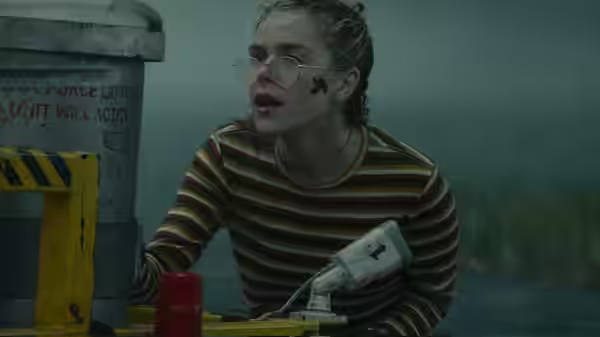
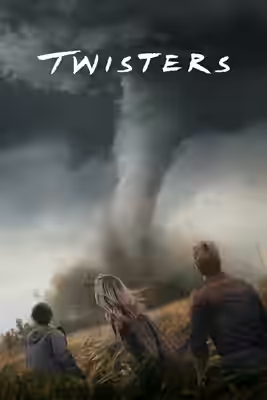
Twenty-eight years after Twister, Lee Isaac Chung goes back to Oklahoma to point trucks at the weather. Kate (Daisy Edgar-Jones) is a student chaser with a theory that a tornado can be broken up by feeding it the right chemicals; she tests it in the opening minutes with a van full of friends, and it goes badly. Years on she is reading radar in a New York office when Javi (Anthony Ramos) turns up with a new scanning system and a job. Back in Oklahoma she meets Tyler (Glen Powell), who drives into storms for an online audience and sells T-shirts from his truck. The film is about whether she gets back in the van.
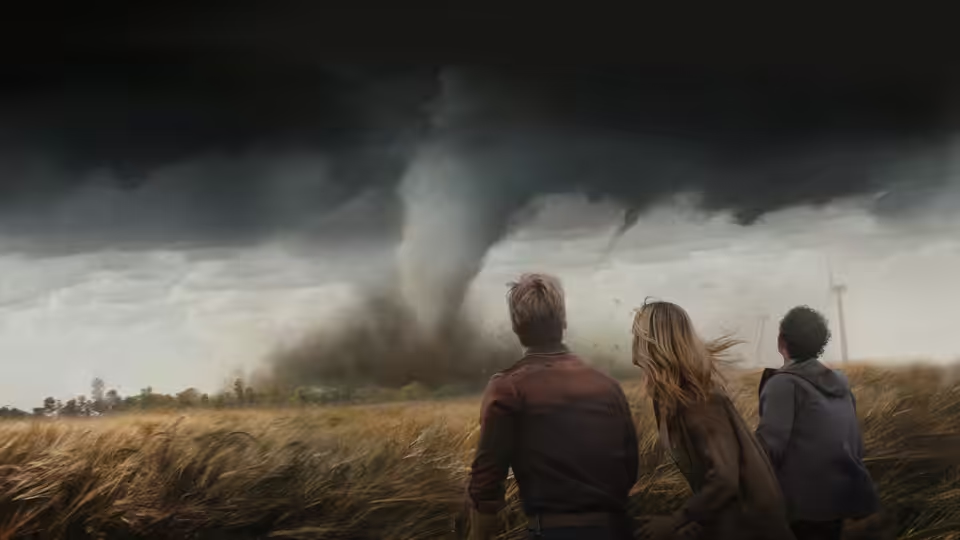
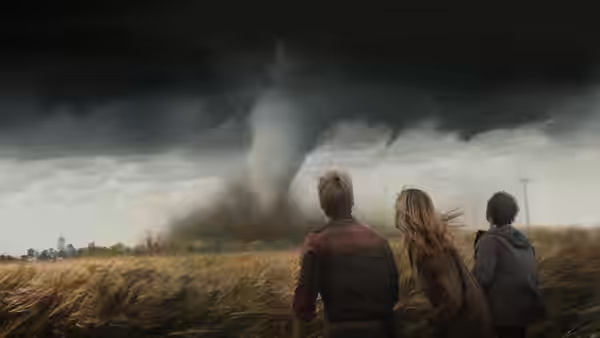
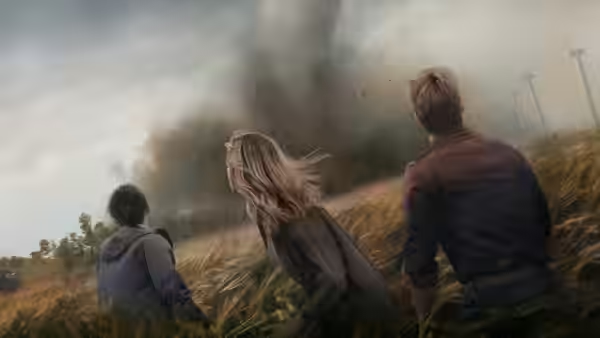
The storms are good. Dan Mindel shoots Oklahoma as a flat green table under a sky that takes up two thirds of the frame, so we see the weather coming from a long way off and can do nothing about it, which is roughly the position of everyone on screen. When a funnel touches down the light goes the colour of a bruise and the sound becomes a roar with no edges. The rodeo sequence, in which a crowd learns too late what the sirens are for, is the best thing here. Chung stays on the ground with the people and does not cut to the funnel from above until it is on top of them. We were frightened, properly, hands on the armrest, and it was the noise that did it more than the picture.
Powell is the reason to stay. He plays Tyler as a man who knows how handsome he is and has decided to be pleasant about it, talking nonsense with total conviction and then turning out to have read the papers Kate assumes he has not. He is the only person in the film who seems to be enjoying the storms, and since we are meant to enjoy them too, every scene without him has a hole in it. Brandon Perea, as his cameraman Boone, gets most of the jokes Powell does not and lands them.
The trouble is the script, by Mark L. Smith from a story by Joseph Kosinski, which has decided that a film about tornadoes needs to be about grief. Kate is written as a wound with a driving licence. Edgar-Jones plays her with intelligence and restraint, and for long stretches she has nothing to do but look at the sky and remember. The film keeps stopping the chase so she can be sad in a doorway, or so the money behind Javi’s operation, in the person of David Corenswet’s Scott, can explain itself, and each time it stops it takes a while to get moving again. There is a speech about the storms getting worse and more frequent, and the two words that would explain why are never said; the film nods at the idea and drives on.
Benjamin Wallfisch’s score does its work under the storms, low brass and climbing strings, and steps aside elsewhere, because whenever the wind drops a country song starts, and there are many. Terilyn A. Shropshire cuts the chases with real clarity; we always know which truck is which and how far the funnel is from it. Patrick M. Sullivan Jr. builds the small towns as real places with churches and diners, then knocks them down, and the wreckage has a weight the plot never matches. Eunice Jera Lee puts Tyler in denim a size too tight and Kate in the fleece of someone who has stopped expecting to have fun.
Twister had Helen Hunt and Bill Paxton arguing about their divorce while a cow flew past, and it knew that the arguing was the film and the cow was the reward. Twisters has the reward and cannot decide what the film is. Powell and Edgar-Jones are good together in the handful of scenes the script allows, but the plot keeps them in separate trucks most of the time.
See it for the rodeo, for Powell, and for the sound, which means see it big if you can. At home the storms shrink to something you can sit through calmly, and the talking between them grows in proportion. It runs 123 minutes and carries a 12A, and it opened in UK cinemas on 17 July 2024.