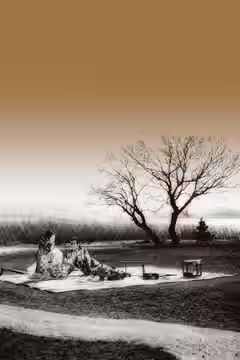
Kenji Mizoguchi’s Ugetsu is patient, unsettling and warmly recommended, with images that give ordinary lives room to matter. Its solemnity occasionally slows the drama, but the quiet human detail makes the attention worthwhile.
Ugetsu is worth the attention its slow pace demands, and we recommend it warmly. Kenji Mizoguchi brings war and the supernatural into the same drama without supplying a reassuring boundary between them. We remain concerned with people even when we cannot be certain what sort of world they occupy. The careful staging occasionally becomes a little solemn, but the feeling within these composed images is strong enough to carry us through.
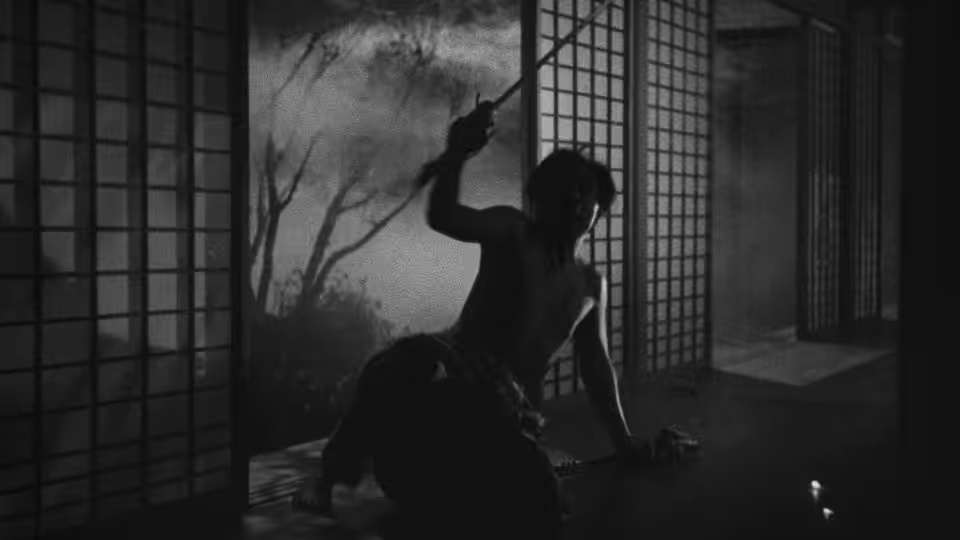
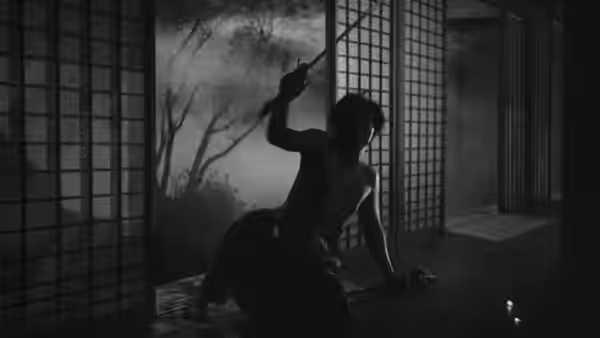
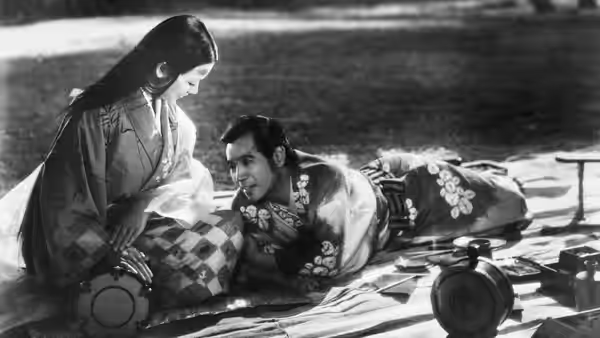
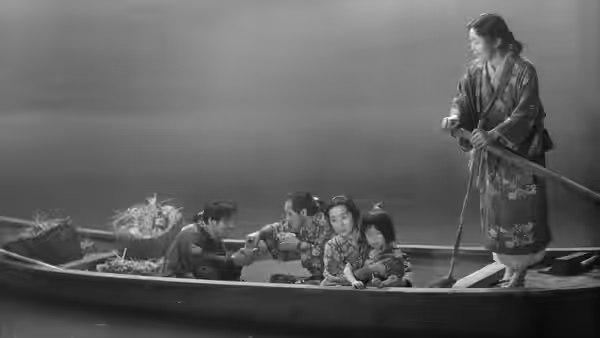
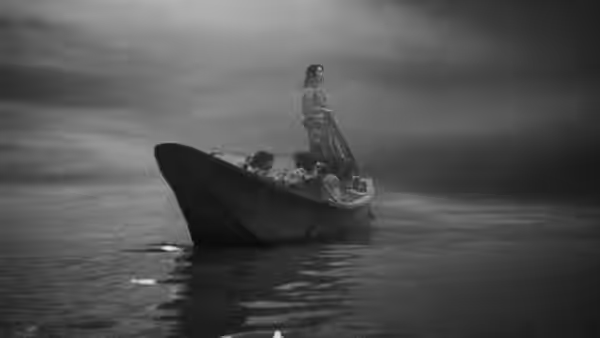
Kazuo Miyagawa’s cinematography gives those images movement as well as shape. The long takes let the eye explore a composition, and Kenji Mizoguchi’s fluid staging keeps finding reasons for that exploration to continue. We have time to notice the surroundings without losing our interest in the people within them. Mitsuzō Miyata’s editing is effective partly because it does not make every shift between the ordinary and the uncanny feel like a fresh start.
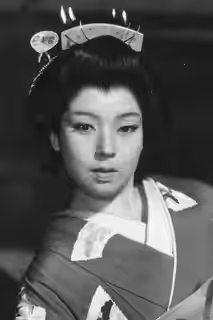
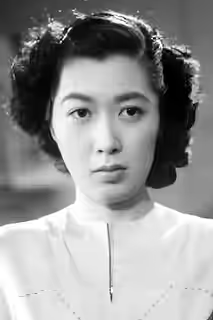
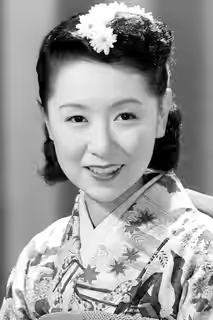
The acting keeps this formal care from becoming chilly. Masayuki Mori as Genjurô and Kinuyo Tanaka as Miyagi hold our attention without needing the editing to insist on every response. We are particularly taken with the warmth of Kinuyo Tanaka’s performance, which gives us someone to care about within the carefully arranged views. The performances reward the time we spend with them, even when the camera offers other things to admire.
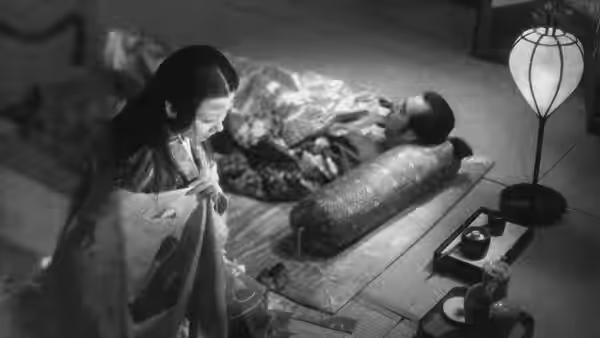
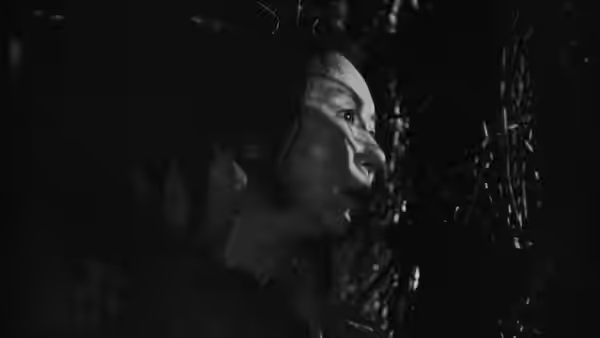
A woman stitches as light enters a room. We were moved more than we expected by that small passage, because the film gives her work such unhurried attention. The movement of her hands is enough to hold the scene, and the light lets us notice it afresh. There is no need to explain what the image stands for. We are watching someone work in a film shadowed by war.
Masatsugu Hashimoto’s production design helps make the surroundings worth studying during those extended shots. A room has to sustain our attention when a director is prepared to stay with it, and the domestic space here does. The music, credited to Tamekichi Mochizuki, Ichirō Saitō and Fumio Hayasaka, helps sustain the uncertainty. We would still put the camera’s movement ahead of the score when accounting for the film’s hold on us.
The main reservation is how consistently the film asks for contemplation. Some long takes continue after we feel we have understood what the scene is doing, and the pace briefly becomes a burden. The humour helps, offering a welcome interruption to the gravity. We value that change of mood; without it, the film’s patience might have felt more like an obligation.
Among supernatural dramas, Ugetsu stands out for how little it needs to hurry us towards the next disturbance. Its shifts away from ordinary experience retain the human distress that makes the war material matter, so the fantasy never feels like an escape from it. At 96 minutes, there is room to look closely without surrendering the evening. We would give it a quiet sitting, without another screen competing for attention.