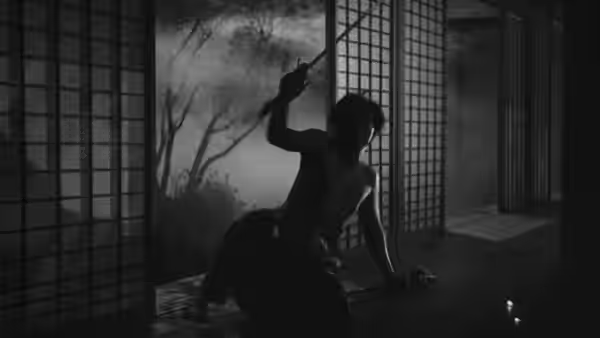
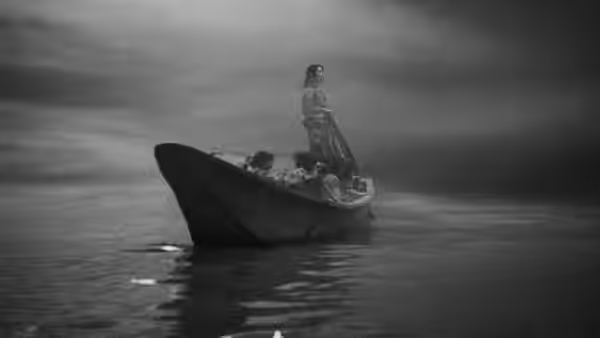
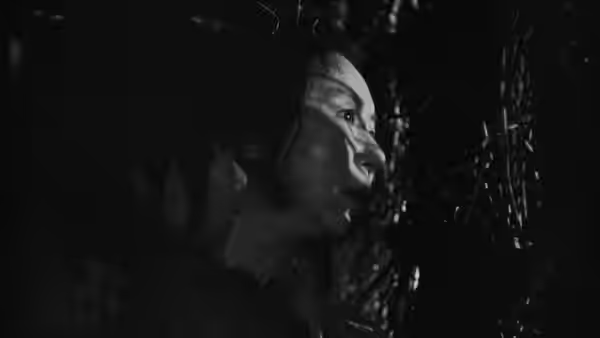
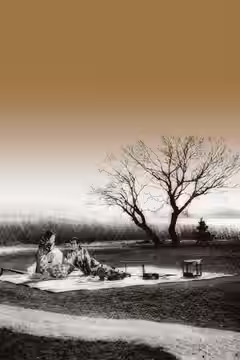
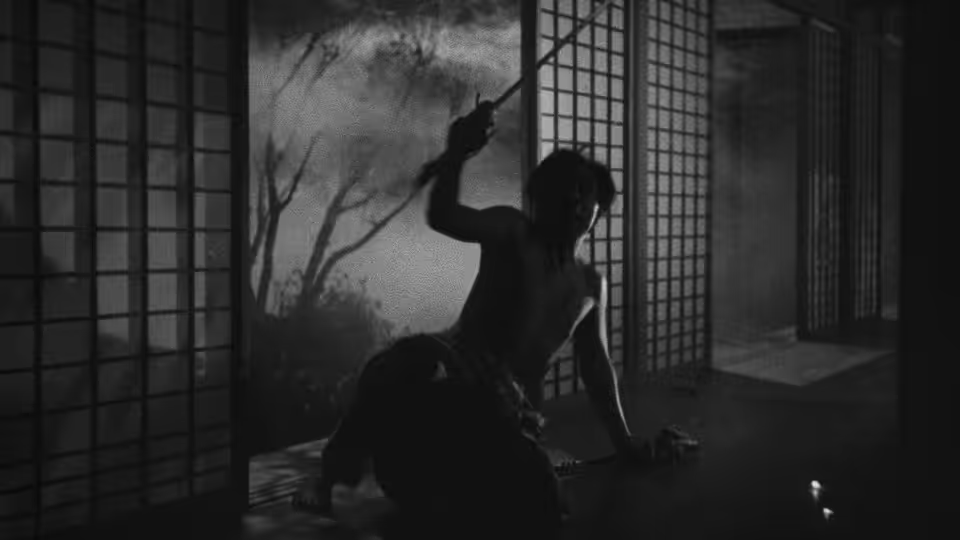
A silhouetted woman raises her arm inside a room of sliding screens
Film review

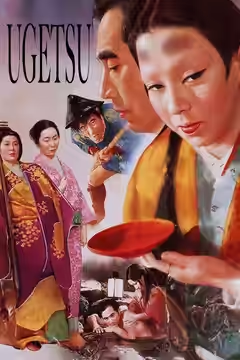
Ugetsu

1953 · Directed by Kenji Mizoguchi · 1h 36m

In a sentenceWe came for the supernatural and stayed to watch a woman sew

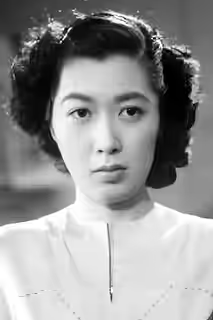
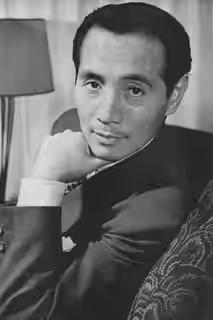
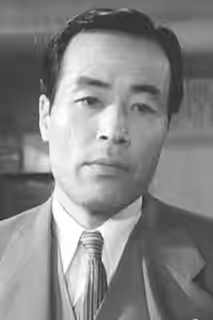
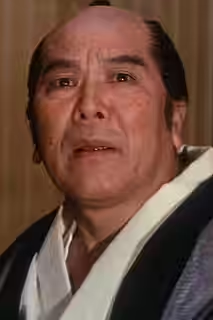
War forms the background to a story involving Genjurô (Masayuki Mori), Miyagi (Kinuyo Tanaka), Tôbei (Eitarō Ozawa) and Ohama (Mitsuko Mito). Lady Wakasa (Machiko Kyō) also figures in a drama that moves between ordinary experience and the supernatural. The focus remains on individual lives within the conflict, with domestic activity sharing the story with events that resist an everyday explanation. What appears real becomes difficult to separate from what lies beyond it. Across 96 minutes, warfare and supernatural encounters disturb the world these characters inhabit.

Plays from YouTube when you press play; nothing loads from them until then.

Fi1m review

Kenji Mizoguchi’s Ugetsu is patient, unsettling and warmly recommended, with images that give ordinary lives room to matter. Its solemnity occasionally slows the drama, but the quiet human detail makes the attention worthwhile.

Ugetsu is worth the attention its slow pace demands, and we recommend it warmly. Kenji Mizoguchi brings war and the supernatural into the same drama without supplying a reassuring boundary between them. We remain concerned with people even when we cannot be certain what sort of world they occupy. The careful staging occasionally becomes a little solemn, but the feeling within these composed images is strong enough to carry us through.

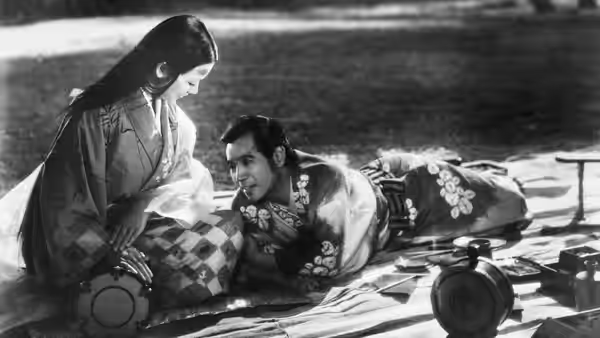
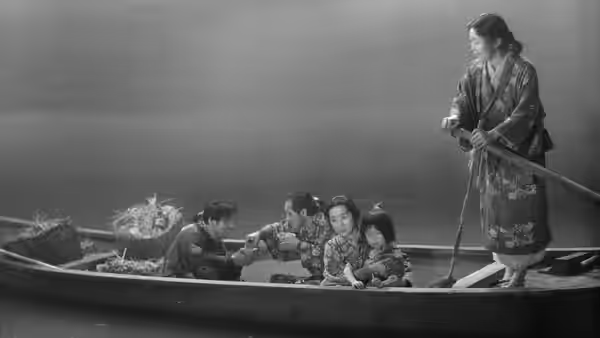
Kazuo Miyagawa’s cinematography gives those images movement as well as shape. The long takes let the eye explore a composition, and Kenji Mizoguchi’s fluid staging keeps finding reasons for that exploration to continue. We have time to notice the surroundings without losing our interest in the people within them. Mitsuzō Miyata’s editing is effective partly because it does not make every shift between the ordinary and the uncanny feel like a fresh start.

The acting keeps this formal care from becoming chilly. Masayuki Mori as Genjurô and Kinuyo Tanaka as Miyagi hold our attention without needing the editing to insist on every response. We are particularly taken with the warmth of Kinuyo Tanaka’s performance, which gives us someone to care about within the carefully arranged views. The performances reward the time we spend with them, even when the camera offers other things to admire.

A woman stitches as light enters a room. We were moved more than we expected by that small passage, because the film gives her work such unhurried attention. The movement of her hands is enough to hold the scene, and the light lets us notice it afresh. There is no need to explain what the image stands for. We are watching someone work in a film shadowed by war.

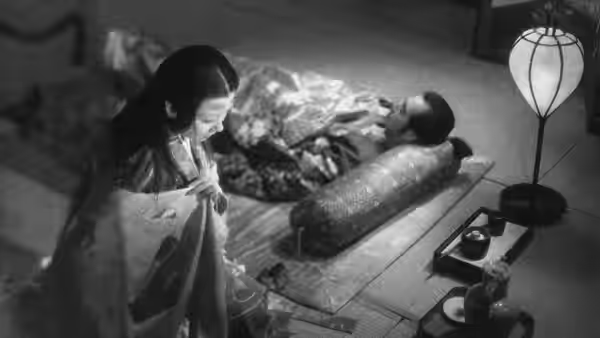
Masatsugu Hashimoto’s production design helps make the surroundings worth studying during those extended shots. A room has to sustain our attention when a director is prepared to stay with it, and the domestic space here does. The music, credited to Tamekichi Mochizuki, Ichirō Saitō and Fumio Hayasaka, helps sustain the uncertainty. We would still put the camera’s movement ahead of the score when accounting for the film’s hold on us.

The main reservation is how consistently the film asks for contemplation. Some long takes continue after we feel we have understood what the scene is doing, and the pace briefly becomes a burden. The humour helps, offering a welcome interruption to the gravity. We value that change of mood; without it, the film’s patience might have felt more like an obligation.

Among supernatural dramas, Ugetsu stands out for how little it needs to hurry us towards the next disturbance. Its shifts away from ordinary experience retain the human distress that makes the war material matter, so the fantasy never feels like an escape from it. At 96 minutes, there is room to look closely without surrendering the evening. We would give it a quiet sitting, without another screen competing for attention.
Critical consensus AI synthesised

81
Positive
6
Mixed
2
Negative
0

Most critics respond warmly to Ugetsu, with praise clustering around Mizoguchi’s direction, the images and the movement between ordinary life and the supernatural. Slant Magazine singles out the fluid staging and long takes for bringing the war narrative and supernatural symbolism together. The AV Club finds the subtle shifts between the real and supernatural unsettling and central to the film’s tragic force. Other praise reaches beyond atmosphere: the reviews also value the humour, carefully arranged compositions and attention to small, intimate actions.

The scores range from mixed to emphatically positive, with no negative assessments recorded. The reservations are harder to establish: the text behind both mixed scores is unavailable, as is one of the positive reviews. That limits what can be said about specific disagreements. The accessible reviews differ chiefly in emphasis, rather than offering a clear dispute over the film’s strengths or weaknesses.

Slant Magazine
5 April 2025 · ★★★★★ · Chuck Bowen
100

Bowen presents the film as a tragic, poetic, and deeply powerful masterpiece. He especially praises Mizoguchi’s fluid staging and long takes, which interweave the war narrative with supernatural symbolism.

Read the full review →
The AV Club
9 November 2005 · Scott Tobias
90*

Tobias regards Ugetsu as a devastating, powerfully tragic masterpiece. He singles out Mizoguchi’s subtle shifts between the real and supernatural for creating a destabilizing atmosphere.

Read the full review →
The Independent
7 February 1998 · HHHH · Liese Spencer
90*

The critic calls the film an elegant masterpiece and recommends it. They praise its exquisite images, poetic storytelling and robust humour.

Read the full review →
RogerEbert.com
78*

The URL identifies a RogerEbert.com Great Movies review of the 1953 film. The blocked page does not reveal the critic’s verdict or what the review singles out.

Read the full review →
Variety
31 December 1952 · Variety Staff
75*

The review finds the film absorbing and praises its rich visual style and coherent direction. It especially singles out the cinematography’s compositions, likening them to old Japanese prints.

Read the full review →
Time Out
· RM
66*

The page identifies this as a review of Mizoguchi’s best-known work, but the review text is unavailable. Its verdict and any specific praise or complaint cannot be determined from the accessible page.

Read the full review →

Straight answers AI written, from our review

Is Ugetsu worth watching?
Ugetsu is worth watching for its patient, unsettling treatment of war and the supernatural, and we score it 89 out of 100. We recommend it warmly to anyone willing to give its quiet domestic scenes as much attention as its uncanny encounters, though the solemnity and lingering long takes occasionally slow the drama.
How long is Ugetsu, and what is it rated?
Ugetsu runs 1h 36m. It is a fantasy and drama film.
Where can I watch Ugetsu in Colombia?
Ugetsu is not on any streaming or rental service in Colombia at the moment. It is available in 5 other countries; change your country at the top of the page to see where. Availability is checked daily.
How does Ugetsu compare to Orpheus?
Ugetsu is our stronger recommendation for human warmth, while Orpheus suits those drawn to inventive, unsettling imagery. Both enter the supernatural without explanatory signposts, but Ugetsu keeps ordinary lives and domestic work close to its mysteries; Orpheus makes an ordinary mirror feel unsafe, though its romance can seem remote.
What should I watch after Ugetsu?
After Ugetsu, try The Phantom Carriage (1921, Fi1m 84): For ghosts whose arrival forces the living to consider their behaviour. Then Orpheus (1950, Fi1m 82): For another passage into the supernatural that needs no explanatory signposts; and The Spirit of the Beehive (1973, Fi1m 87): For another patient film in which fear outlasts the fighting.

Cast

Awards

Academy Awards, 1956

Nominated
Best Costume Design, Black-and-White

Silver Lion, 1953

Won
Silver Lion

If you liked this, try…

  1. The Phantom Carriage (1921, Fi1m 84)For ghosts whose arrival forces the living to consider their behaviour.

  2. Orpheus (1950, Fi1m 82)For another passage into the supernatural that needs no explanatory signposts.

  3. Onibaba (1964) · not on Fi1m yetFor wartime desperation with a harsher temper and more physical terror.

  4. The Spirit of the Beehive (1973, Fi1m 87)For another patient film in which fear outlasts the fighting.

  5. Uncle Boonmee Who Can Recall His Past Lives (2010) · not on Fi1m yetFor a quieter encounter with spirits, where grief needs little explanation.