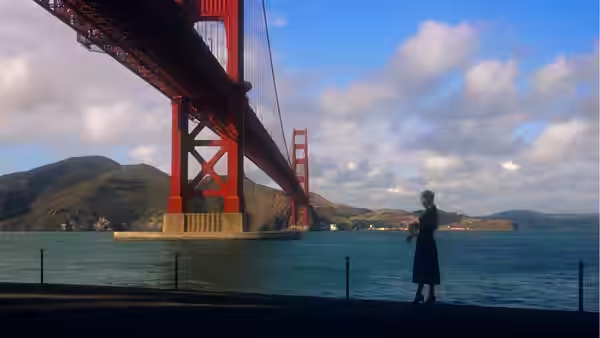
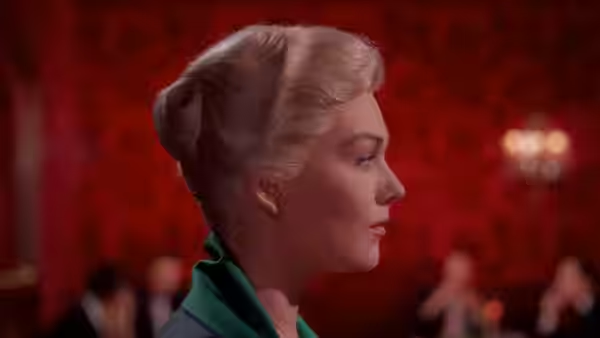
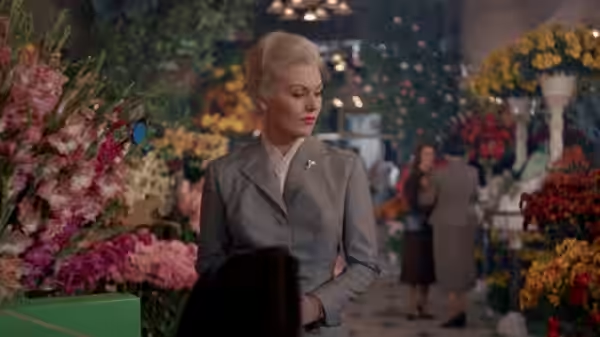
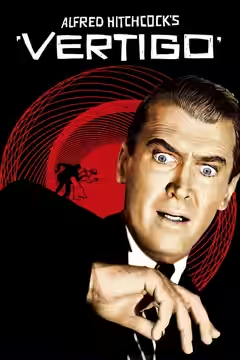
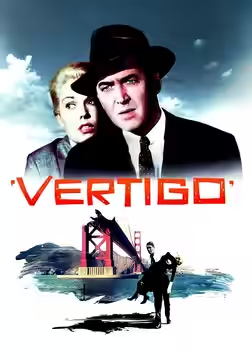
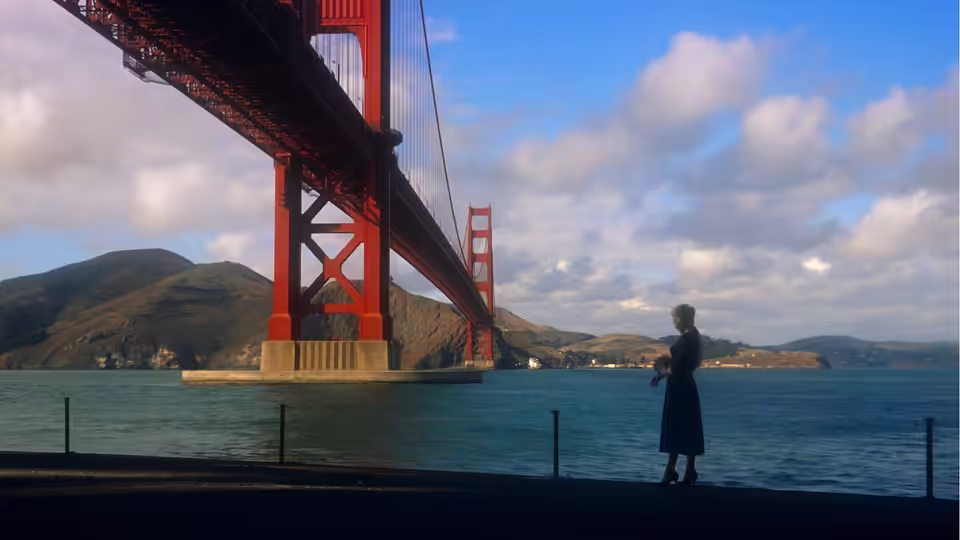
a woman in a dark coat standing by the water under a red bridge
Film review

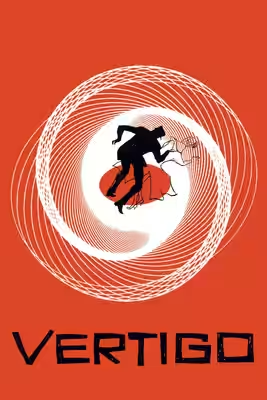
Vertigo

1958 · Directed by Alfred Hitchcock · 2h 08m

In a sentenceThe detective follows the woman; we begin to think someone ought to be following him

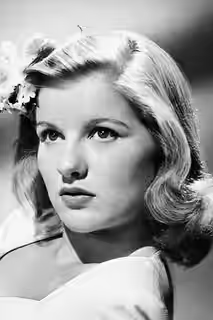
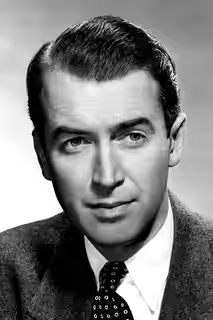
In San Francisco, detective John ‘Scottie’ Ferguson (James Stewart) shadows Madeleine Elster (Kim Novak), a woman who believes she is possessed by a spirit from the past. His task puts him in the position of watching her movements through the city, and his interest in her becomes an obsession. The mystery brings together his attempts to understand Madeleine’s behaviour and his growing fascination with her. Alfred Hitchcock directs, with Barbara Bel Geddes as Midge Wood and Tom Helmore as Gavin Elster.

Plays from YouTube when you press play; nothing loads from them until then.

Fi1m review

Hitchcock’s romance makes a detective’s fascination deeply uncomfortable, with James Stewart and Kim Novak giving it painful conviction. The mystery is far-fetched and some journeys drag, but we would not trade its patience for a brisker thriller.

Vertigo is an unnerving romance, and we would recommend it even to anyone who ordinarily avoids thrillers. Alfred Hitchcock makes the simple act of following a woman through San Francisco so absorbing that we can almost overlook how troubling it is. James Stewart’s detective, Scottie Ferguson, watches Kim Novak’s Madeleine Elster and becomes obsessed. The film asks us to spend time inside that obsession, with little of the comfortable distance that usually comes with watching a detective work.

Stewart gives Scottie enough ordinary human appeal to make that invitation difficult to refuse. His concentration becomes oppressive, though, and there is something disturbing about how much emotional weight he places upon a woman he is watching. We felt uncomfortable during the prolonged following sequences, because his interest starts to seem like an entitlement to her life. Stewart allows that discomfort to accumulate without making Scottie someone we can dismiss and stop thinking about.

Novak’s performance is just as important, and harder to discuss without giving things away. Madeleine must hold Scottie’s attention and ours, while remaining someone whose behaviour he cannot simply explain. Novak makes the uncertainty affecting: there is a person under all that scrutiny, even when the detective seems more interested in his idea of her. The film’s treatment of women can be uncomfortable, but her performance gives us good reason to question the man doing the looking.

Robert Burks’s photography gives San Francisco a quiet strangeness, with slow camera movements that encourage us to search the city alongside Scottie. The locations become absorbing in themselves, which matters when so much time is spent travelling between them. George Tomasini lets the driving sequences run long enough for us to share Scottie’s fixation. A few shorter journeys would make the first half tighter without diminishing its unease.

Bernard Herrmann’s score makes those stretches feel emotionally urgent, even when the investigation itself is moving slowly. The music is full of longing, and it makes Scottie’s absorption in Madeleine persuasive before we have much reason to trust it. Hitchcock is generous with the time given to looking and listening; the feeling can develop without a conversation arriving to explain it. We would not want the film hurried into the shape of a more efficient thriller.

The plot is another matter, and Alec Coppel and Samuel A. Taylor’s screenplay does ask for some indulgence. Taken simply as a mystery to be solved, it is too far-fetched to bear close inspection. Yet the implausibility troubles us less than it might, because the performances make the desire and distress convincing. What matters most is how readily Scottie’s longing can pass for something admirable, and how uneasy the film makes that assumption.

We would take this over a tidier mystery that left its detective unquestioned. Hitchcock lets romantic fascination become disturbing without making it seem inexplicable, which is more unsettling than a villain we know to distrust from the outset. There is enough recognisable longing in Scottie to make easy condemnation feel insufficient. Give it an evening when there is no need to hurry it along, and do not expect the romance to provide much comfort.
Critical consensus AI synthesised

81
Positive
15
Mixed
0
Negative
3

Most critics place Vertigo near the top of Hitchcock’s work, and the praise clusters in three places. James Stewart’s obsessed detective is singled out again and again, several reviews noting how far the part sits from his usual warmth; Kim Novak’s dual role is admired almost as often. The look of the film draws the rest: the San Francisco locations, the Technicolor, the recurring greens and Bernard Herrmann’s score, all of which recent reviews of the 4K restoration say benefit from a large screen.

The dissent is old rather than wide. Two of the three negative notices come from the 1958 release: The Guardian finds the second hour tests patience, and The New Yorker finds the plot far-fetched and the driving tiresome. Sight and Sound finds it slow and the story unable to sustain itself. Variety, positive overall, also calls the first half too long. Later critics note the same plot holes and the unlikeable hero, and forgive them.

Little White Lies
12 July 2018 · 5/5/5 · Lillian Crawford
100

The critic calls it a dizzying cinematic experience that restores its status as a picture to be obsessed with, thanks to the new 4K restoration highlighting its lavish visuals and Bernard Herrmann's score. They single out the sheer colour, cinematography, and audiovisual allure for praise while noting the plot's holes and the reprehensible hero.

Read the full review →
Radio Times
★★★★★ · Tom Hutchinson
100

The critic calls it one of the truly great later Hitchcocks, praising the hallucinatory quality, dreamlike San Francisco locations, and standout dual performance by Kim Novak alongside James Stewart's complex characterisation.

Read the full review →
The Times
13 July 2018 · ★★★★★ · Kevin Maher
100

The critic reflects on the film's enduring status as a Hitchcock masterpiece about obsession and identity. He highlights its perverse themes and quotes other directors' praise for its poetic qualities.

Read the full review →
Time Out
22 September 2014 · ★★★★★ · Geoff Andrew
100

The critic describes it as a brilliant but despicably cynical view of human obsession and manipulation in love. They praise James Stewart's performance as the neurotic detective and note that Hitchcock is at the peak of his powers, with Kim Novak a revelation, though the bleakness is hard to swallow.

Read the full review →
Empire
1 January 2000 · Jake Hamilton
95*

The critic calls Vertigo Hitchcock's most disturbing masterpiece and one of the finest American movies ever made. They single out the superb performances from Stewart and Novak along with the director's signature techniques and obsessions.

Read the full review →
Los Angeles Times
26 September 2012 · Kenneth Turan
90*

The film offers the most elegantly spooky vision of an American city ever captured on screen, particularly in its 70mm presentation of San Francisco. Hitchcock uses major stars to craft a dark and deeply personal story.

Read the full review →

Straight answers AI written, from our review

Is Vertigo worth watching?
Vertigo is worth watching, and we scored it 92, recommending it even to anyone who ordinarily avoids thrillers. James Stewart and Kim Novak make a detective's fascination with the woman he follows both persuasive and disturbing. The mystery is far-fetched and some of the driving sequences run long, so give it an evening when you are not in a hurry.
How long is Vertigo, and what is it rated?
Vertigo runs 2h 08m. It is a mystery and romance film.
Where can I watch Vertigo in Romania?
Vertigo is available to rent from Amazon Prime Video from lei 7.99. Availability is checked daily; the links above go straight to each service.
How violent or frightening is Vertigo, and is it suitable for children?
Vertigo carries a PG certificate and is unsettling rather than violent or frightening. Its discomfort comes from watching a detective's interest in a woman harden into obsession, which children are unlikely to find alarming and unlikely to find interesting either. It suits teenagers and adults with patience for a slow, adult romance.
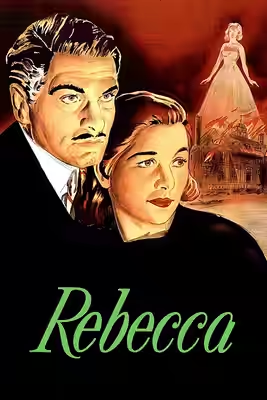
How does Vertigo compare to Rebecca?
Vertigo and Rebecca are both Hitchcock romances troubled by a woman who cannot be forgotten, but they look in opposite directions. Rebecca stays with Joan Fontaine's insecurity as the one being judged; Vertigo puts us inside the man doing the looking, and asks us to distrust him. We rate Vertigo the higher of the two, though Rebecca is the easier evening.
Is Vertigo based on a true story or a book?
Vertigo is based on a novel by Pierre Boileau and Thomas Narcejac, not on a true story. The screenplay by Alec Coppel and Samuel A. Taylor moves the action to San Francisco and builds a plot that asks for some indulgence as a mystery. Knowing the book is not necessary; the film's hold comes from the performances and Hitchcock's patience rather than the puzzle.
What should I watch after Vertigo?
After Vertigo, try Rebecca (1940, Fi1m 85): For another romance troubled by a woman who cannot be forgotten. Then The Double Life of Véronique (1991, Fi1m 86): For the mysterious pull of resemblance, carried by a watchful central performance; and In the Mood for Love (2000, Fi1m 91): For longing made palpable through colour, music and the effort of restraint.

Cast

Awards

Academy Awards, 1959

Nominated
Best Production Design
Nominated
Best Sound

If you liked this, try…

  1. Rebecca (1940, Fi1m 85)For another romance troubled by a woman who cannot be forgotten.

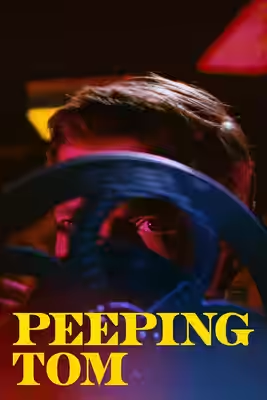
  2. Peeping Tom (1960) · not reviewed yetAnother disturbing examination of looking, with sympathy where we least expect it.

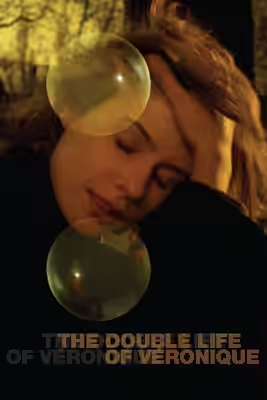
  3. The Double Life of Véronique (1991, Fi1m 86)For the mysterious pull of resemblance, carried by a watchful central performance.

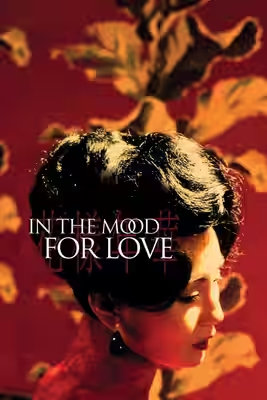
  4. In the Mood for Love (2000, Fi1m 91)For longing made palpable through colour, music and the effort of restraint.

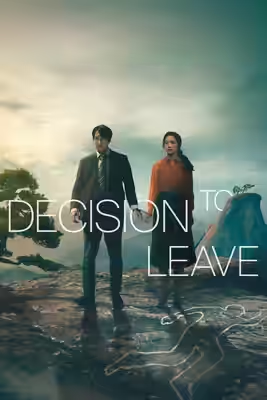
  5. Decision to Leave (2022, Fi1m 82)A detective’s fascination compromises his work in another carefully paced, troubling romance.

Free account

Know what to watch tonight

Two lists that know where things are streaming, collections you can share, your own score beside ours, and Discover that remembers what you have seen.

  • Want to see, sorted by what is streaming now
  • Seen, with your score out of ten
  • No adverts, ever
Vertigo (1958) review: A disturbing romance worth the patience (Romania) | Fi1m