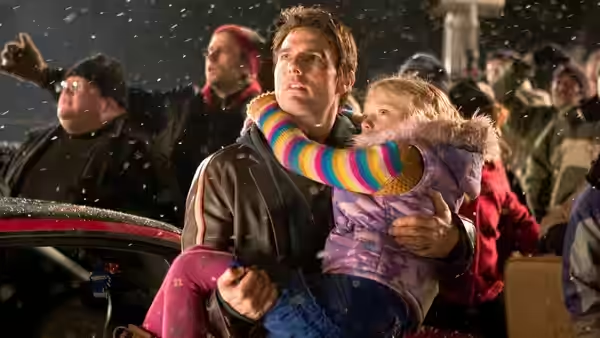
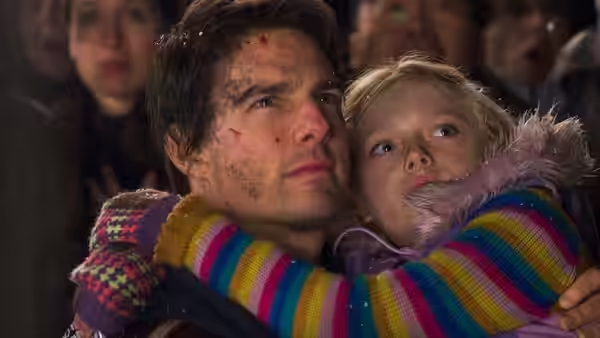
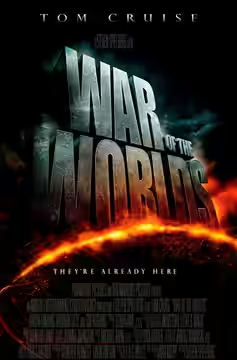
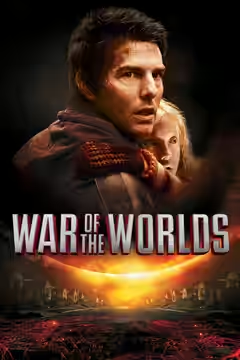
Spielberg films the invasion from the pavement, at a running man’s eye level, and for an hour it is as frightening as anything he has made. The second half narrows to a cellar and the last ten minutes lose their nerve.
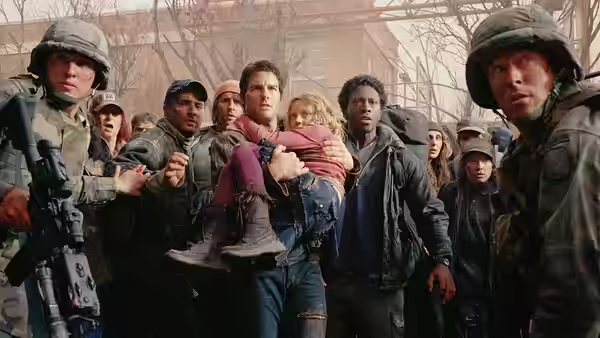
Steven Spielberg takes H. G. Wells’s novel out of Victorian Surrey and drops it on New Jersey, and he makes one decision that governs everything else: we never leave Ray (Tom Cruise). There are no generals, no scientists, no maps with arrows on them. What Ray cannot see, we cannot see, and the screenplay by David Koepp and Josh Friedman keeps him at the level of a man trying to get two children from one place to another. For its first hour it is as frightening as anything Spielberg has made.
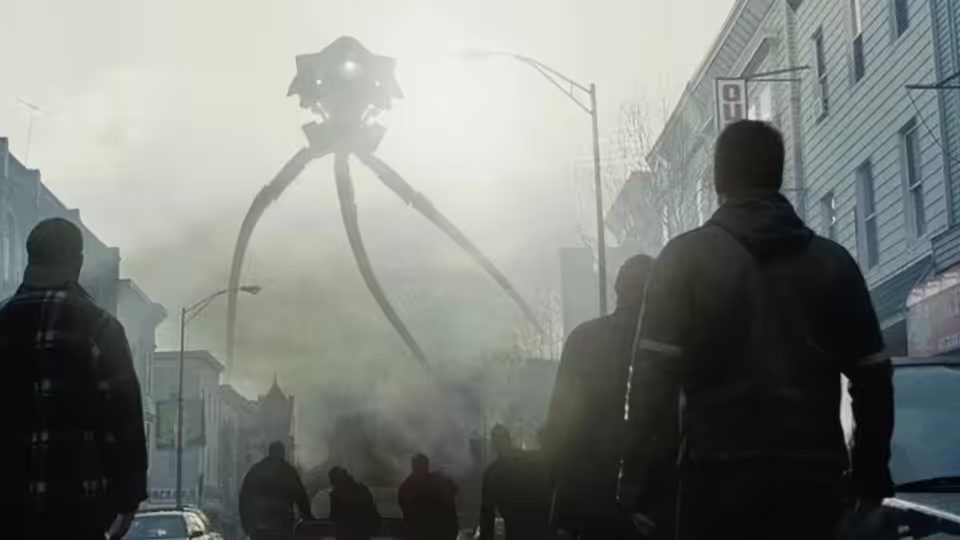
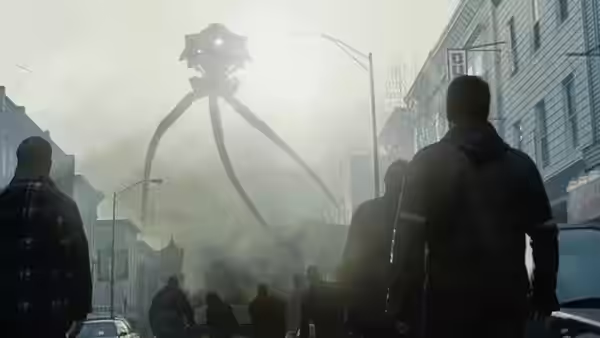
The machine arrives about twenty minutes in and he makes us wait for it. Lightning hits the same crossroads again and again, and then the road buckles and a tripod climbs out of the ground on legs the height of a tower block. Janusz Kamiński shoots it from where Ray is standing, with the colour drained until the street looks like a photograph left in the sun. Then the beam. People are there, and then they are a puff of grey and a shirt drifting down to the tarmac. We were frightened, properly, and the reason is that Michael Kahn does not cut away: the shot holds long enough for Ray to understand what the dust on his face is.
There is a sequence inside the stolen van, the camera moving around the three of them through the windows as they argue, that runs on without a visible cut and tells us more about this family than a page of dialogue would. Later an airliner lies across a suburban street, and Rick Carter has built the wreck so that Ray walks through the fuselage as if through a neighbour’s kitchen. Joanna Johnston puts Cruise in one grey work jacket and leaves him in it; by the end it looks dug up.
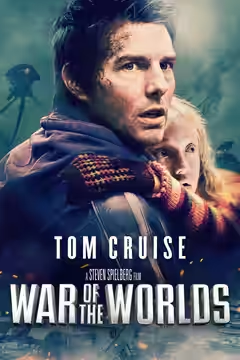
Cruise is better here than the poster suggests. Ray is a poor father who is good at exactly one thing, moving fast, and the film does not pretend he learns much else. Dakota Fanning screams a great deal, and the script has the sense to make Ray irritated by it rather than moved. Justin Chatwin’s Robbie wants to go and fight, which is the film’s only glance at the world beyond this car, and it is settled in one roadside argument that is better written than most of the speeches in the genre.
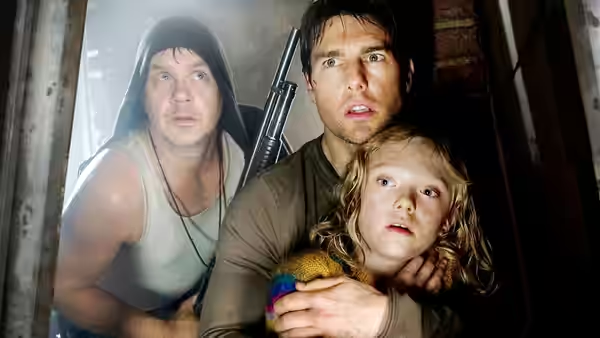
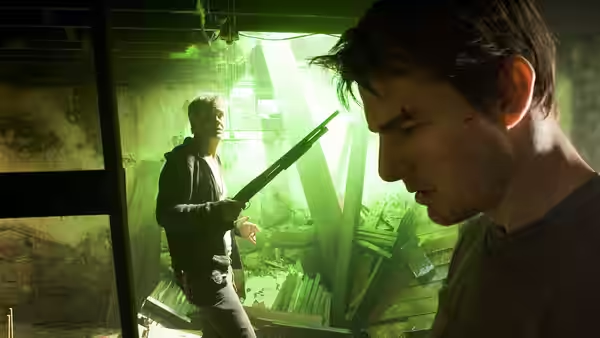
The second half shrinks. Ray and Rachel end up in a farmhouse cellar with Harlan Ogilvy (Tim Robbins), and Spielberg turns the picture into a haunted house film. Robbins is unnerving, but it goes on, and a film that had been about a city dying is now about a lantern and a door. The invaders, seen close to, are a mistake, less frightening than their shadow was. John Williams holds back for most of the running time, low strings and drums and no tune, and it suits the picture; when a melody at last arrives near the close it is telling us how to feel about something the script has not earned.
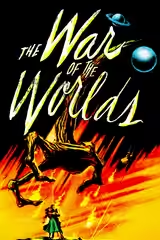
Which brings us to the ending, and we will not describe it. It takes about ten minutes, resolves two hours of chaos with a tidiness the previous hundred did not prepare us for, and hands back some of the bleakness the film had been brave enough to hold. Gene Barry and Ann Robinson, the leads of the 1953 film, appear briefly as the grandparents, which is a kind thing to have done. Most of the reviews hold the finish against the whole picture; we think it costs a good deal without sinking what came before.
Set against Spielberg’s own work, this is closer to Jaws than to Close Encounters of the Third Kind: the visitors are not here to talk, and nobody pauses to ask what they want. A film about an invasion that never wonders why it happened is missing something. It is also why the first hour works. Watch it with the lights off and the sound up, and if there are children in the house, know that the 12A is doing a great deal of work. It runs 117 minutes.