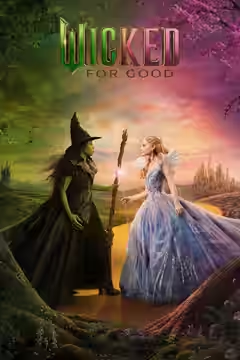
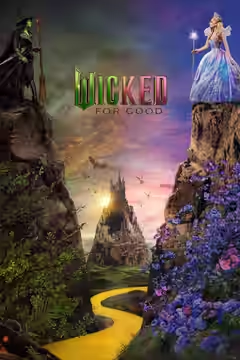
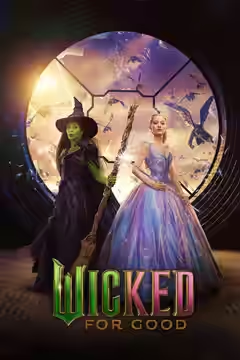
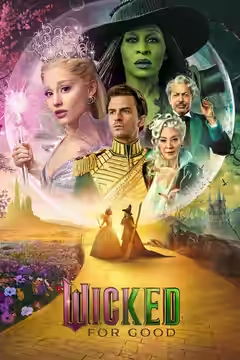
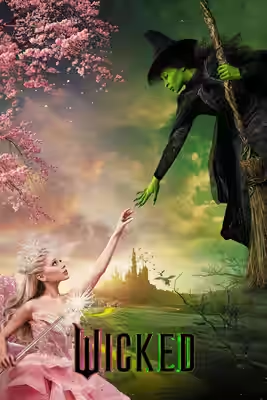
Jon M. Chu’s second half of Wicked gives Cynthia Erivo and Ariana Grande the songs they deserve and a plot that keeps interrupting them. Handsomely dressed, over-long and dimmer than the first, it is worth the evening for the two of them.
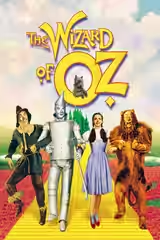
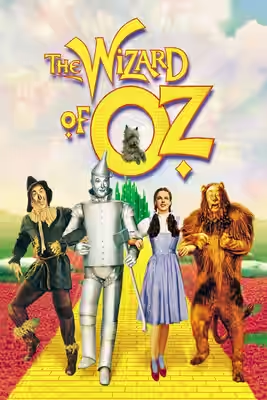
Jon M. Chu’s Wicked (2024) stopped at the interval, with Elphaba in the air. Wicked: For Good is the second half of the stage show, and anyone who has seen it will tell you it is the weaker half: the songs are sadder, the plot has to hurry, and it exists to hand over to The Wizard of Oz (1939) with every hat and slipper in place. Chu and his screenwriters, Winnie Holzman and Dana Fox, have two jobs: finish the story of two friends, and join it to the older film. They manage the first. The second keeps interrupting.
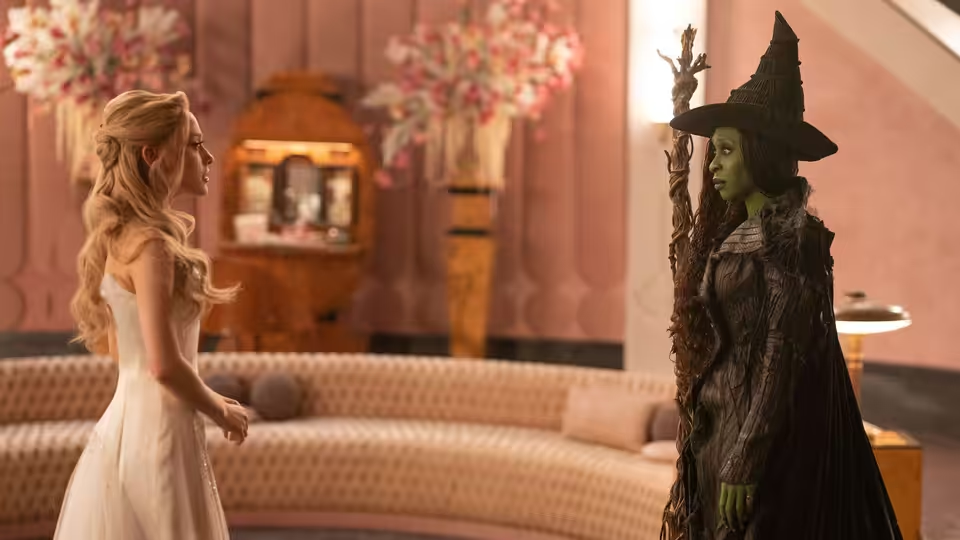
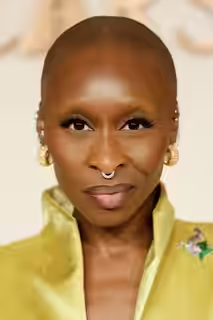
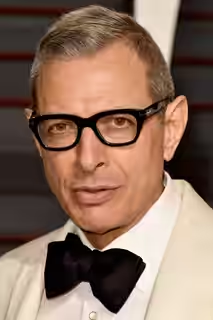
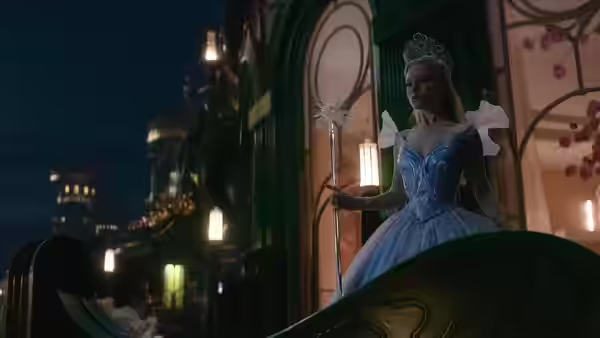
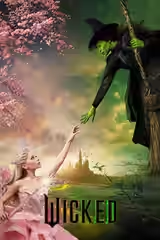
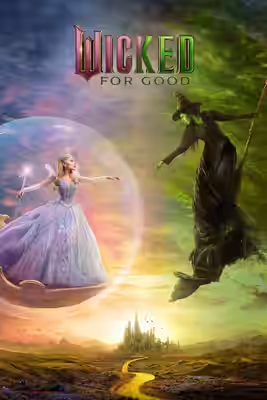
Elphaba (Cynthia Erivo) is now the Wicked Witch of the West, hiding in the forest and freeing whatever caged animals she can reach. Glinda (Ariana Grande) has taken the job of being adored, floating over the Emerald City in a bubble and reading what the Wizard (Jeff Goldblum) and Madame Morrible (Michelle Yeoh) have written for her. Fiyero (Jonathan Bailey) is engaged to Glinda and looking past her. In Munchkinland, Elphaba’s sister Nessarose (Marissa Bode) governs, with Boq (Ethan Slater) at her side.
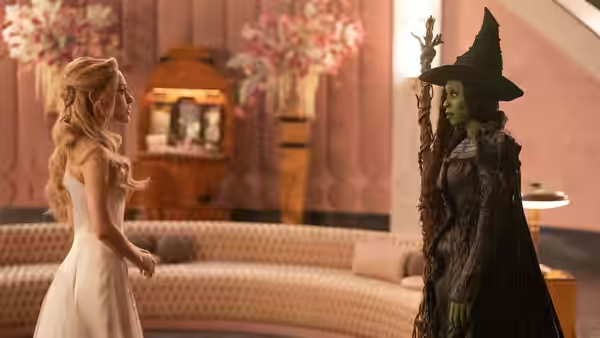
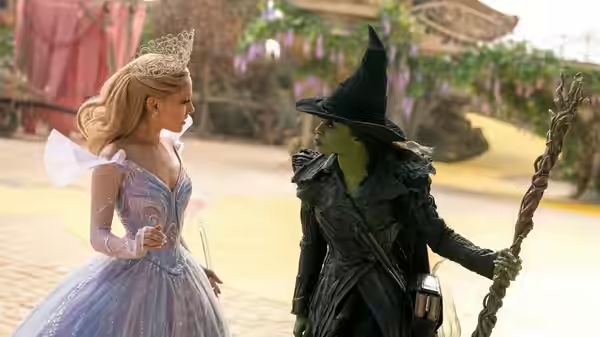
Erivo and Grande are the reason to go. Erivo is angry for most of the film and sings as if it were costing her something, with a hardness in the lower register that was not there before. Grande, who did the comedy in the first film, does it again and then lets it drop; she has more to do this time, including a song of her own, and plays a woman noticing she is being used. The closing duet moved us more than we expected. Chu keeps the camera close on two faces, cuts away from neither, and lets the number finish. After two hours of fireworks it is the one scene that trusts its actors to be enough, and they are.
Paul Tazewell dresses them so you could follow the story with the sound off: Glinda in paler and paler pinks, layered like spun sugar, Elphaba in a black that has begun to fray at the hem. Nathan Crowley’s Emerald City is polished green glass and gold rails, and his Munchkinland is all crooked timber. Alice Brooks’s photography is a problem. The first film was flooded with colour; this one lives in browns and greys, which suits the story, but the forest is plainly a stage and the skies have the flat look of something added afterwards. Twice we noticed the join when we should have been watching the face.
The trouble is everything between the songs. Stephen Schwartz’s tunes are reprised and hummed until they wear thin, and John Powell’s underscore runs the same melodies beneath the dialogue, so we hear the numbers before anyone sings them. The politics are laid out with a heavy hand: Morrible and the Wizard print posters, hold rallies and invent an enemy, and the film says what this means, then has a character say it again. Myron Kerstein cuts the second hour fast, but fast is not the same as urgent. In the middle stretch, when the film is explaining how the familiar figures of Oz came to be, we were bored, and then irritated at being bored by something so expensive.
Goldblum does the Wizard as a salesman who half believes his own pitch, and the film lightens whenever he is in it. Yeoh glides and is frightening, though the script gives Morrible one note and asks her to hold it. Bailey keeps his charm and loses his footing in the second half through no fault of his own; Bode’s Nessarose is handed the story’s hardest turn and given four minutes to make it. Colman Domingo voices the Cowardly Lion in a cameo.
The stage show has always had this problem: the interval falls after its best song, and what follows is housekeeping. Chu has made the housekeeping expensive and sometimes beautiful, but at 137 minutes he has given it room to show. See it if you saw the first film; you will want to know how it ends, and the last ten minutes pay off. Bring the person who cried last time. They will cry again, after a spell of checking the clock.