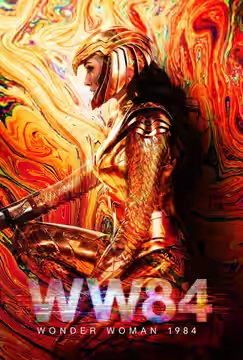
Gal Gadot and Chris Pine give this overlong superhero sequel some welcome warmth. Patty Jenkins’s belief in kindness survives the muddle, but the crowded plot and uneven action make it difficult to recommend.
Wonder Woman 1984 wants its superhero to make kindness seem exciting, and we are happy to give that a chance. Patty Jenkins allows Diana Prince to be generous, vulnerable and pleased to help, but surrounds her with a story that cannot stop adding complications. The result is likeable in patches, too muddled and too long to recommend without substantial reservations. Its 151 minutes leave ample room for competing subplots, several of which never become as interesting as the people playing them.
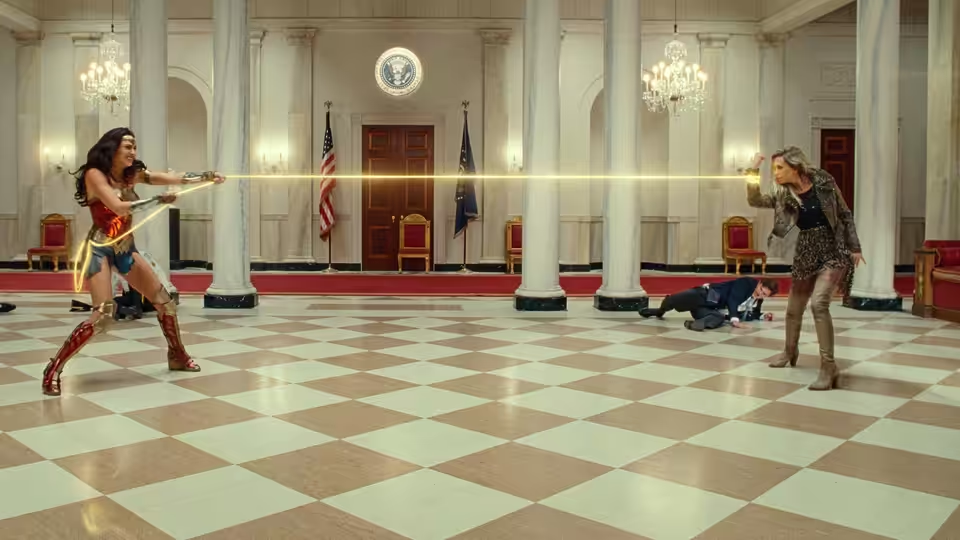
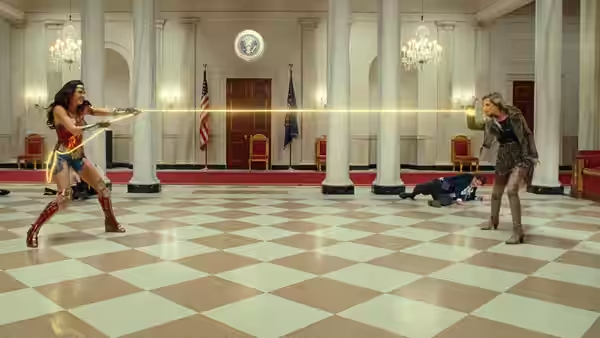
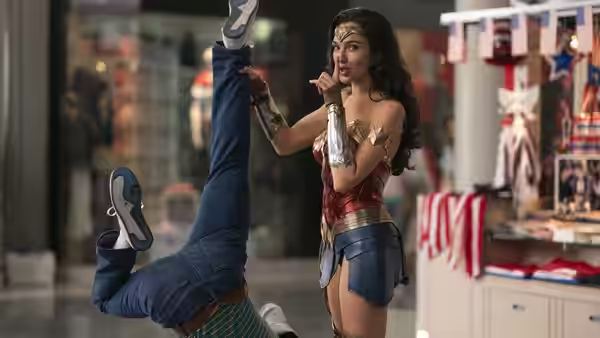
The early action shows why this could have worked. We smiled at Diana’s lasso work, because it gives her something more inventive to do than trade punches. Matthew Jensen’s colourful cinematography suits that buoyancy, while Aline Bonetto’s production design gives the shopping-centre action an everyday setting that welcomes a little disruption. These passages make helping people look enjoyable. The film works better with an immediate physical problem we can follow.
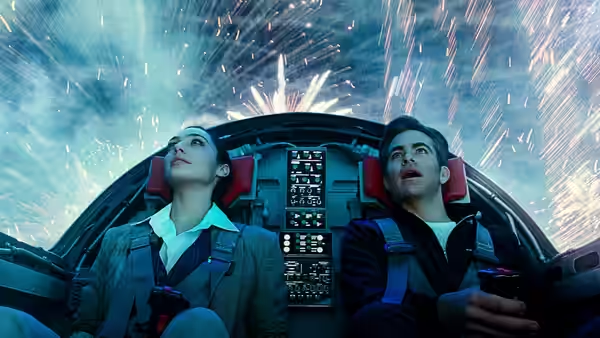
Gal Gadot is most persuasive when Diana is allowed to want something for herself. Her scenes with Chris Pine have an ease that the busier stretches sorely lack, and their affection gives us a reason to care without requiring another explanation. Chris Pine makes Steve Trevor engaging enough that spending time with him feels like a reasonable use of an adventure film. Kristen Wiig, meanwhile, lets Barbara Minerva’s vulnerability remain visible through the comedy, giving her awkwardness some weight rather than merely asking us to laugh at it.
That attention to people makes the screenplay’s shortcomings more frustrating. Patty Jenkins, Geoff Johns and David Callaham give Diana, Barbara and Maxwell Lord competing demands on our attention, without making their crowded story sufficiently clear. Pedro Pascal supplies exuberance and seems willing to risk looking ridiculous, which is useful in a film this earnest. He is entertaining from moment to moment, but Maxwell Lord needs more development than the writing gives him. Barbara also becomes less interesting than Kristen Wiig’s performance initially promises.
Richard Pearson’s editing struggles to find a satisfying rhythm among those strands. Too often, we are waiting for the film to decide which character deserves our attention, and the pauses between its pleasures become conspicuous. Hans Zimmer’s score pushes for excitement when the story has barely established why the next confrontation matters. As the spectacle grows, the action becomes harder to read, and the earlier pleasure of watching Diana tackle a clear physical problem starts to disappear.
Diana’s generosity remains a reason to stay. The interest in forgiveness, friendship and personal responsibility gives her something worth standing for, and Gal Gadot makes that decency credible. But even a fantastical adventure needs us to understand what its characters are trying to achieve from scene to scene. Against that basic standard of superhero storytelling, the film’s complications are a hindrance, however appealing its intentions. Several of the competing stories needed to be shorter.
This is a difficult choice for an evening when nobody particularly wants to negotiate the viewing. Those already attached to Diana may find Gal Gadot reason enough to accept the digressions, and the romantic scenes offer their own compensation. We would hesitate to choose it for someone mainly seeking brisk action. Affection for these characters will have to do some of the work.