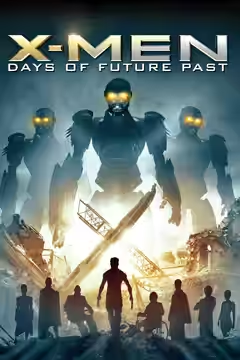
Bryan Singer’s crowded superhero film stays entertaining because its actors make the arguments matter. The character history can be cumbersome, but the playful action gives the solemn business of saving the future a welcome lift.
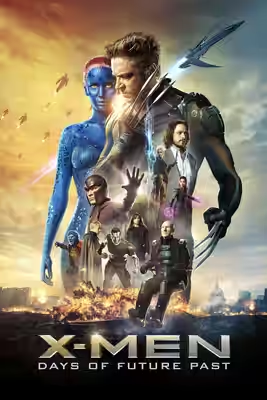
Bryan Singer’s X-Men: Days of Future Past is good superhero entertainment, sustained by its actors when the time-travelling business gets cumbersome. Its premise gives a crowded cast a shared task: save the future by altering the past. Simon Kinberg’s screenplay makes that easier to care about than it might sound. We stay interested because the people doing the arguing seem worth listening to, even when the explanations ask more of our patience.
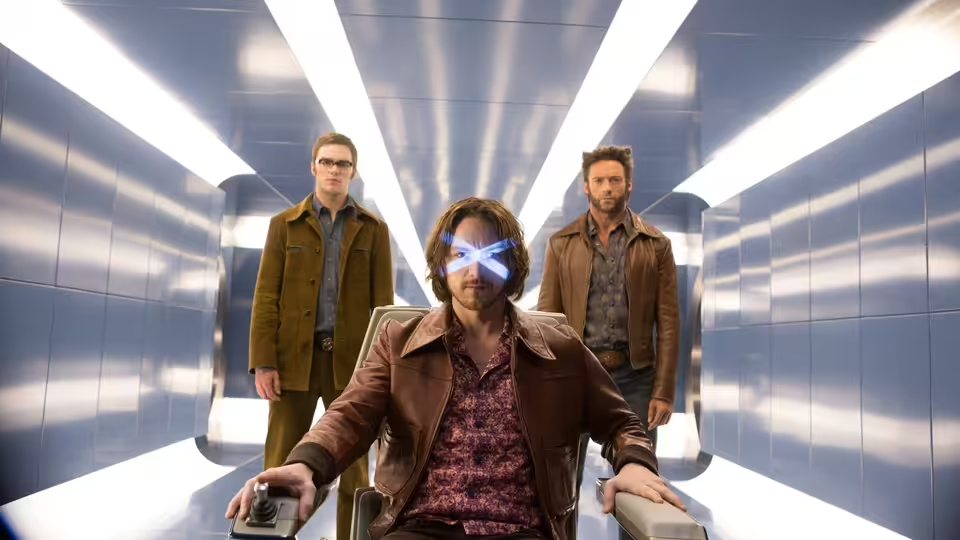
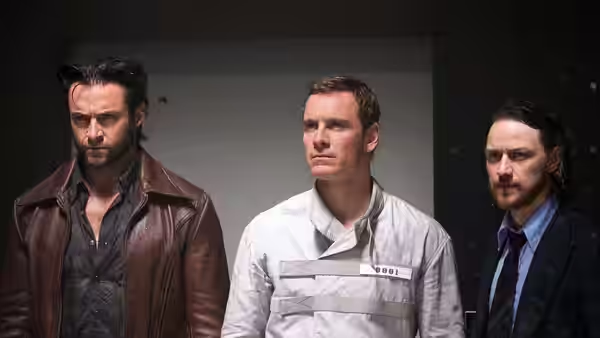
James McAvoy gives Charles Xavier the emotional weight that keeps the elaborate plotting from becoming an exercise. He sounds like someone for whom taking charge is difficult, and that makes his decisions worth attending to. Michael Fassbender gives Erik Lehnsherr enough conviction to make him difficult to dismiss, even when agreement looks unwise. Their exchanges have a tension that the larger action sometimes lacks, because both actors can make listening to the other person seem like hard work.
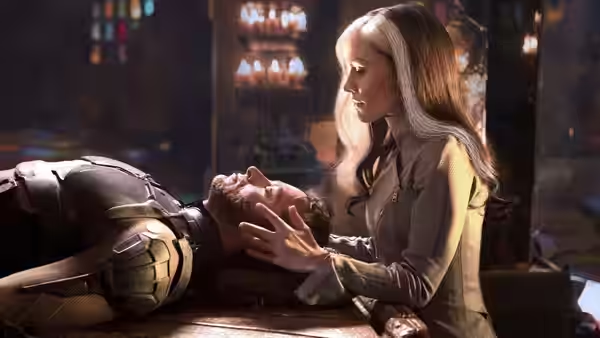
Hugh Jackman is an assured presence as Logan / Wolverine, helping to steady a film full of competing personalities. Jennifer Lawrence gives Raven / Mystique an urgency that the writing does not consistently support with enough attention to her thinking. Peter Dinklage is effective as Dr. Bolivar Trask, although the film lacks an opposing presence as compelling as its central pair. The cast is strong enough to make the imbalance frustrating: we keep noticing people who deserve more time.
The Pentagon sequence loosens the film up. Quicksilver’s slow-motion action gives us time to enjoy the joke inside the spectacle. We laughed with relief. Watching someone take pleasure in having a superpower makes a welcome change from watching people explain its burdens, and the sequence knows when to move on. Its timing is precise without making the whole thing feel overly rehearsed.
Newton Thomas Sigel’s cinematography lets us read the slowed action clearly, giving the joke enough space to register without making it feel laboured. John Myhre’s production design gives the Pentagon a suitably officious air, which makes the irreverence funnier. Both contributions work best when there is a clear physical problem for the characters to solve. The more crowded stretches are less distinctive to look at, even when the cutting keeps them understandable.
John Ottman, editing as well as composing, keeps the crowded story moving with considerable economy. The shifts between timelines are easier to follow than the accumulated character histories, although the bleak future passages do not always maintain their urgency. His score is less persuasive when it presses for grandeur; the performances have already supplied enough feeling. A quieter cue would sometimes leave more room for the actors, particularly when the dialogue is already carrying considerable importance.
By the standards of superhero ensemble films, this is unusually willing to let conversation carry a scene. It does not give everyone enough room, and newcomers may reasonably wonder why certain faces are expected to mean so much. But its central performances reward the necessary patience, while the humour keeps the business of rescuing the future from becoming a chore. See it for the performances, but do not expect a patient introduction to everybody.