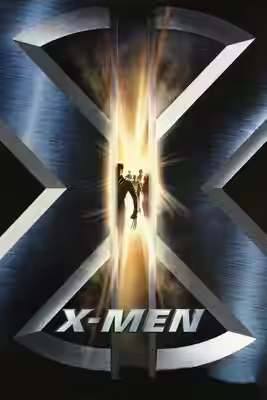
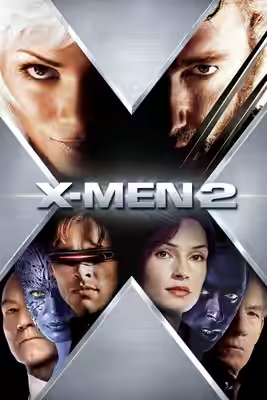
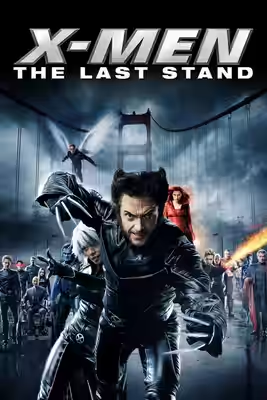
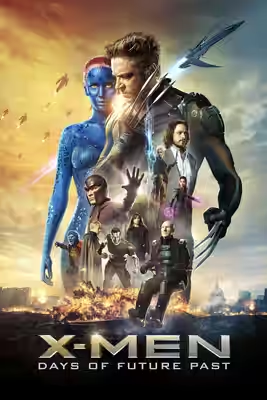
Bryan Singer’s uneven superhero film is worth the trouble for Hugh Jackman. Wolverine’s bond with Rogue gives it feeling, but a crowded story leaves much of the cast waiting for something to do.
Bryan Singer’s X-Men is a decent superhero film with a crowded story and several actors who deserve more room. It earns an evening if the genre appeals, chiefly because Hugh Jackman gives Wolverine enough personality to make us want to follow him. David Hayter’s screenplay has a great many people to establish, and too often establishing them is all it manages. At 104 minutes, the film moves briskly, but it leaves us wishing that fewer characters had been invited.
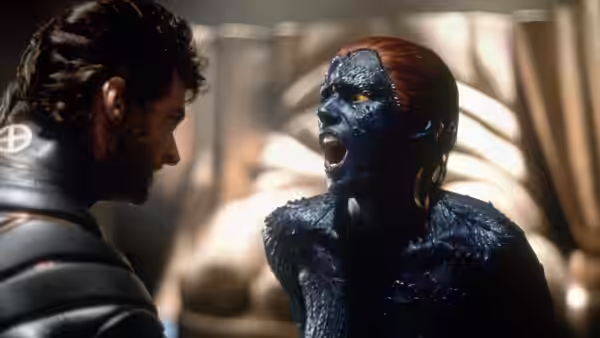
Jackman’s intensity makes Wolverine interesting even when the story is busy elsewhere. He brings irritation as well as conviction, and the humour allows him to be difficult without becoming tiresome. We were moved by Wolverine’s bond with Rogue: Anna Paquin gives his performance someone to respond to, and their connection makes the dangers feel less anonymous. Singer allows these two enough attention for us to care about them, a courtesy the rest of the cast receives unevenly.
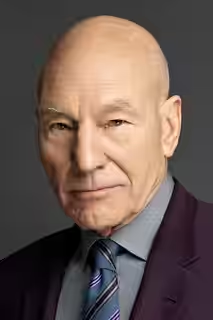
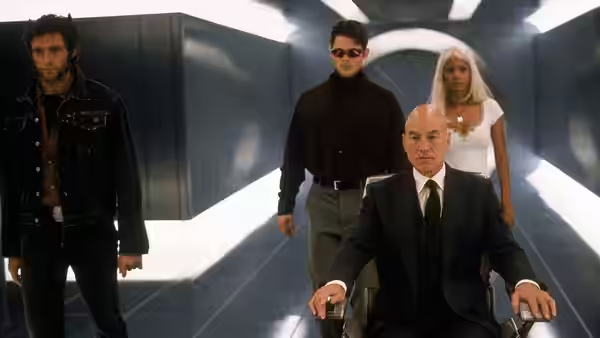
Patrick Stewart’s Xavier and Ian McKellen’s Magneto help make the film’s seriousness bearable. They give the material authority without suggesting that we ought to be grateful for it, and McKellen lets us understand the attraction of a character who could have been a routine antagonist. His performance leaves room for sympathy, which makes him worth listening to. Stewart is a steady presence, although the pleasure of watching these actors can disguise how much work they are doing for the writing.
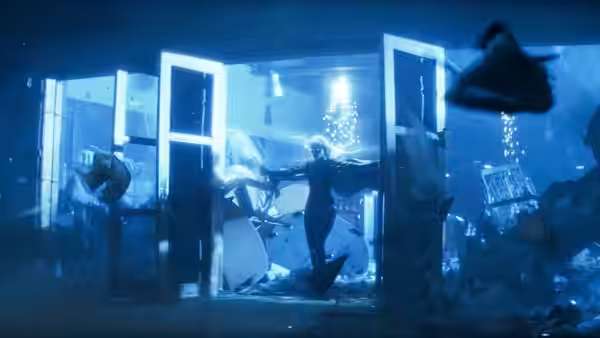
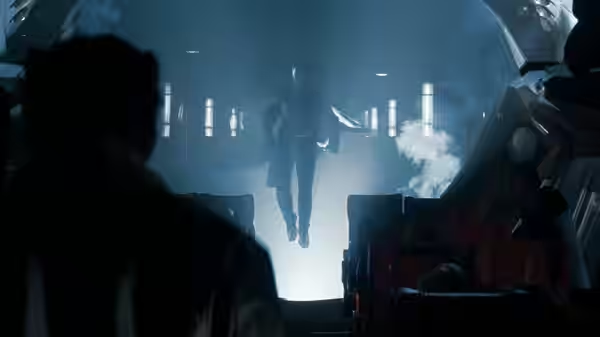
Newton Thomas Sigel’s cinematography is effective at holding our attention on the actors; the action makes a less consistent impression. The effects are often persuasive, but they do not guarantee excitement when the people involved have barely registered. John Myhre’s production design gives the film a convincing physical setting, though few of its spaces stay with us as clearly as Jackman’s presence does. The images support Singer’s serious approach without providing much extra pleasure when the story begins to hurry.
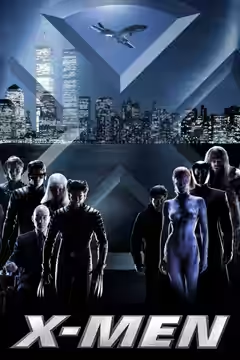
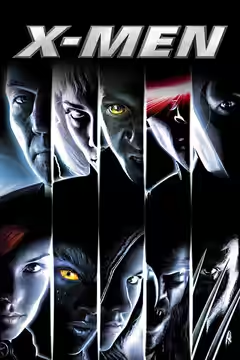
Famke Janssen’s Jean Grey, James Marsden’s Cyclops and Halle Berry’s Storm are the clearest casualties of that hurry. All three need more than the screenplay finds for them, particularly when the film asks us to accept them as an ensemble worth investing in. We wanted more time with these characters before the action required our concern. Jackman is given enough opportunity to seem contradictory and human, which makes the thinness of the surrounding roles harder to overlook.
Editors Kevin Stitt, John Wright and Steven Rosenblum keep things moving, but speed cannot solve the problem of fitting this many people into one story. The film can feel as though it is getting through introductions rather than developing relationships. Michael Kamen’s music lends the action urgency, though it does little to distinguish passages that are already struggling to hold our interest. There are effective superhero set-pieces here, separated by stretches in which the film’s abundance of characters becomes tiring.
A superhero ensemble ought to make us interested in more than its most forceful member. X-Men manages that with Rogue, Xavier and Magneto, then struggles to extend the courtesy much further. Too much still feels like preparation for a fuller film, and a newcomer should not have to supply enthusiasm in advance. See it for Jackman, provided you can forgive how little attention several of his colleagues receive.