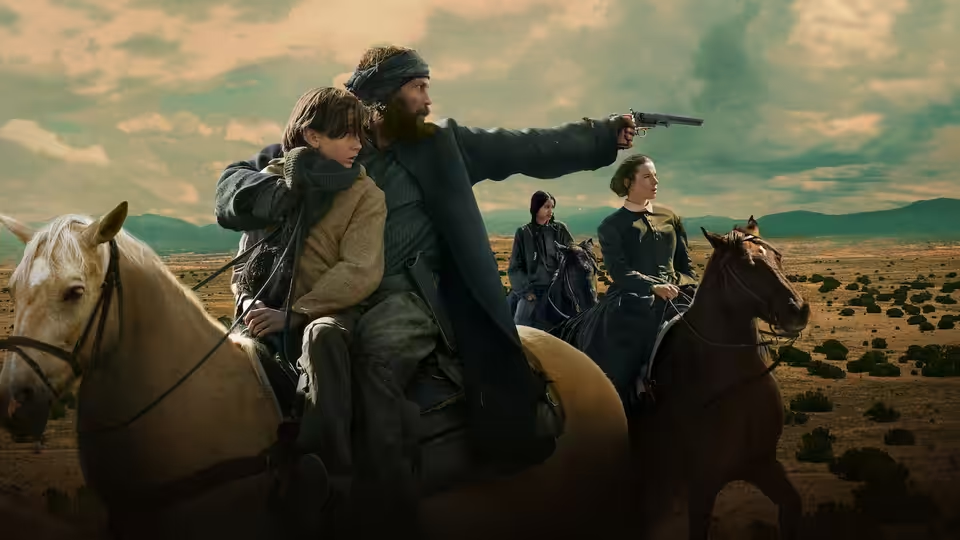
Peter Berg’s Western has fierce action and a fine performance from Betty Gilpin. But six episodes of relentless violence wear it down, while too many characters are given little to do beyond suffer.
Peter Berg’s six-part Western American Primeval makes a forceful case for fearing the frontier, then keeps making it long after we have understood. It is a mixed series, gripping in stretches but too repetitive to recommend. Creator and writer Mark L. Smith follows several lives through the violence of the American West, trying to give each ordeal weight. But spreading suffering across an ensemble does not automatically give the people within it more depth.
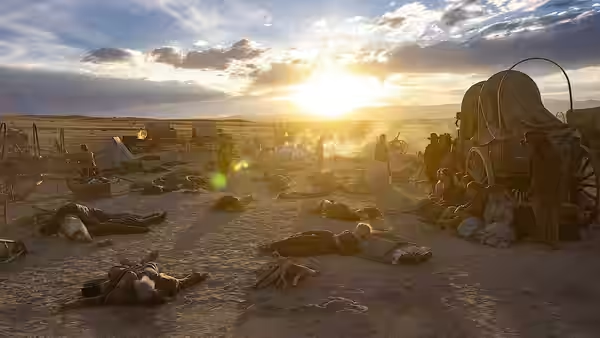
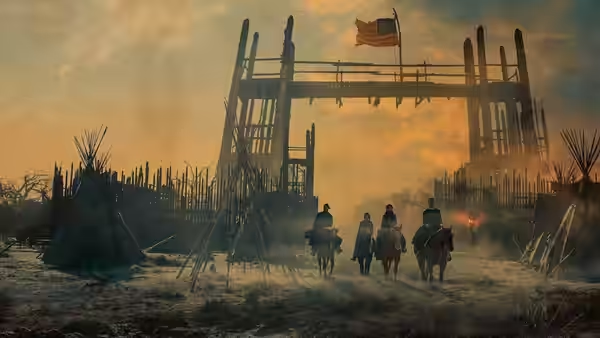
The opening violence is hard to dismiss. Peter Berg stages the Mountain Meadows Massacre as sustained chaos, and Jacques Jouffret’s location photography gives the attack a convincing physical scale. We were horrified by its relentlessness; there is little relief from the assault. Renée Reâd’s production design helps the setting feel inhabited, while the surrounding country remains imposing. The problem comes when the series keeps returning to the same degree of distress.
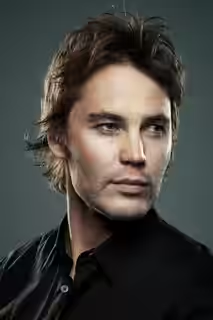
Betty Gilpin gives it a reason to slow down. As Sara Rowell, she is especially effective in the quieter scenes, where the effort of carrying on receives some attention between threats. Her friendship with Isaac Reed, played by Taylor Kitsch, provides the strongest reason to stay with the series: their scenes allow concern for another person to develop between the bouts of violence. We wanted longer with them, because those quieter exchanges make their survival matter beyond the immediate suspense of an attack.
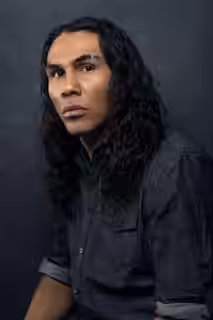
Dane DeHaan and Saura Lightfoot-Leon, as Jacob Pratt and Abish Pratt, bring conviction to the material about religious zealotry. Yet too often the writing supplies another ordeal when it ought to supply another side to a character. The Native characters fare worse: they remain underwritten, with too little space for lives that exist beyond the other storylines. That is a substantial failing in a series attempting to take several perspectives on the same period, especially when the historical context is also so thin.
Shea Whigham is a welcome exception to the general solemnity as Jim Bridger. Jim Bridger’s disputes give the drama something more specific to work through than another test of endurance. These exchanges suggest how much sharper the series might have been with more attention to the people disputing the West and less repetition of its hazards. The Western has ample room for arguments about belief and power, and this series becomes more interesting when its characters have something to dispute.
Editors Jon Otazua, Art Jones and Hugo Diaz help give the action its immediate force, but the movement between storylines is less persuasive. Six episodes ought to leave room for these people to become distinct, yet the accumulation of crises makes their experiences increasingly alike. The music by Explosions in the Sky adds to the pressure without providing much relief from it. Alongside the images, it sustains a mood that the writing already insists upon. The longer this goes on, the harder it becomes to respond to each new crisis.
There is no obligation for a Western to be comforting. There is, however, a need to give its characters lives beyond enduring the next atrocity, something Betty Gilpin and Shea Whigham manage in the space they are given. Viewers drawn to the harsher end of the genre may find enough in those performances to persist, though the thin characterisation is a considerable price for the action. If the opening leaves you exhausted rather than curious, there is little reason to commit to six episodes.