Series review

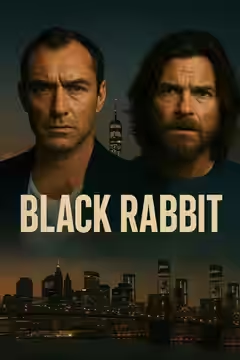
Black Rabbit

2025 · Directed by Benjamin Semanoff, Jason Bateman, Laura Linney, Justin Kurzel · Series · 15

In a sentenceEight episodes is a long time to spend wishing two brothers would make one sensible decision

DramaCrime

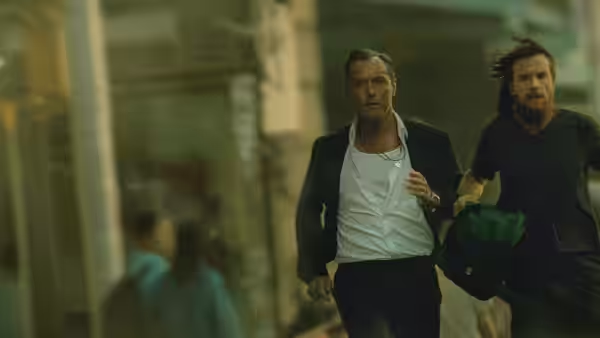
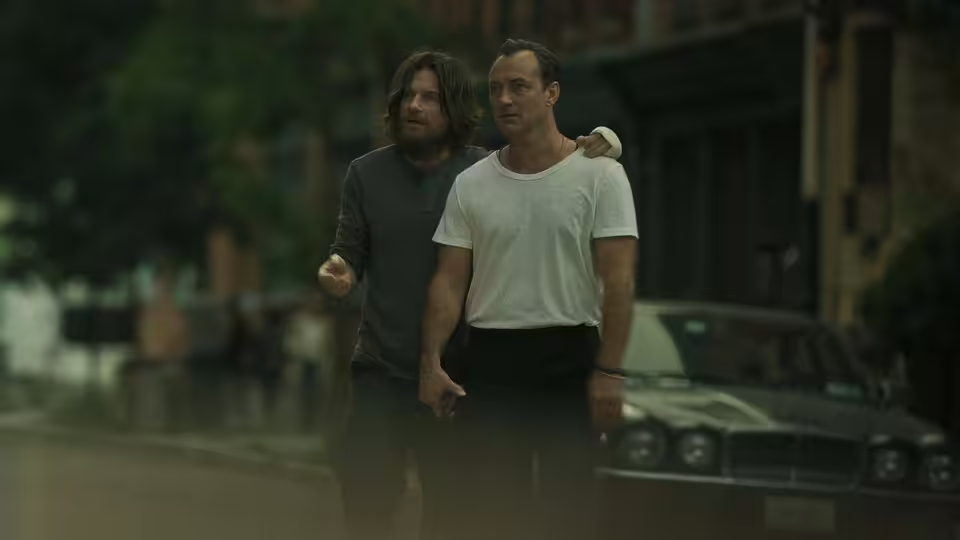
In New York’s restaurant and nightlife scene, Jake Friedken (Jude Law) and his brother Vince (Jason Bateman) find family loyalty difficult to separate from dependency. Addiction and a succession of bad decisions put pressure on their relationship, drawing the pair into a crime story in which neither can treat the other’s troubles as a separate concern. The eight-part drama follows the brothers through the overlapping pressures of family, business and crime. Troy Kotsur plays Joe Mancuso, with Abbey Lee as Anna, Odessa Young as Gen and Chris Coy as Babbitt.

Plays from YouTube when you press play; nothing loads from them until then.

Fi1m review

Jason Bateman and Jude Law are convincing as brothers who keep making things worse. Their performances justify a look at this uneven crime drama, but repetitive plotting makes eight episodes feel generous.

The useful question in Black Rabbit is why these brothers keep accepting trouble from one another. Across eight episodes, the answer involves addiction, dependency and the familiar difficulty of abandoning family, even when family keeps making things worse. We found it a decent, uneven crime drama, carried by Jason Bateman and Jude Law through stretches the writing has not earned. It is worth considering for their performances, provided patience with self-destructive men comes readily.

Bateman plays Vince Friedken, with Law as Jake, and their chemistry does much of the work that the writing leaves unfinished. Vince is the sort of likeable disaster whose next mistake seems entirely avoidable until his charm gets to work. We wanted Jake to stop making allowances for him, and were surprised by how much we cared. Bateman gives Jake enough reason to stay involved, while Law makes that continued attachment convincing.

The New York restaurant and nightlife setting supplies an interest beyond the next family crisis. Cinematographers Peter Konczal and Igor Martinović give the city a grubby, restless quality that makes the brothers’ troubles feel at home there. Alex DiGerlando’s production design helps the restaurant milieu feel inhabited rather than merely supplied as a fashionable backdrop. There is enough life in these surroundings to suggest a broader drama, and sometimes we wished the series would pay more attention to it.

Zach Baylin and Kate Susman are among the credited writers, and the scripts are less persuasive when they have to keep the story moving. Too often, a fresh mistake supplies movement without telling us anything further about the person making it. The brothers’ dependency explains a good deal, but using it repeatedly does not make each escalation equally interesting. Supporting characters also struggle for definition, leaving the leads to carry more than even this pairing can manage.

That repetition is particularly costly over eight episodes. Editors Vikash Patel, Kyle Reiter and Cedric Nairn-Smith have an escalating plot to organise, but the series still takes too long to establish its pace and spends too much time renewing familiar problems. Danny Bensi and Saunder Jurriaans’s score contributes to the anxiety, though there is already plenty supplied by the brothers. We grew tired of the mounting trouble because so much of it came from decisions whose foolishness was already clear.

Troy Kotsur, as Joe Mancuso, is a welcome exception to the thinness around the brothers, giving the supporting cast some force of its own. Justin Kurzel’s direction of the final two episodes also gives the thriller a firmer grip, without curing the slackness that precedes them. The tighter direction makes the danger easier to care about. More of that urgency earlier would have helped.

The better family crime dramas let us understand a terrible choice before asking us to sit through its consequences. Here, the acting provides that understanding more reliably than the scripts, which too often fall back on the same failings. Try it for Bateman and Law if difficult siblings are your sort of television; expect to wish somebody had cut an episode or two.

Critical consensus AI synthesised

58
Positive
5
Mixed
1
Negative
3

The reviews lean positive on Black Rabbit, though the consensus is sharply divided. Praise centres on Jude Law and Jason Bateman as troubled brothers, with their chemistry giving the crime drama its emotional force. Admirers find the story of addiction, codependency and family dysfunction tense and involving, even when it becomes punishing. Bateman draws particular praise from The Telegraph, which finds him compelling as the likeable disaster of the pair.

The disagreement is over whether the brothers’ downward spiral earns sustained attention. Detractors find them thinly drawn and difficult to care about, and see the accumulating misery as exhausting rather than moving. Structure also divides critics: The Times calls it daring, while NME finds it awkward despite admiring the performances and family drama. Even The Hollywood Reporter’s strongly negative assessment makes exceptions for Troy Kotsur’s supporting performance and the tense direction of the final two episodes.

Vulture
16 September 2025
85*

The review highlights the sublime brother act between Jason Bateman and Jude Law as the core strength, with their chemistry anchoring the anxiety-inducing story of codependency, addiction, and family dysfunction. It calls the series riveting and devastating with mercurial performances amid a dense, escalating plot.

Read the full review →
The Telegraph
18 September 2025 · ★★★★ · Anita Singh
80

While Law is fine, Bateman excels as the likeable disaster brother in this salty crime saga that builds from a restaurant drama into something more engaging, worth watching.

Read the full review →
IndieWire
18 September 2025 · C- · Ben Travers
50

The critic finds the limited series an unbearably bleak Netflix thriller tracking two brothers on a dismal downward spiral of their own designs. It praises the dedicated cast and scurrying, seamy vision of New York City but calls the story exhausting misery for the sake of misery.

Read the full review →
Variety
18 September 2025 · Alison Herman
35*

The critic finds the Netflix series draggy and dated overall, struggling to sustain interest across eight episodes despite its New York nightlife setting and restaurant milieu. The unpleasant, unrepentant brother protagonists (and the lack of charm or investment in them) are singled out as a core flaw that hinders engagement.

Read the full review →
The Guardian
18 September 2025
30*

The critic finds it almost impossible to care about the lead characters, who are poorly sketched or stupid, making the series a relentlessly cheerless watch despite some action.

Read the full review →
The Hollywood Reporter
16 September 2025 · Daniel Fienberg
30*

The critic finds the series a blandly bleak antihero drama mixing elements of The Bear, Uncut Gems and Ozark, with unlikable bumbling brothers, clichéd plotting and weak character development. Praise goes to the tense, well-directed final two episodes by Kurzel and a strong supporting turn from Troy Kotsur.

Read the full review →

Cast

Stills

If you liked this, try…

Before the Devil Knows You’re Dead poster

Before the Devil Knows You’re Dead

2007 · Family resentment and financial panic turn two brothers into dangerous partners

Pusher poster

Pusher

1996 · For another urban crime story in which each attempted fix creates more trouble

The Long Good Friday poster

The Long Good Friday

1980 · A criminal’s business ambitions collide with trouble he cannot bully into submission

Animal Kingdom poster

Animal Kingdom

2010 · A colder Australian family crime drama, with relatives who make safety impossible

The Bear poster

The Bear

2022 · More restaurant pressure, with greater attention to the people doing the work