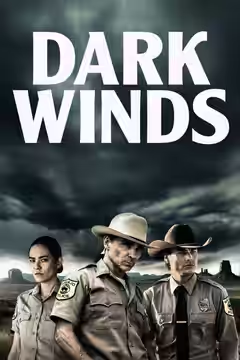
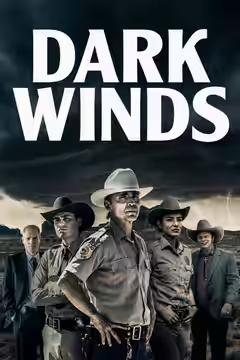
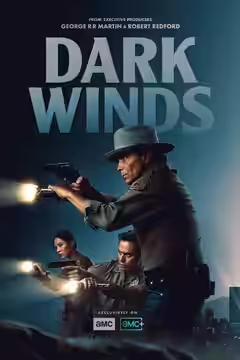
Graham Roland’s adaptation of Tony Hillerman’s novels is a patient, well-made crime series carried by Zahn McClarnon’s stillness as Joe Leaphorn. The first season’s mystery is its weakest part; the people and the place are worth your evening anyway.
Graham Roland’s series takes Tony Hillerman’s Navajo Tribal Police novels to a place where the roads are long, the phones are few and the FBI turns up when it wants something. What Roland and a largely Native writing and directing team are after is a procedural in which the police, the victims and the suspects all belong to the place, and the men in suits are the visitors. On that they succeed. The first season’s mystery is the weakest thing in it. The people are good enough that we kept watching anyway.
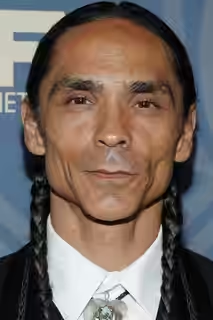
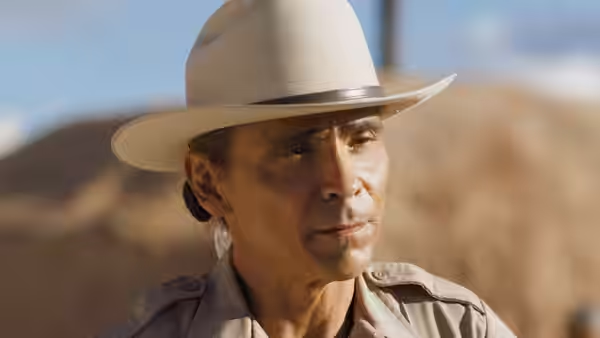
Zahn McClarnon is the reason. He plays Joe Leaphorn with his hands in his pockets and his voice at one level, a man who has learned that out here the officer who talks least learns most. The scene that got at us is small. Leaphorn and his wife Emma (Deanna Allison) sit at their kitchen table and talk around something neither will name, and McClarnon does nothing with his face at all. It moved us more than any of the killings did. It is the kind of grief that has been in a house so long it has become furniture.
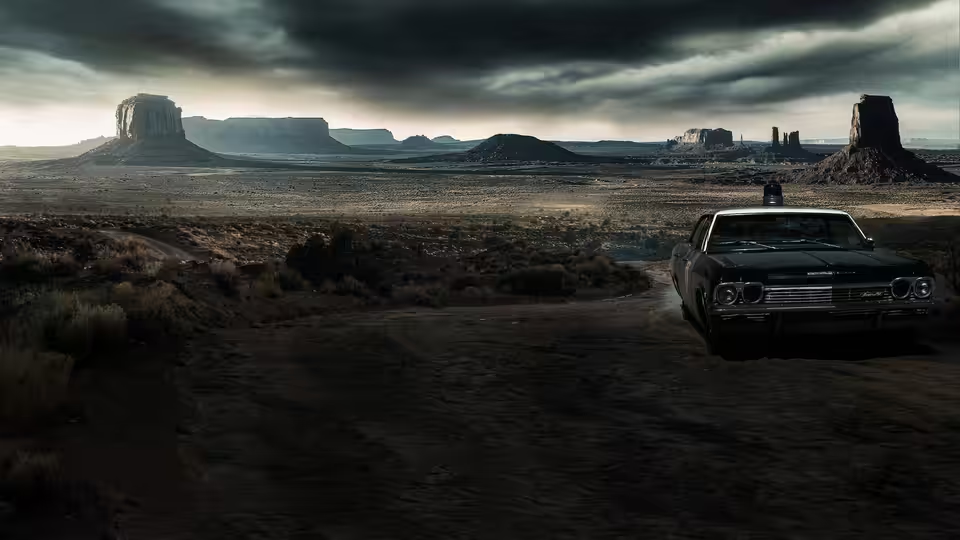
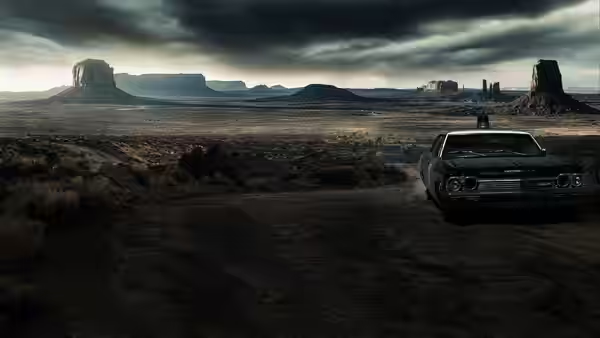
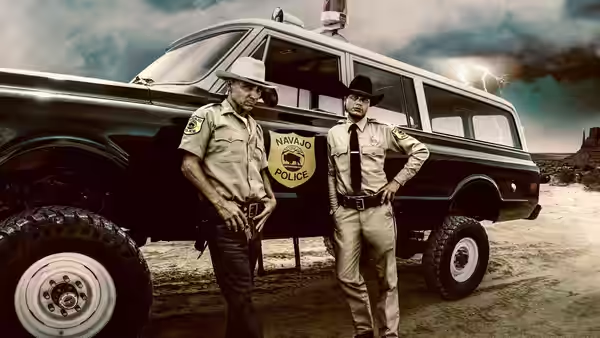
Paul Elliott shoots the reservation in wide, flat daylight, red rock and pale sky, and he keeps the same light for a murder scene as for a drive to the trading post. Nothing is dressed up for a visitor. Guy Barnes and Mark Garner’s production design gets the period right without pushing it: a police station of filing cabinets and one radio. Peggy Stamper puts Leaphorn in a uniform he plainly lives in, and Jim Chee in town shoes that mark him as an outsider before he has said a word. Kevin, Deana and Sean Kiner’s score sits low under the dialogue and knows when to let the wind take over.
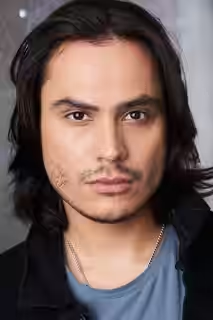
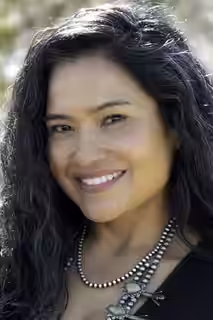
Kiowa Gordon’s Chee arrives as the new deputy, and Noah Emmerich’s Leland Whitover of the FBI wants him useful and has no interest in who did the killing. Gordon plays a man who left, did well, and has come back with a college vocabulary and no idea how to stand in a hogan. Emmerich plays Whitover as a reasonable man who could not care less. Jessica Matten’s Bernadette Manuelito is the season’s quiet success: a young officer who knows the terrain and the families, and does most of the actual police work while the men look at maps. Eugene Brave Rock’s Frank Nakai has more menace in a look than the plot ever gives him to use.
The trouble is the crime. The one that opens the season looks good and makes little sense, and the more the six episodes try to connect it to the killing, to Jeremiah Bitsui’s Benjamin Tso and to Elva Guerra’s frightened Sally Growing Thunder, the more you can see the joins. Nicholas Logan’s Colton Wolf, a blank-faced hitman, belongs to another show; every time he appears the series stops being about a place and starts being about a genre. Editors J. Kathleen Gibson, Brian Wessel and Joaquin Elizondo cut between three or four strands and cannot always hide that one of them is idling. We were bored by the hitman, and then irritated that a series this careful had let him in.
Chris Eyre, who directed Smoke Signals, is among the directors, and the series is at its best when it follows his habit of watching people sit and talk for longer than a cop show is supposed to. Billy Luther and Erica Tremblay, who both write and direct here, and McClarnon himself, directing an episode, keep that going. Most critics rate the later seasons above the first, and we would not argue; the mysteries tighten and McClarnon is given more to carry. But the first season is where you meet these people, and they are worth meeting properly.
The 15 certificate is for violence that is sudden and brief. Watch two episodes before you decide. The first is busy setting up a crime it does not much care about; the second is where the series finds out what it is for. Then stay for McClarnon, and forgive the hitman.