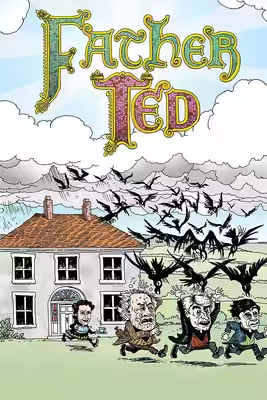
Arthur Mathews and Graham Linehan’s sitcom about three priests exiled to Craggy Island is one of the best Britain and Ireland have made. The first series is still finding its nerve and a few later set-pieces overrun; nothing else about it has aged.
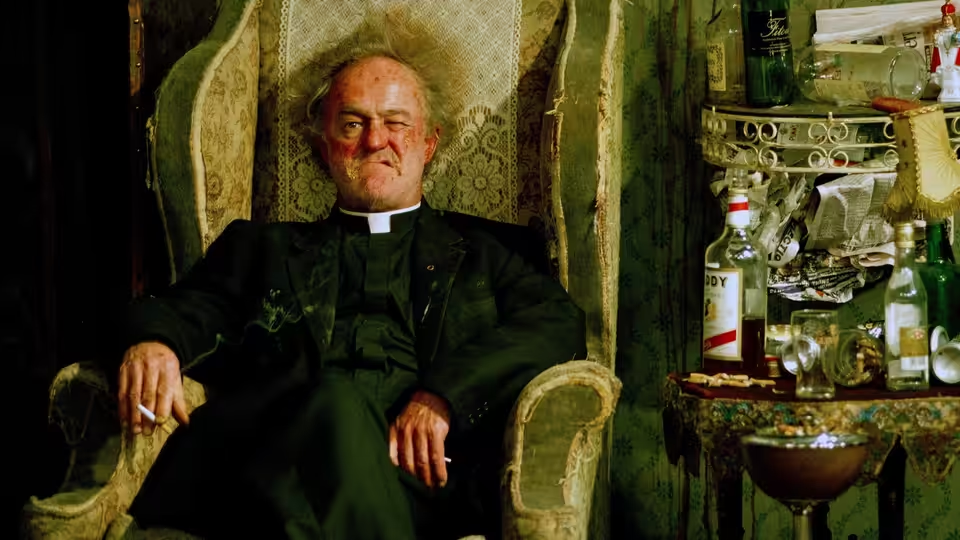
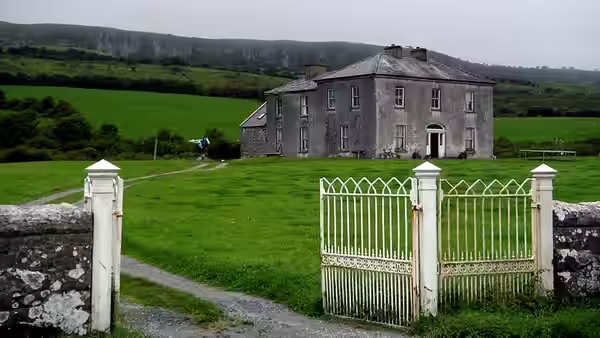
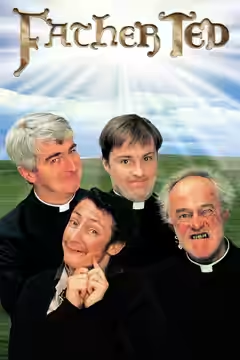
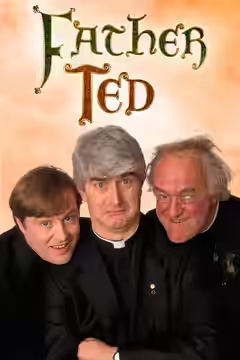
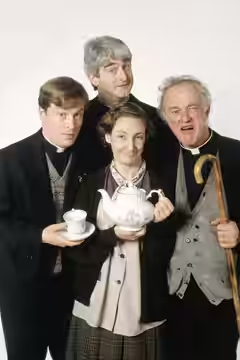
Father Ted puts three priests the Church would rather forget in a parochial house on Craggy Island, off the west coast of Ireland, and leaves them there for 24 episodes. Father Ted Crilly (Dermot Morgan) wants a parish on the mainland and a little respect. Father Dougal McGuire (Ardal O’Hanlon) is not sure God exists and is not sure it matters. Father Jack Hackett (Frank Kelly) wants a drink. Mrs Doyle (Pauline McLynn) wants everyone to have a cup of tea and will not hear otherwise. Arthur Mathews and Graham Linehan, who created and wrote it, are not much interested in the Catholic Church as a target. They are interested in what three men do with an island nobody else wants.
Our verdict is not complicated. This is one of the best sitcoms Britain and Ireland have made, and we say so having gone back through all three series looking for weak spots. There are some. The first series, six episodes shown from April 1995, is still working out how strange it is allowed to be, and a few of the later set-pieces run a minute past the point where they should stop. Everything else holds.
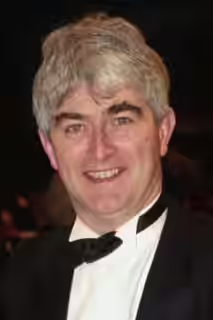
Morgan is the reason the show has a spine. Ted is the sensible one only by comparison: a snob in a cardigan, a coward with a plan, a man who cannot pass a small lie without picking it up. Morgan plays him a beat too pleased with himself, so that we can see the disaster arriving before he can, and when the plan collapses, as it always does, there is a flicker of real hurt. We felt for him more than the show had any right to expect. He believes he deserves better than Craggy Island, and the awful thing is that he does not, quite, and half knows it.
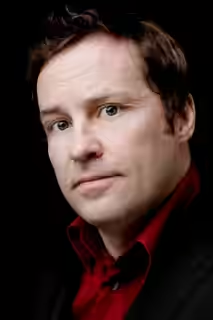
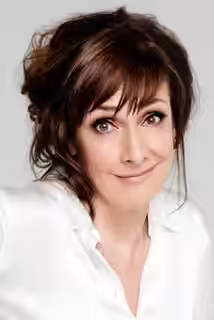
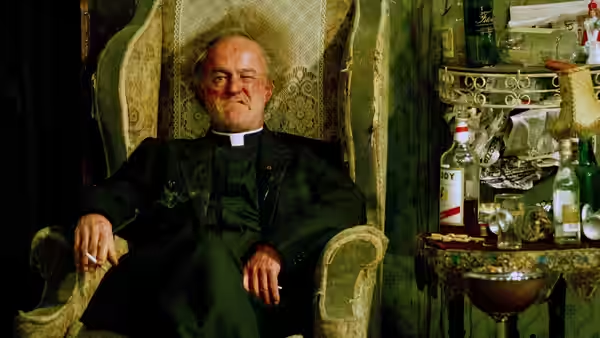
O’Hanlon gives Dougal a face that does not move while the world does, and he never once winks at us. The scene in which Ted uses a pair of toy cows to explain the difference between small and far away, and Dougal nods and does not understand, made us laugh until it hurt. The reason is patience: the writers let Ted explain it three times and let the camera stay on Dougal each time. Kelly’s Father Jack has four words and an armchair and gets a laugh from every combination of them. McLynn’s Mrs Doyle is the show’s most frightening creation, a woman for whom “no” is the opening of a negotiation, played with a bright, unblinking hospitality that would empty a room.
It is a studio sitcom with an audience, and Declan Lowney, Andy De Emmony and Linehan direct it as one. The house is a stage set with a window, a sofa and a door for people to arrive through, and the producers, Geoffrey Perkins and Lissa Evans, clearly understood that the form works best when the trap is visible. When the show leaves the house, for a caravan, an aeroplane or a song contest, it is always to find that the island has come along. The guests are chosen for how badly they fit. Graham Norton’s Father Noel Furlong is enthusiasm as a medical condition. Clare Grogan’s Niamh Connolly is a singer who despises everything Ted stands for and is not wrong. Richard Wilson turns up as himself, and we will leave the reason to you.
The faults are real and they are small. The plots have a shape they cannot shake: Ted has a scheme, the scheme requires a lie, the lie comes apart in front of a bishop, Bishop Facks (Denys Hawthorne) among them. Women other than Mrs Doyle are mostly visitors. The third series, eight episodes from March 1998, reaches for bigger stunts and does not always land them, and the audience laughter is now and then louder than the joke.
It sits in the long line of sitcoms about people who cannot leave a room, and it is kinder than most of them. Nobody here is punished for being stupid. Ted is punished for being ashamed of the others, which is a different thing.
Three series, 24 episodes of 24 minutes, and there were never any more; it stops while it is still good. The 15 certificate is for the language, nearly all of it Father Jack’s, and for one word the show made acceptable in living rooms that would have flinched at the alternative.