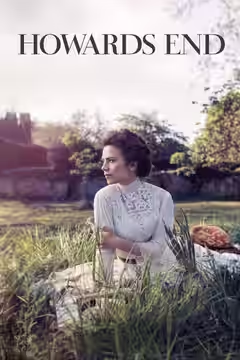
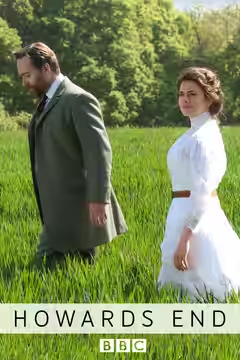
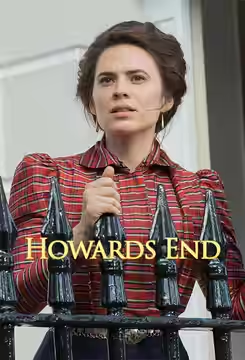
A warm, absorbing adaptation, carried by Hayley Atwell and Philippa Coulthard. Its conversations are more persuasive than its central romance, but the sisters make four episodes feel like time well spent.
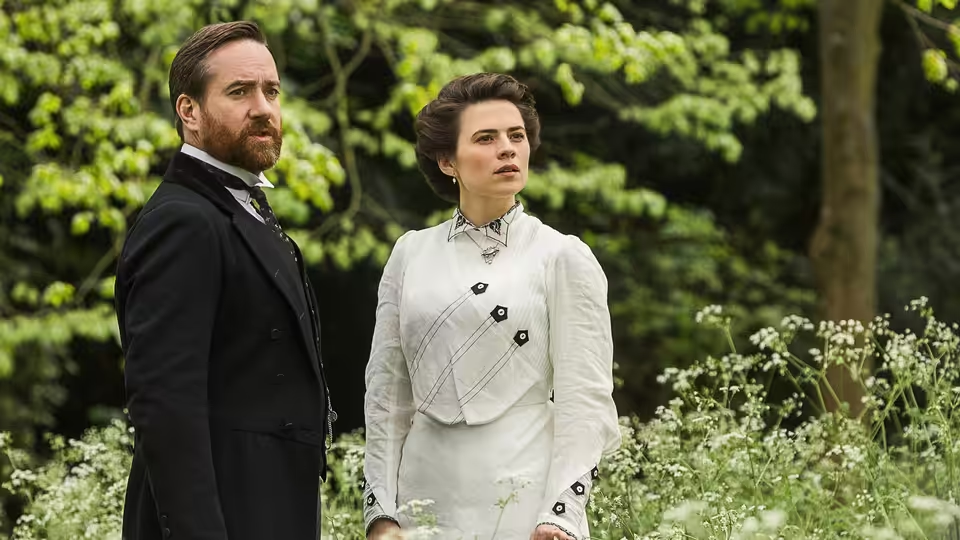
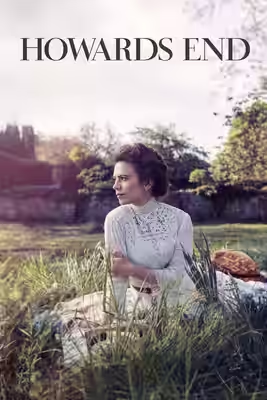
Hettie Macdonald’s Howards End is a warm, intelligent adaptation that earns our attention through its conversations. Kenneth Lonergan, adapting E.M. Forster’s novel, takes seriously the pleasure of talking to someone who disagrees with us, and the irritation of discovering they have a point. The exchanges about class and the place of women have enough human friction to keep them from feeling like subjects set for discussion. The main weakness is a romance that needs more time to become convincing; the Schlegel sisters are persuasive from the start.
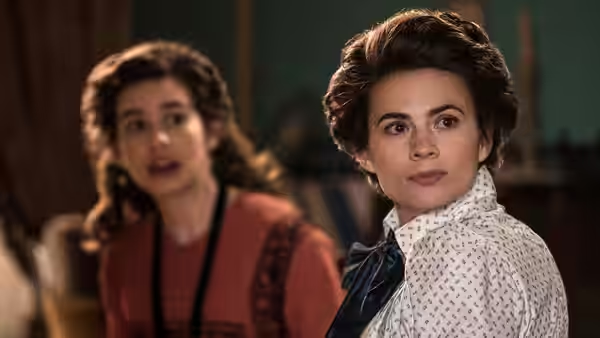
Hayley Atwell plays Margaret Schlegel with an enjoyment of other people that makes the character easy to spend time with. She can sound certain without seeming finished with the conversation, a useful distinction in a drama where opinions matter so much. Philippa Coulthard gives Helen Schlegel the energy to challenge that certainty. We grew fond of these sisters because their disagreements never made us doubt their attachment to one another. The performances give the dialogue the familiarity of people who have heard each other argue before.
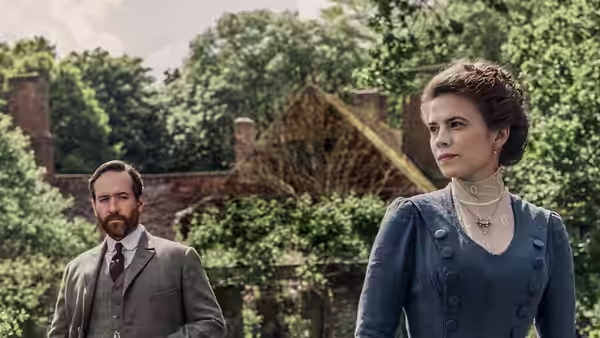
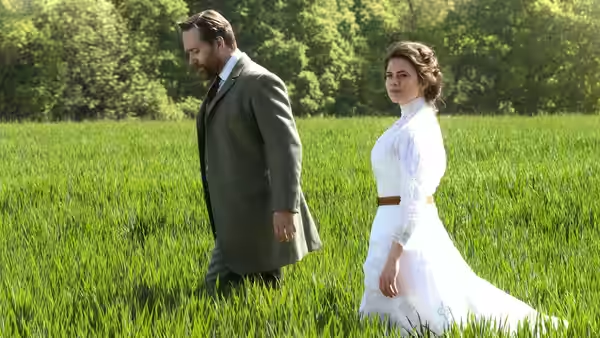
Matthew Macfadyen gives Henry Wilcox an assurance that can make disagreement feel like an inconvenience. Julia Ormond’s Mrs. Wilcox is more quietly affecting, and her warmth complicates any easy division into sympathetic and unsympathetic households. Both performances matter because the sisters are such appealing company that everyone else risks being judged by how well they suit them. The supporting cast keeps the drama from becoming quite so comfortable, giving us reasons to take an interest in people who do not share the sisters’ habits of mind.
The series also understands that having an opinion about inequality is much easier when the conversation costs nothing. Its arguments about class retain a useful awkwardness: liking someone does not settle the practical differences between their lives. Kenneth Lonergan gives women’s voices enough space to be insistent, funny and occasionally exhausting. We are allowed to enjoy the sisters without being required to endorse everything they say, and the writing leaves their disagreements open long enough for us to consider them.
Luke Hull’s production design provides an attractive period setting without making the furnishings more interesting than the people. Hettie Macdonald keeps the emphasis on the cast, which is the right choice when these faces have so much to tell us. Nico Muhly’s music is more persuasive when it leaves the emotion alone; at times its warmth feels like encouragement we did not need. The performances already give us ample reason to care, particularly when the sisters are together.
Stephen O’Connell’s editing generally gives the dialogue enough breathing room for the relationships to feel familiar. The unevenness comes when the series asks its central romance to become convincing on a tighter schedule. We can understand the attraction without quite feeling that we have watched it develop, and the compression is conspicuous beside the patience elsewhere. Four episodes offer welcome space for discussion, but the lovers could have used more of it. This is a substantial reservation in a drama so concerned with how people come to understand one another.
As a literary television drama, Howards End makes good use of the freedom to linger over a conversation. There are stretches that will feel slow to anyone waiting for the next confrontation, though the humour usually prevents the earnestness from becoming heavy. Its strongest reason to stay is the sisters, whose company remains engaging even when their opinions become tiring. Choose it for an evening when there is time to listen.