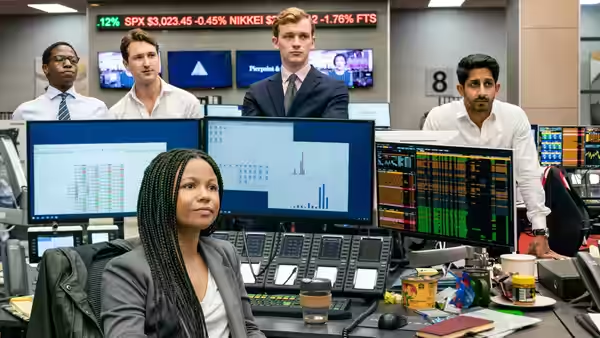
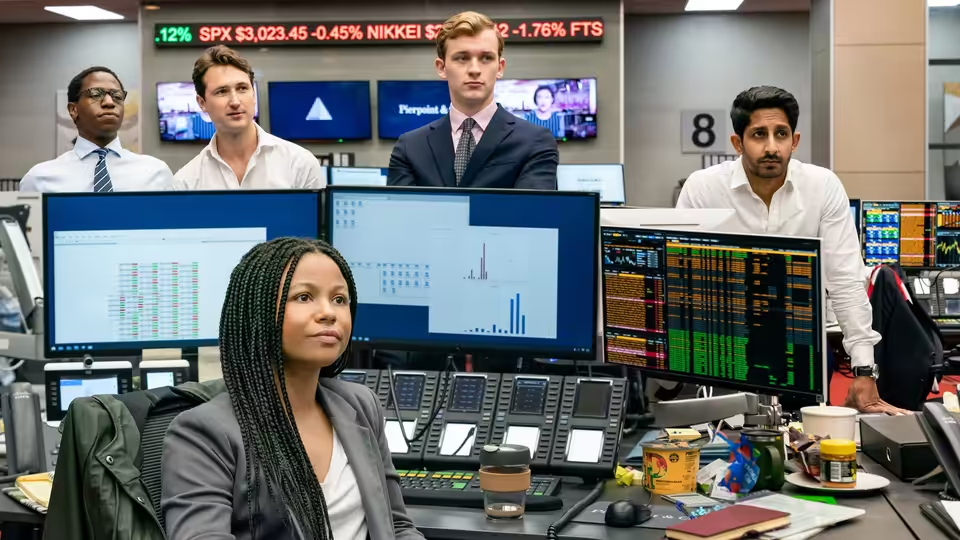
Harper Stern (Myha'la Herrold) at her desk in a busy trading room
Series review

Industry

2020 · Created by Mickey Down, Konrad Kay · Series · PISF 16

In a sentenceThe bankers are more interesting at work, which may disappoint the bankers

A group of young bankers tries to establish itself in finance while work spills into friendships, sex and life outside the office. Professional ambition sits alongside questions of identity, and relationships between colleagues carry consequences beyond the working day. Myha’la plays Harper Stern, Marisa Abela plays Yasmin Kara-Hanani, Harry Lawtey plays Robert Spearing and David Jonsson plays Gus Sackey. Ken Leung appears as Eric Tao. The drama follows the competing pressures of getting ahead and finding a place among people whose personal lives are closely bound up with their jobs.

Plays from YouTube when you press play; nothing loads from them until then.

Fi1m review

Industry makes young bankers worth following, chiefly by showing how ambition complicates the working day. The performances hold our attention; the sex and excess are less reliable, especially when they crowd out the office politics.

Getting ahead at work is difficult enough without wanting the people who can help to like us as well. Industry builds a good, abrasive workplace drama around young bankers whose professional ambition is tangled up with their private lives. Mickey Down and Konrad Kay’s writing is strongest on the difficulty of judging a colleague who may also be a friend or a rival. We recommend it for that uncomfortable company, with a caveat about how often the after-hours excess interrupts more interesting business.

Office politics give the series a dependable source of tension, because getting on with colleagues is part of getting ahead. The writing allows questions of identity to affect ambition without making each character a tidy representative of a group. People can understand their own disadvantages and still behave badly towards somebody else. That complexity keeps the working relationships interesting, particularly when personal loyalties become difficult to separate from professional ones.

Myha’la, playing Harper Stern, and Marisa Abela, as Yasmin Kara-Hanani, are central to why this company remains watchable. Neither performance requires us to approve of a character before paying attention, and both reward the writing’s willingness to leave people complicated. We felt uneasy watching professional ambition spill into the characters’ sexual relationships. The drama makes it difficult to imagine these people spending an evening together without work entering it, which gives their social lives a pressure that the excess alone cannot supply.

With Adam Lyons, Federico Cesca and Arthur Mulhern among its cinematographers, Industry is most persuasive when it stays with people at work. Steve Summersgill’s production design gives those professional encounters a credible setting without becoming the attraction itself. The surroundings need to make these working relationships believable, and they do. How the colleagues treat one another supplies the interest.

The editing, with Kyle Traynor among the credits, cannot always make the personal complications feel urgent. Too often, working and hooking up settle into a rhythm we can anticipate, and the programme takes too long to make the repetition count. The excess makes sense as behaviour shaped by a demanding professional life. That does not mean every instance is equally interesting to watch.

The wider consequences of the banking business receive less searching attention. Personal conflict repeatedly takes precedence, and the questions raised about the profession can seem secondary to who is getting ahead within it. That is a limitation worth naming, particularly when the writing is otherwise so alert to unequal power. We do not need a lecture on banking, but the people outside these working and social circles deserve some thought.

Try it when there is time to settle into an ensemble, rather than when a plot needs to earn its keep immediately. The appeal depends on growing interested in people whose decisions are not always easy to defend, and that takes some patience. There is no requirement to want them as colleagues.

Critical consensus AI synthesised

64
Positive
4
Mixed
2
Negative
1

Most critics lean positive. The praise gathers around the ensemble and the writing of the young traders: several reviews find the characters complex and the series compelling even when the people in it are hard to like. Its handling of office politics and the power games of a London trading floor draws the most consistent approval, and more than one critic reaches for Skins as a comparison for its mix of work pressure and after-hours excess.

The reservations are about familiarity and pace. The AV Club and Vulture both find the show borrowing from other workplace dramas, and Vulture thinks Harper too reserved a lead to carry it. The Ringer finds the interpersonal drama crowds out the sharper social critique. The one outright dissent is IndieWire, which finds the series dull and slow to pay off, even with Lena Dunham directing. The spread is wide, though most reviews sit in the middle or above.

The AV Club
9 November 2020 · B- · Danette Chavez
70

The critic likens the series to Working Girl with Harper as the scrappy lead navigating finance, noting its ensemble nature and Gen Z take on ambition and culture shock. It meets the brief in parts but feels derivative of other shows like Suits and Grey's Anatomy.

Read the full review →
Vulture
12 November 2020
60*

The series trades in familiar elements from other shows but mostly delivers on its compelling premise of young bankers in a high-pressure London firm. Harper's reserved characterization keeps it from fully sparking, though later episodes show promise.

Read the full review →
IndieWire
9 November 2020 · Ben Travers
30*

The HBO series about young bankers is surprisingly ho-hum and slow to pay off. Even Lena Dunham's direction fails to spice up the drama about working and hooking up.

Read the full review →
Den of Geek
9 November 2020 · ★★★★
80

The review praises the empathetic, non-judgmental approach to ambitious young traders and their high-stakes world, highlighting the strong ensemble and relatable themes of youth and ambition. It wins viewers over despite the jargon-heavy start.

Read the full review →
NME
6 November 2020 · Olly Richards
80*

The critic finds the series compelling despite unlikeable characters, praising the well-written complex characters and its potential to be a classic like Mad Men with elements of Skins.

Read the full review →
Paste
10 December 2020 · Katherine Smith
75*

The series excels at depicting the power dynamics and office politics in the finance world, with strong performances and writing that blends identity issues with ambition, though it questions the broader implications of the industry.

Read the full review →

Straight answers AI written, from our review

Is Industry worth watching?
Industry is worth watching for anyone with the patience to settle into an ensemble of young bankers whose ambition and private lives keep colliding, and we scored it 76. The office politics and the performances from Myha'la and Marisa Abela are the draw; the after-hours sex and excess are less reliable and too often interrupt the more interesting business at work.
How long is Industry, and what is it rated?
Industry is rated 16 by the PISF in Poland. It is a drama series.
Where can I watch Industry in Poland?
Industry is streaming on HBO Max in Poland, and it is also available to buy from Amazon Prime Video. Availability is checked daily; the links above go straight to each service.
How violent or frightening is Industry, and is it suitable for children?
Industry carries a US TV-MA rating and no UK certificate, and it is a drama for adults rather than children. It is not violent or frightening in the horror sense, but the review notes that professional ambition spills into the characters' sexual relationships, and the excess outside the office is frequent. Teenagers and the easily embarrassed should treat it as adult viewing.
How does Industry compare to Margin Call?
Industry and Margin Call both deal with pressure inside a bank, but Margin Call confines the 2008 crash to one building over one night and keeps the financial decisions in view, while Industry follows young bankers over a series as work bleeds into friendships and sex. The film is the tighter and more exact of the two; the series offers longer company and messier people.
What should I watch after Industry?
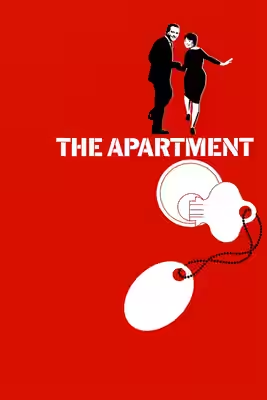
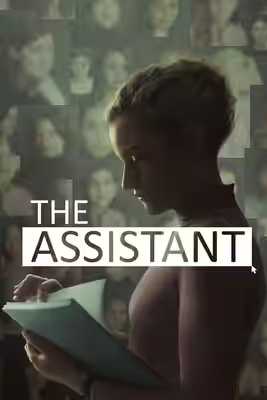
After Industry, try Margin Call (2011, Fi1m 82): For the workplace pressure, with the financial decisions kept firmly in view. Then The Apartment (1960, Fi1m 91): Another office where professional advancement makes private life painfully difficult to protect; and The Assistant (2019, Fi1m 81): A quieter working day, with close attention to hierarchy and complicity.

Cast

If you liked this, try…

  1. Margin Call (2011, Fi1m 82)For the workplace pressure, with the financial decisions kept firmly in view.

  2. The Apartment (1960, Fi1m 91)Another office where professional advancement makes private life painfully difficult to protect.

  3. The Bureau (2015) · not reviewed yetProfessional competence offers little protection when work starts governing private loyalties and relationships.

  4. The Assistant (2019, Fi1m 81)A quieter working day, with close attention to hierarchy and complicity.

  5. The Big City (1963) · not reviewed yetWork unsettles domestic expectations in another precise drama about money and independence.

Free account

Know what to watch tonight

Two lists that know where things are streaming, collections you can share, your own score beside ours, and Discover that remembers what you have seen.

  • Want to see, sorted by what is streaming now
  • Seen, with your score out of ten
  • No adverts, ever