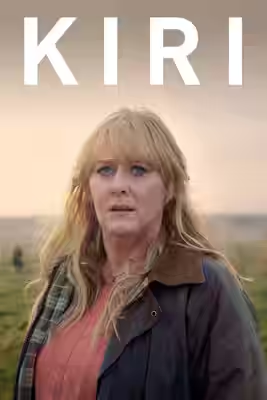
Sarah Lancashire and Lucian Msamati give Kiri warmth and force, but four episodes leave some supporting stories short of attention. We recommend this humane crime drama for the acting, with reservations about how much it leaves unexplored.
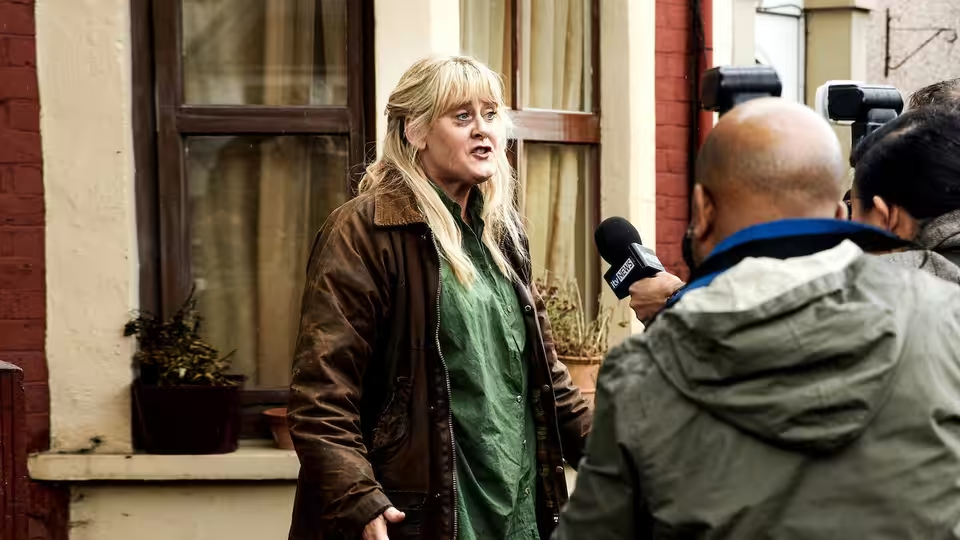
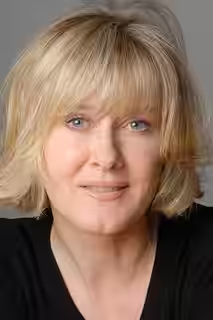
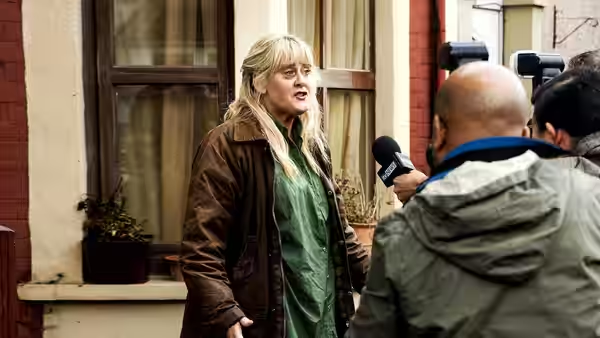
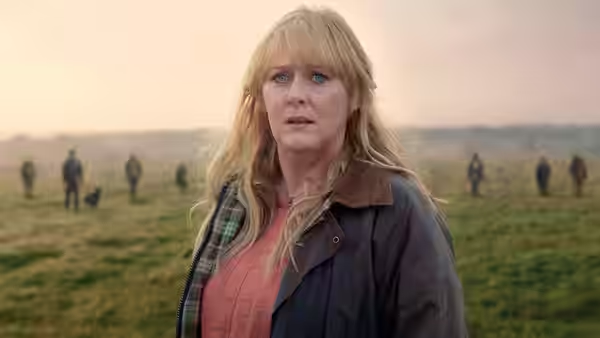
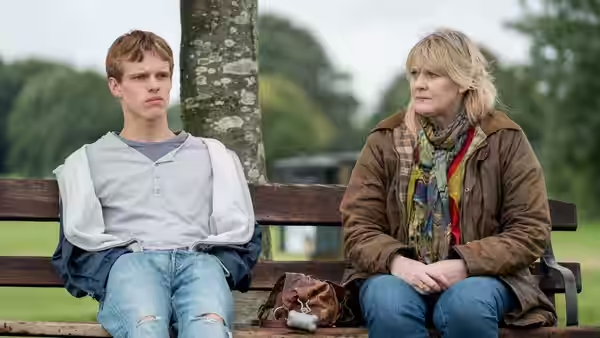
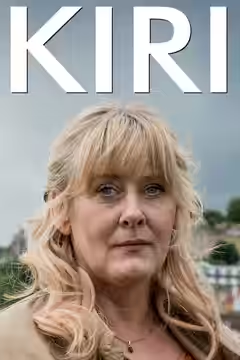
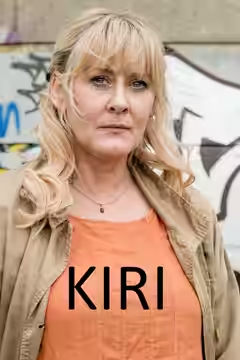
Kiri is a humane, well-acted crime drama that gives some of its people less time than they deserve. Created by Jack Thorne and directed by Euros Lyn, it has four episodes in which to establish a substantial cast. Sarah Lancashire’s Miriam Grayson, a social worker with troubles of her own, gives it a strong centre. The difficulty comes when attention spreads beyond her: the programme makes us curious about people it does not always examine closely enough.
Miriam’s humour matters, and not merely as a brief escape from the painful material. It helps us understand how someone with considerable personal difficulties can still have something to offer other people. We warmed to her because Sarah Lancashire lets her be funny without making those difficulties disappear. We can like her without assuming she always knows best, and the performance leaves room for both affection and doubt. She remains interesting when she is being fallible, which is harder to achieve than making a professional seem impressively capable.
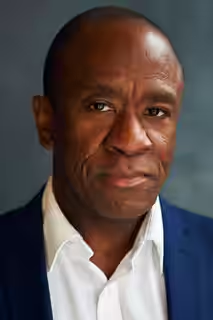
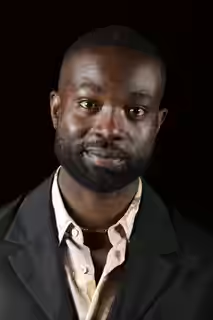
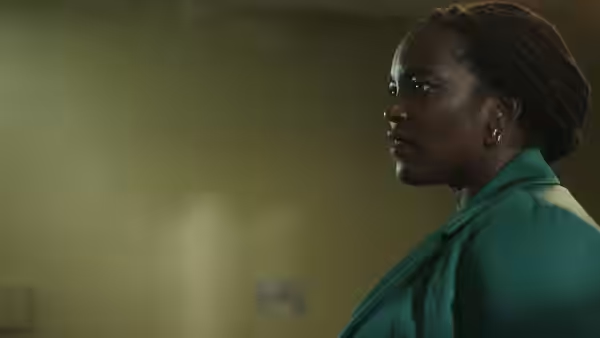
Lucian Msamati, as Tobi Akindele, deserves comparable attention. There is an intensity to his performance that makes Tobi seem worth a longer examination, without making every moment feel like a demand for one. We wanted more of him. With Paapa Essiedu as Nate Akindele and Lia Williams as Alice Warner, the cast offers further reasons to stay interested even when the writing apportions its attention unevenly. Some supporting stories need more space before their characters can become as substantial as the performances suggest they might be.
Jamie Pearson’s editing gives the four episodes a useful briskness, although the pace makes the thinner stories harder to ignore. We remember the performances more clearly than Matt Gray’s cinematography, Antonia Lowe’s production design or Chris Clark’s music. That is not itself a complaint: a drama this dependent on character does not need every department demanding notice. The direction is most persuasive when the actors have enough room to complicate our first impressions. The balance favours moving things along a little too often.
Jack Thorne and fellow writer Rachel De-Lahay deserve credit for treating the work of caring for others seriously. Crime dramas often expect us to admire a difficult professional simply because that person is good at the job; here, humour and concern for other people count for something. The weakness is how unevenly the writing extends its patience across the cast. A supporting story can establish someone as complicated and then move on before those complications have been sufficiently explored. The omissions matter because the programme has encouraged us to take these people seriously.
For viewers drawn to crime drama through its characters, there is enough here to justify the evening. Sarah Lancashire and Lucian Msamati make the painful material involving without reducing their performances to a succession of anguished expressions. The reservation is substantial but specific: the series gives some people the attention they need and leaves others frustratingly incomplete. Watch Kiri for the actors, and be prepared to wish that some of them had been given longer.