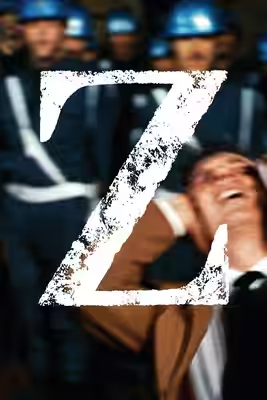
Luca Marinelli makes Mussolini both repellent and disturbingly watchable in Joe Wright’s often gripping political drama. We recommend it, with one reservation: eight episodes of speeches and restless theatricality make for tiring company.
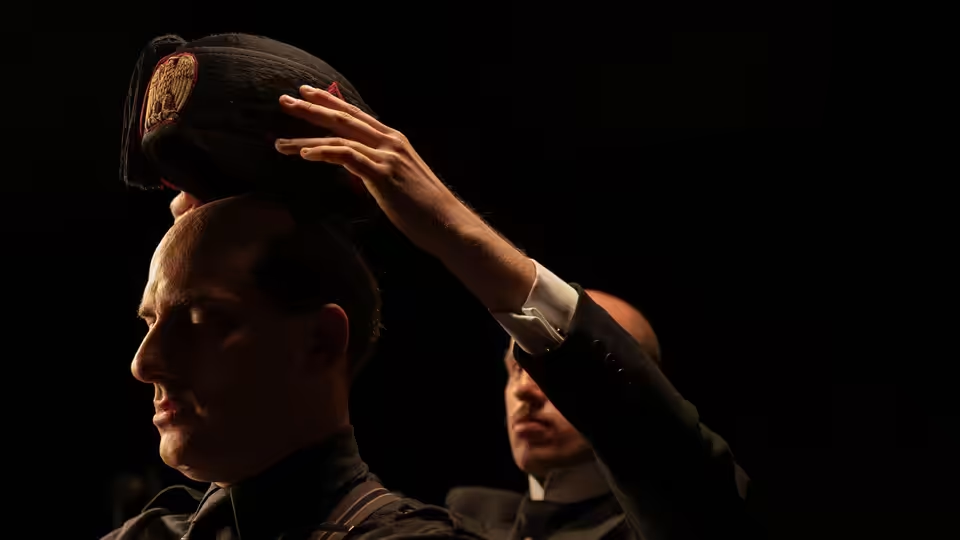
Joe Wright’s Mussolini: Son of the Century is a strong political drama that makes its central figure horribly watchable and gives us good reason to feel troubled by that. Its subject is the rise of fascism, with particular attention to the vain man who discovers how holding an audience can help him acquire power. Wright directs his pursuit as a theatrical spectacle, encouraging us to notice how much we enjoy the performance. The approach works, although eight episodes test our tolerance for its insistence.
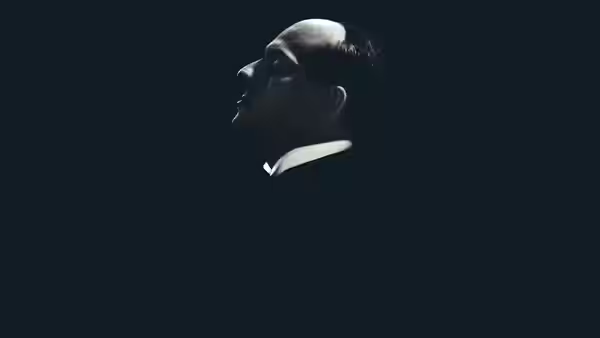
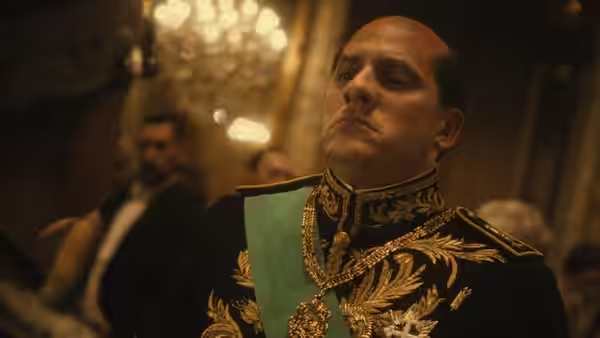
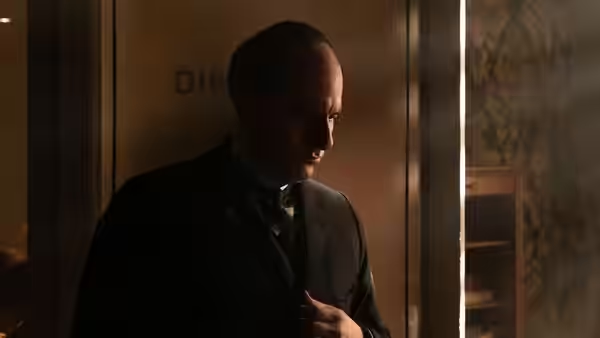
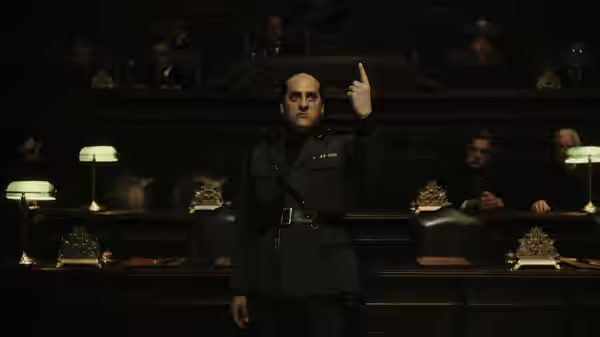
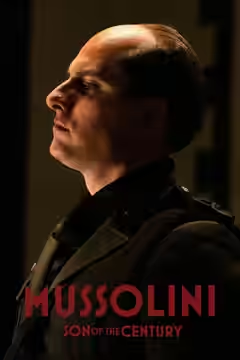
Luca Marinelli gives us plenty to look at: Mussolini’s swollen self-importance, his appetite for an audience and the persistence that survives his ridiculousness. He allows the man to be absurd, then makes us see why that offers no protection against him. We felt uneasy about how much we enjoyed watching him. The puffed-up vanity is funny, and Marinelli makes it part of a performance that remains dangerously persuasive. He keeps the ambition visible even when the man looks foolish.
Screenwriters Davide Serino and Stefano Bises make media influence part of the business of acquiring power. Speeches matter here because they let Mussolini keep putting himself before an audience, cultivating a public personality that Marinelli makes overbearing and seductive. We can see the value of giving those displays so much space: the series takes seriously the possibility that people might enjoy listening to him. His ridiculousness never relieves the drama of having to explain his appeal, and the writing gives Marinelli room to work on both.
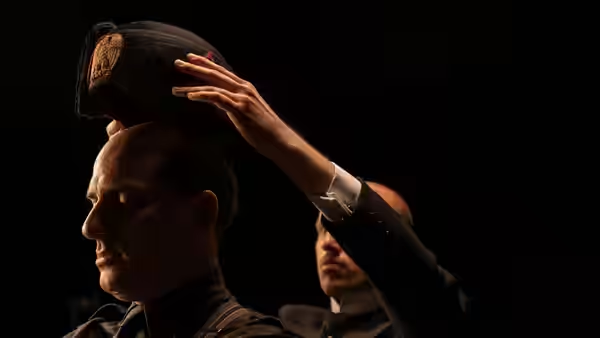
Paolo Carnera and Seamus McGarvey’s cinematography suits Wright’s appetite for camera tricks and theatrical display. The visual restlessness helps make political speechmaking exciting, although there are stretches when we would welcome a camera that attracted less notice. Mauro Vanzati’s production design reinforces the sense of watching an elaborate performance, with Mussolini its chief attraction. The stagey surroundings work for a man so concerned with appearances, but they contribute to the enclosed, airless feeling that becomes harder to bear as the series proceeds.
Valerio Bonelli’s editing gives the rhythmic sequences enough drive to keep the programme from becoming a procession of public addresses. Tom Rowlands’s music helps sustain that force, and the combination is effective when Wright needs political manoeuvring to feel urgent. The difficulty comes when the pace and emphasis stay insistent for so long that they begin to lose their effect. Some speeches continue after we have understood what they tell us about the speaker, and another stylistic flourish cannot always recover our interest.
Historical drama can make powerful men seem important simply by asking actors to look solemn in expensive-looking rooms. Wright avoids that particular trap: Marinelli is allowed to be vain, grotesque and persistent, and the series is stronger for keeping those qualities in view. We would not want a tidier performance or a more reassuring account of fascism’s appeal. We would want fewer flourishes once the point has been made. Watch it for Marinelli, and leave a little room between episodes; there is no obligation to hear all those speeches in one evening.