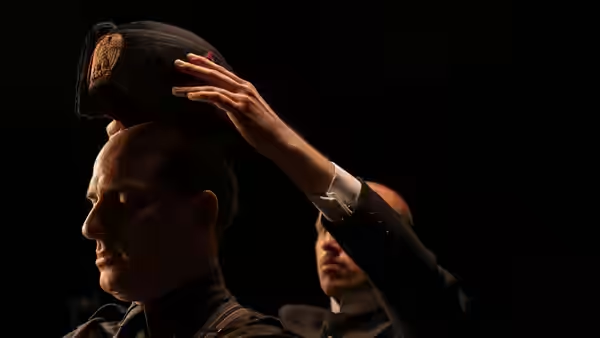
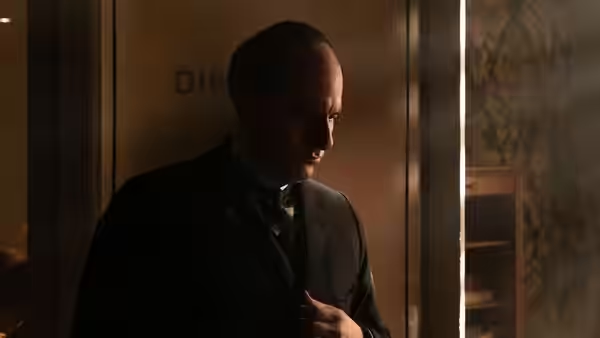
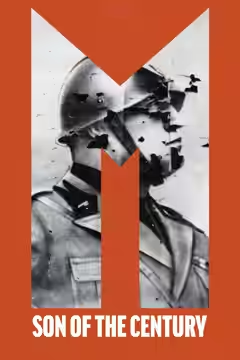
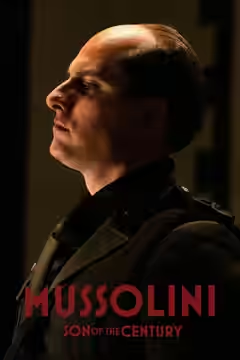
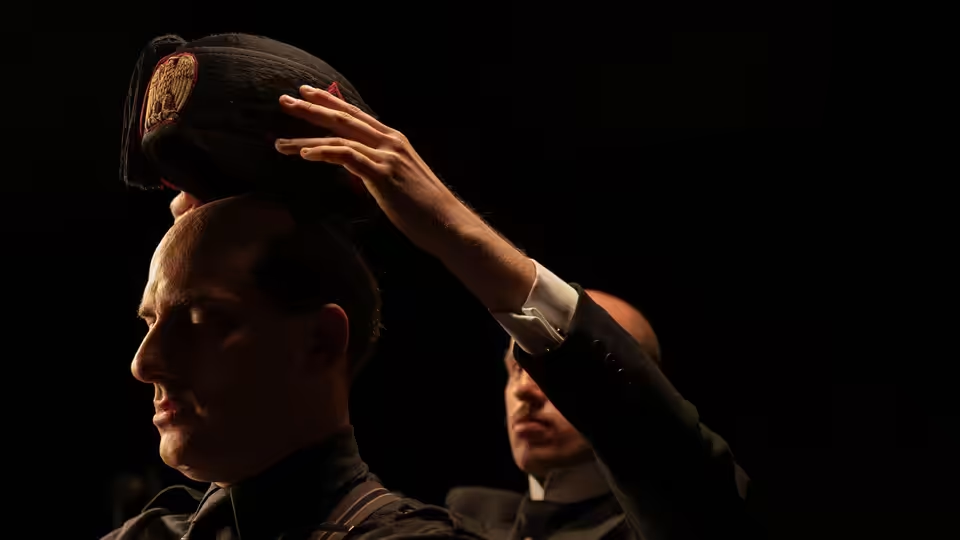
Mussolini (Luca Marinelli) having a black cap placed on his head
Series review

Mussolini: Son of the Century

2025 · Created by Joe Wright · Series

In a sentenceLuca Marinelli makes Mussolini horribly watchable, though eight episodes is a long time to spend wishing someone would stop talking

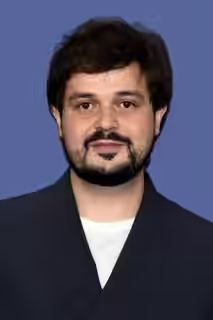
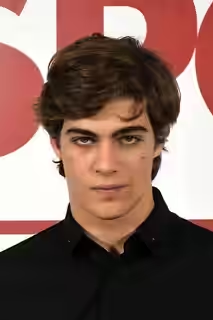
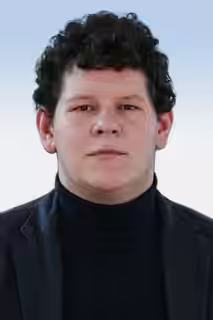
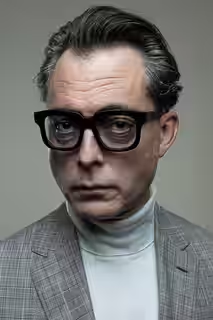
Benito Mussolini (Luca Marinelli) seeks political power through public speeches, media influence and the promotion of his own personality. As fascism gains ground, the drama follows his efforts to turn attention into authority, with his vanity repeatedly on display. Joe Wright directs this eight-part Italian-language series, which keeps Mussolini at the centre of its account of a political movement’s rise. Francesco Russo plays Cesare Rossi, Barbara Chichiarelli plays Margherita Sarfatti and Benedetta Cimatti plays Rachele Mussolini, while Paolo Pierobon appears as Gabriele D’Annunzio.

Plays from YouTube when you press play; nothing loads from them until then.

Fi1m review

Luca Marinelli makes Mussolini both repellent and disturbingly watchable in Joe Wright’s often gripping political drama. We recommend it, with one reservation: eight episodes of speeches and restless theatricality make for tiring company.

Joe Wright’s Mussolini: Son of the Century is a strong political drama that makes its central figure horribly watchable and gives us good reason to feel troubled by that. Its subject is the rise of fascism, with particular attention to the vain man who discovers how holding an audience can help him acquire power. Wright directs his pursuit as a theatrical spectacle, encouraging us to notice how much we enjoy the performance. The approach works, although eight episodes test our tolerance for its insistence.

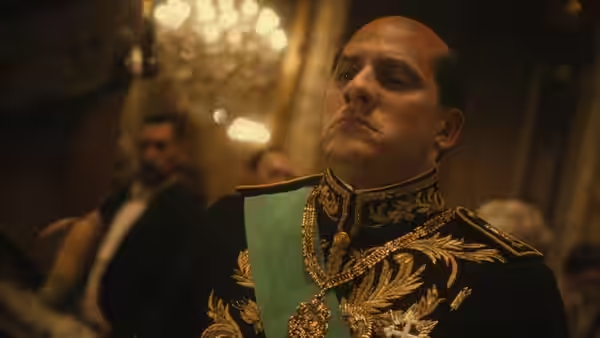
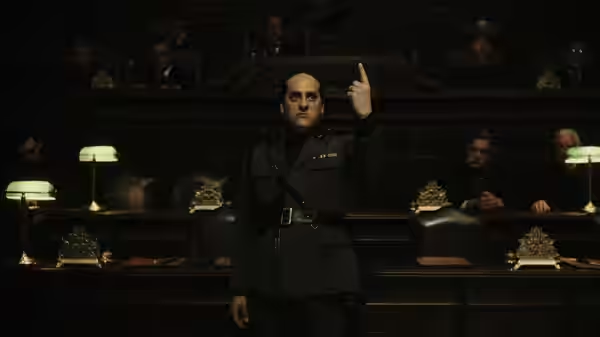
Luca Marinelli gives us plenty to look at: Mussolini’s swollen self-importance, his appetite for an audience and the persistence that survives his ridiculousness. He allows the man to be absurd, then makes us see why that offers no protection against him. We felt uneasy about how much we enjoyed watching him. The puffed-up vanity is funny, and Marinelli makes it part of a performance that remains dangerously persuasive. He keeps the ambition visible even when the man looks foolish.

Screenwriters Davide Serino and Stefano Bises make media influence part of the business of acquiring power. Speeches matter here because they let Mussolini keep putting himself before an audience, cultivating a public personality that Marinelli makes overbearing and seductive. We can see the value of giving those displays so much space: the series takes seriously the possibility that people might enjoy listening to him. His ridiculousness never relieves the drama of having to explain his appeal, and the writing gives Marinelli room to work on both.

Paolo Carnera and Seamus McGarvey’s cinematography suits Wright’s appetite for camera tricks and theatrical display. The visual restlessness helps make political speechmaking exciting, although there are stretches when we would welcome a camera that attracted less notice. Mauro Vanzati’s production design reinforces the sense of watching an elaborate performance, with Mussolini its chief attraction. The stagey surroundings work for a man so concerned with appearances, but they contribute to the enclosed, airless feeling that becomes harder to bear as the series proceeds.

Valerio Bonelli’s editing gives the rhythmic sequences enough drive to keep the programme from becoming a procession of public addresses. Tom Rowlands’s music helps sustain that force, and the combination is effective when Wright needs political manoeuvring to feel urgent. The difficulty comes when the pace and emphasis stay insistent for so long that they begin to lose their effect. Some speeches continue after we have understood what they tell us about the speaker, and another stylistic flourish cannot always recover our interest.

Historical drama can make powerful men seem important simply by asking actors to look solemn in expensive-looking rooms. Wright avoids that particular trap: Marinelli is allowed to be vain, grotesque and persistent, and the series is stronger for keeping those qualities in view. We would not want a tidier performance or a more reassuring account of fascism’s appeal. We would want fewer flourishes once the point has been made. Watch it for Marinelli, and leave a little room between episodes; there is no obligation to hear all those speeches in one evening.
Critical consensus AI synthesised

72
Positive
5
Mixed
0
Negative
1

Most critics like it, and they like the same two things. Luca Marinelli’s Mussolini is praised across the board: a towering, unnervingly charismatic performance that keeps the dictator ridiculous and dangerous at once, and even the least impressed review calls it magnificent. Joe Wright’s direction is the other draw. The reviews describe a frenetic, theatrical, anachronistic style, heavy on camera tricks and rhythmic set pieces, and most find it the right approach for a portrait of how fascism seduces. Several add that the tactics on screen feel familiar today.

The reservations are about stamina. Over eight episodes the speeches pile up and the flourishes wear thin, and even admirers such as The Telegraph concede it turns tiring and claustrophobic before the end. The spread is wide rather than narrow: five positive reviews sit against one firm dissent from The Guardian, which finds the series lavish, stagey and far too long, catching totalitarianism’s tedium a little too faithfully.

Vulture
1 October 2025 · Roxana Hadadi
85*

Joe Wright deploys maximalist flourishes, camera tricks, and rhythmic sequences to portray Mussolini as a magnetic but destructive force. The experimental style and strong lead performance make the portrait of fascism's rise appropriately mesmerizing and timely.

Read the full review →
The Telegraph
4 February 2025 · ★★★★ · Chris Bennion
80

Joe Wright directs a fantastically theatrical, testosterone-fuelled Italian-language drama with a frenetic Peaky Blinders energy and strong performances, especially Luca Marinelli's charismatic turn. It becomes tiring and claustrophobic over eight episodes but remains remarkable and immersive.

Read the full review →
The Times
4 February 2025
80*

Luca Marinelli delivers a towering, unnervingly captivating performance as the dictator in this eight-part drama focused on his puffed-up vanity and rise to power.

Read the full review →
IndieWire
11 September 2025 · Ben Travers
75*

The flashy, anachronistic series follows Mussolini's rise through media influence, the March on Rome, and his takeover of government. Driven by Luca Marinelli's intense performance, it highlights how fascism's tactics feel familiar today.

Read the full review →
The Guardian
4 February 2025
30*

The series is a lavish, stagey eight-part dramatisation that captures totalitarianism's tedium as well as its grotesquerie, but drags on too long with excessive speeches and stylistic flourishes. Luca Marinelli gives a magnificently disgusting performance as a ridiculous yet persistent loser who rises to power.

Read the full review →
Collider
19 September 2024 · 9/10 · Jeff Ewing
90

The critic finds the series a harrowing and timely warning about the fragility of democracy in the face of fascism that needs to be seen. They single out Luca Marinelli's excellent central performance as Mussolini for its tactical smarts and malicious charisma.

Read the full review →

Straight answers AI written, from our review

Is Mussolini: Son of the Century worth watching?
Mussolini: Son of the Century is worth watching for anyone who wants a political drama about how fascism seduces its audience, and we scored it 80. Luca Marinelli makes the man vain, absurd and dangerously persuasive at once. Our reservation is stamina: eight episodes of speeches and Joe Wright's restless theatricality wear thin, so space the episodes out.
Where can I watch Mussolini: Son of the Century in Lithuania?
Mussolini: Son of the Century is not on any streaming or rental service in Lithuania at the moment. It is available in 21 other countries; change your country at the top of the page to see where. Availability is checked daily.
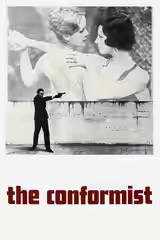
How does Mussolini: Son of the Century compare to The Conformist?
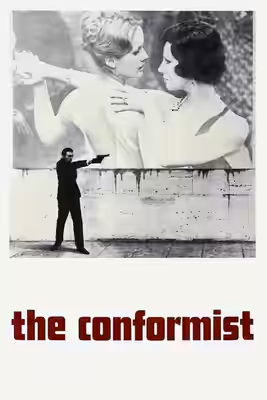
Mussolini: Son of the Century is the louder, bigger work; The Conformist is the more intimate and, we think, the finer one. Wright's series puts the dictator centre stage and asks why crowds enjoyed him, while Bertolucci's film watches an ordinary man's cowardice and wish to fit in. Choose the series for Marinelli's performance, the film for quiet, well-arranged dread.
What should I watch after Mussolini: Son of the Century?
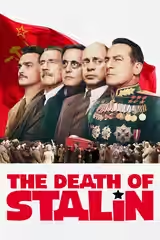
After Mussolini: Son of the Century, try The Conformist (1970, Fi1m 87): For fascism made intimate through cowardice, conformity and carefully arranged rooms. Then The Death of Stalin (2017, Fi1m 83): Petty men scramble for power, with the jokes never cancelling the fear; and Z (1969, Fi1m 84): Political violence and official lies, pursued with an urgency this series sometimes loses.

Cast

If you liked this, try…

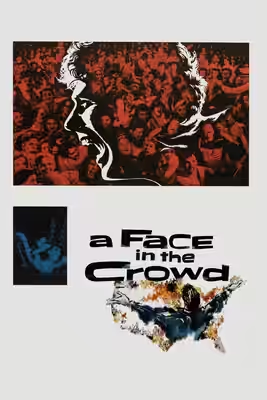
  1. A Face in the Crowd (1957) · not reviewed yetA popular entertainer learns how much political power comes with an audience.

  2. The Conformist (1970, Fi1m 87)For fascism made intimate through cowardice, conformity and carefully arranged rooms.

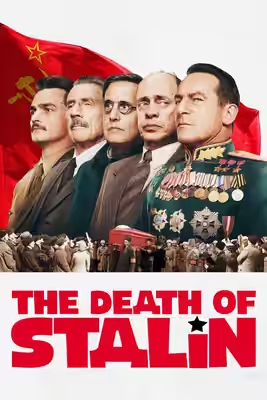
  3. The Death of Stalin (2017, Fi1m 83)Petty men scramble for power, with the jokes never cancelling the fear.

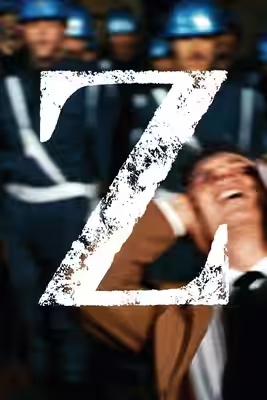
  4. Z (1969, Fi1m 84)Political violence and official lies, pursued with an urgency this series sometimes loses.

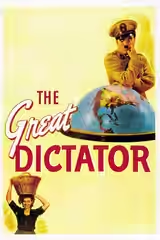
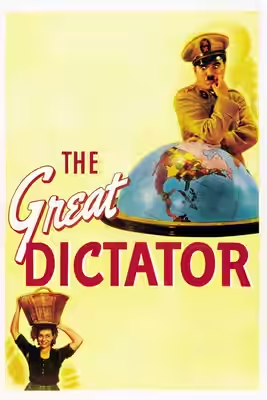
  5. The Great Dictator (1940, Fi1m 80)Chaplin finds something frightening in a dictator’s need to look impressive.

Free account

Know what to watch tonight

Two lists that know where things are streaming, collections you can share, your own score beside ours, and Discover that remembers what you have seen.

  • Want to see, sorted by what is streaming now
  • Seen, with your score out of ten
  • No adverts, ever