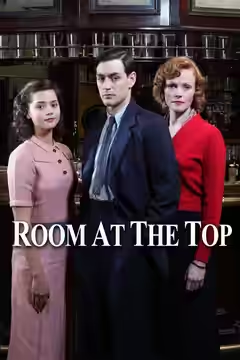
Amanda Coe and Aisling Walsh’s two-part version of John Braine’s novel is handsome, sharp and better acted than it needed to be. Matthew McNulty makes Joe Lampton easy to like and hard to forgive, and Maxine Peake walks off with it.
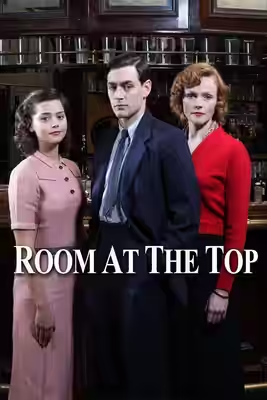
John Braine’s novel is about a young man who looks at a town and sees a price list. Joe Lampton wants the house on the hill, the car, the girl whose father owns the mill, and he is honest with himself about wanting them, which is more than most of the people around him can manage. Amanda Coe’s adaptation, in two hour-long parts directed by Aisling Walsh, keeps that honesty and keeps the book’s cruelty too. It is a good piece of television, and in Maxine Peake it has something better than good.
Our verdict is straightforward. If you like British period drama about class and money and want one that does not flatter anyone, this is worth your two hours. It is not a masterwork and it does not pretend to be one; it is a careful, well-made telling of a story that has been told before, and it earns its place beside the earlier telling without replacing it.
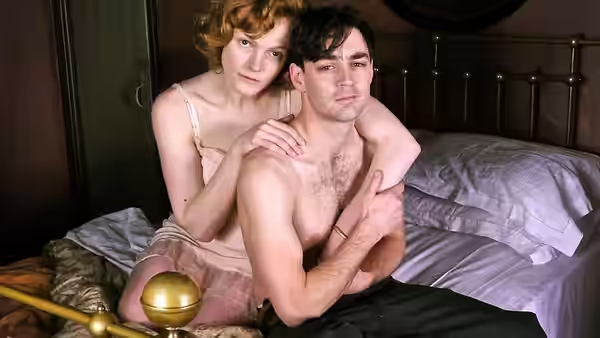
Matthew McNulty plays Joe as a man who knows exactly how he looks in a room and is still not sure it is enough. He has the charm and the chip on the shoulder in equal measure, and he lets you see Joe doing the sums on every person he meets. What makes the performance work is that McNulty does not ask for sympathy. Joe is a user. The series lets him be one and trusts you to keep watching anyway.
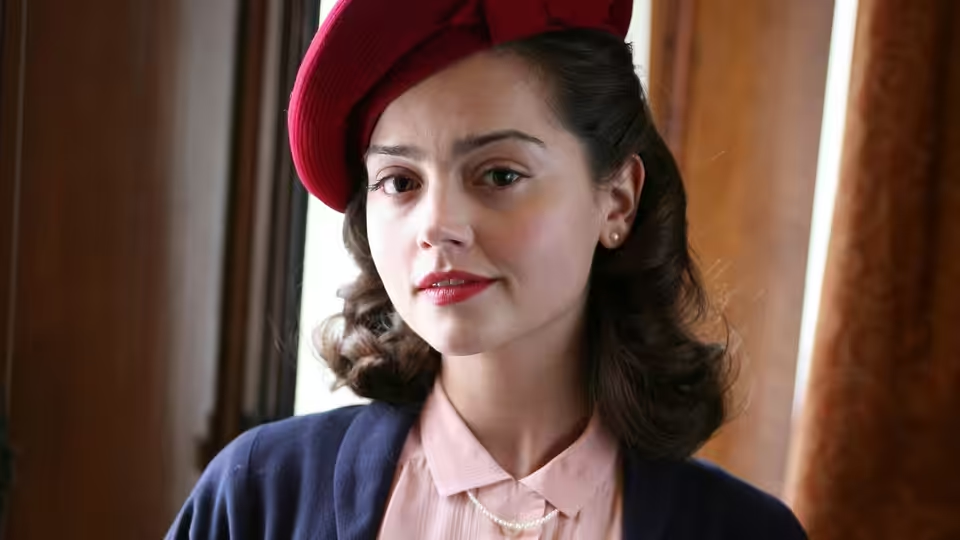
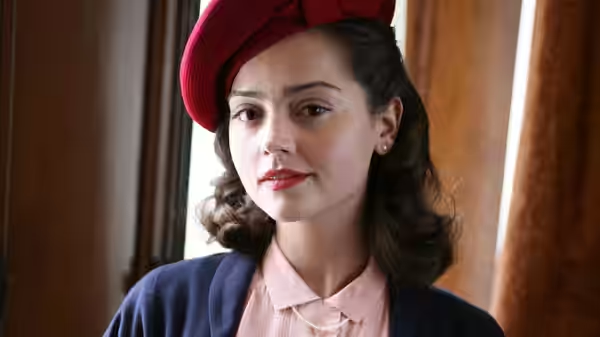
Jenna Coleman’s Susan Brown is the harder part, because Susan is written as a prize rather than a person, and Coleman plays that: a bright, sheltered girl who has never been told no and does not know what to do with a man who says yes to everything. Theo James has little to do as Jack Wales beyond be tall and rich, and does it. Tom Brooke, as Charles, is the series’ conscience and its best source of jokes, and he is underused in the second part.
Then there is Peake. Alice Aisgill is the married woman Joe sleeps with while he courts the girl he means to marry, and in lesser hands she is a plot complication. Peake plays her as the only adult in the story. She is funny, tired, clear-eyed about Joe and clear-eyed about herself, and she looks at him the way you look at a door you know you should not open. It moved us more than we expected. The scene that did it is a small one in the first part: Alice, alone with Joe after a rehearsal, saying something light and watching his face to see whether he has understood her. He has not, quite. We had, and we wanted to warn her.
Lukas Strebel shoots the town in browns and greys, with the lamps left low in the lodging houses and the light saved for the Browns’ big rooms, so that money looks warm and everything else looks like weather. Chris Truelove’s production design gets the texture of the time right without making a museum of it: the thin carpets, the rented suits, the one good coat. Kristina Hetherington’s editing keeps the two parts moving at a steady walk. The second part takes a turn we will not describe, and Hetherington lets it land without rushing.
It has limits. Two hours is not quite enough for Braine’s book, and the second part feels it: Joe’s choices come faster than his reasons, and a strand with Beryl (Kate O’Flynn) is set up and then more or less dropped. Coe’s script is good on what people say and less good on what the town thinks of them, so the class pressure that drives Joe is more often stated than shown. And the series never finds a way to make Susan matter to us as much as she matters to Joe, which leaves the central choice lopsided.
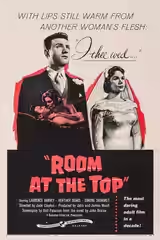
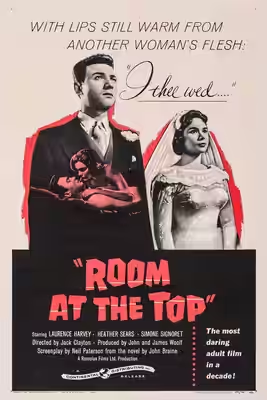
Braine’s novel was filmed before, in 1959, with Laurence Harvey and Simone Signoret, and that version is the one people remember. This one is smaller, kinder to Joe and rougher on the people he climbs over. The one review we have read goes further than we do, and we understand why; Peake would make a case for anything. See it for her, and for McNulty, and do not expect to like Joe at the end of it. He would not expect you to.