Rebecca Sugar’s cartoon about a boy raised by three alien warriors starts as a sunny gag-a-week show and grows, eleven minutes at a time, into a patient story about grief and love. The early episodes wander; the songs make up for it.
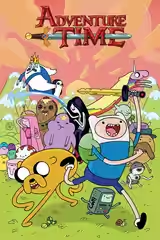
Rebecca Sugar worked on Adventure Time before she made this, and several of that show’s writers, Pendleton Ward, Adam Muto and Tom Herpich among them, are credited here too. Steven Universe starts as a sunny, slightly odd cartoon about a boy in a seaside town who lives with three alien women and would like to be one of them. It ran for five seasons and 154 episodes of eleven minutes each, and over that time it became a serious story about grief, inheritance and loving someone who has gone. It is one of the best children’s programmes we have seen, and it takes a while to become one.
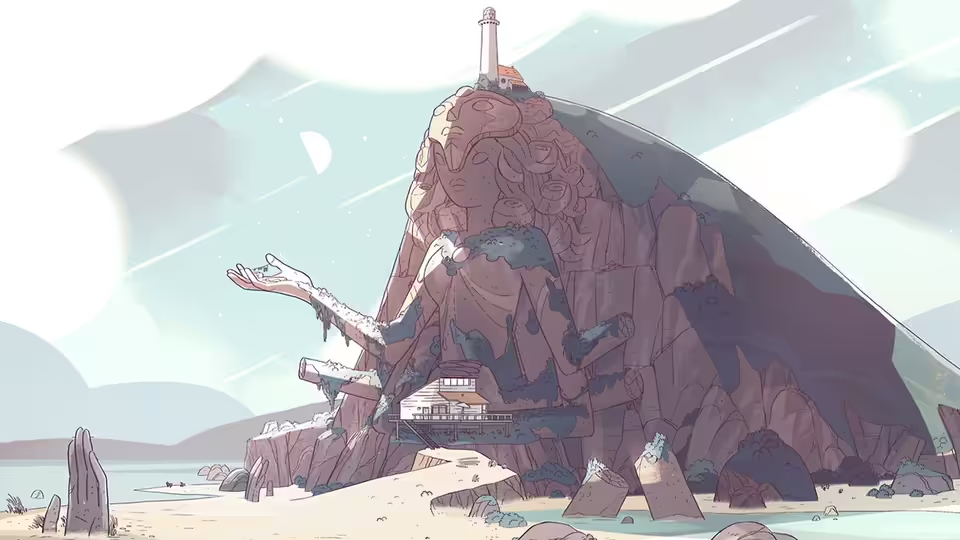
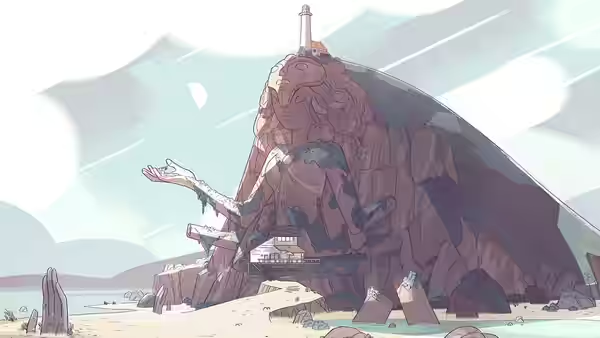
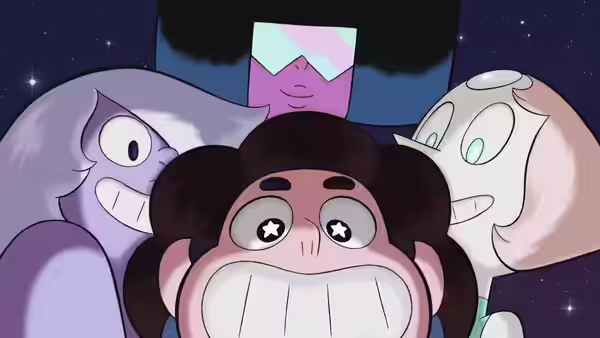
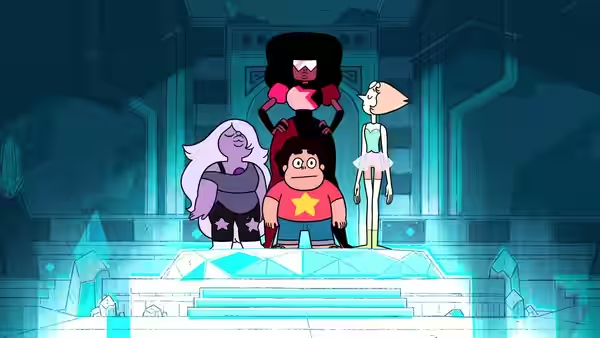
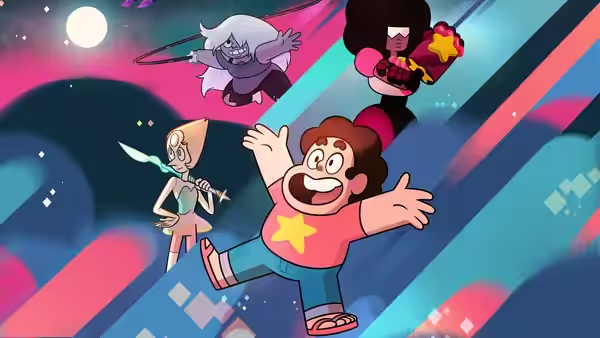
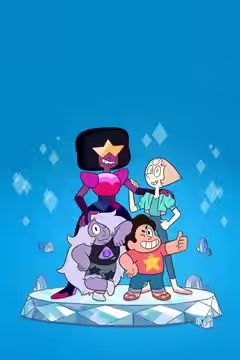
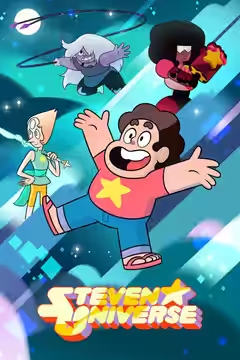
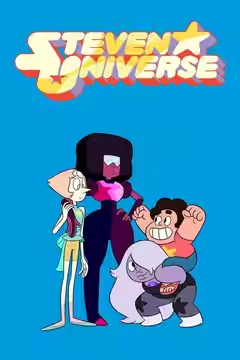
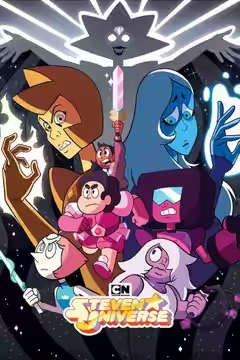
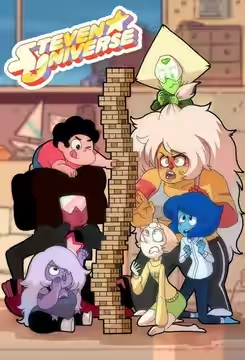
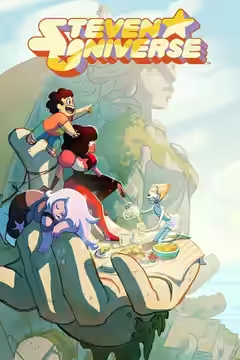
The look is hand-drawn and soft. Beach City is a boardwalk, a doughnut shop, a lighthouse and a lot of sky, and the sky is pink more often than any town can honestly claim. The three Gems are drawn as shapes before they are drawn as people: Garnet is a block, Pearl is a line, Amethyst is a scribble, and you can read each of them from the silhouette before anyone speaks. Joseph D. Johnston, Kat Morris and Ian Jones-Quartey direct, and the fights are fast, clear and over in seconds, which is the right size for an eleven-minute slot.
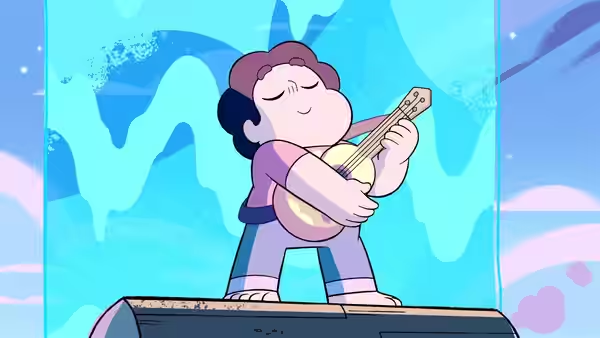
Aivi Tran and Steven Velema score it with chiptune blips and quiet piano, and we would listen to it without the pictures. The songs are the show’s secret weapon. Sugar writes them, they are short, and the cast can sing: Estelle, who has the records to prove it, gives Garnet a low, flat, unhurried voice that makes her the calm centre of every scene, and Deedee Magno Hall’s Pearl gets the ballads. Zach Callison plays Steven as a boy whose first instinct is kindness, and he never made us want to switch him off, which for a cartoon child is rare.
Hall is the reason we are writing at this length. Pearl is fussy and brittle and in love with a woman who is gone, and the show lets her be all three at once. There is an episode fairly early on in which she takes Steven to a place that mattered to his mother, and the way Hall’s voice thins when she talks about Rose Quartz moved us more than we thought a cartoon of this shape could. We had turned it on to see what the fuss was about. We sat there afterwards for a while.
The caveats are real. Season one is forty-nine episodes, and perhaps a third of them are about the town rather than the Gems: Lars at the doughnut counter, Ronaldo and his conspiracy blog, the mayor’s van with the loudspeaker. Some are funny and some are filling a slot. The plot arrives in gulps, one episode of consequence followed by four of larks, and anyone who wants the story will find the early going slow. Skip nothing, though. The show likes to plant a line in a throwaway episode and pay it off two years later.
Its central idea is fusion, two Gems combining into one larger person, and the show uses it to talk about relationships more directly than most adult drama manages. When Steven and his friend Connie fuse they become Stevonnie, a teenager voiced by AJ Michalka who is not quite either of them, and the episode is about consent and comfort and being looked at. Relationships between women are treated as ordinary. This is a PG cartoon and it does not flinch, which is more than can be said for most of its rivals.
Later the scale widens, Patti LuPone arrives as Yellow Diamond, imperious and bored, and the show has to reckon with an empire. We will not say how. We will say that its conviction that talking can settle anything, which is lovely at the size of a kitchen, is harder to swallow at the size it eventually reaches, and the ending asks for more forgiveness than some of its villains have earned. Most critics have been kinder about that than we are. We think Sugar’s faith in conversation is the show’s best quality and, at the last, its blind spot.
Watch it in order, with children if you have them and without if you do not. Eleven minutes is a dangerous length; you will tell yourself one more and look up an hour later.