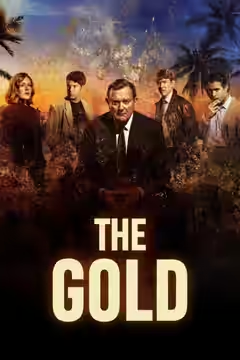
Neil Forsyth’s crime drama finds plenty of entertainment in the business of shifting stolen gold. We recommend its first series for the plotting and ensemble, with patience required for the lectures about class.
The Gold makes the disposal of stolen goods an absorbing subject for a crime drama. The first series of Neil Forsyth’s drama is smart, entertaining television that occasionally pauses to explain social distinctions we have already understood. The Brink’s-Mat robbery provides the opening, but the business of selling the gold gives the story its scope. Across six episodes, the investigation spreads through the criminal underworld, legitimate businesses and domestic lives, finding plenty to occupy us after the immediate excitement of the heist.
Forsyth understands that the practical difficulties of crime can be entertaining in themselves, and he makes the laundering sufficiently legible to invite us along. We were caught up in its ingenuity, and slightly uncomfortable at how much we enjoyed it. The money has to pass through an expanding network of people and businesses, giving the plotting something concrete to follow. That attention to how the enterprise works gives a familiar genre fresh problems to solve, with enough human interest to keep the transactions from becoming an accounting exercise.
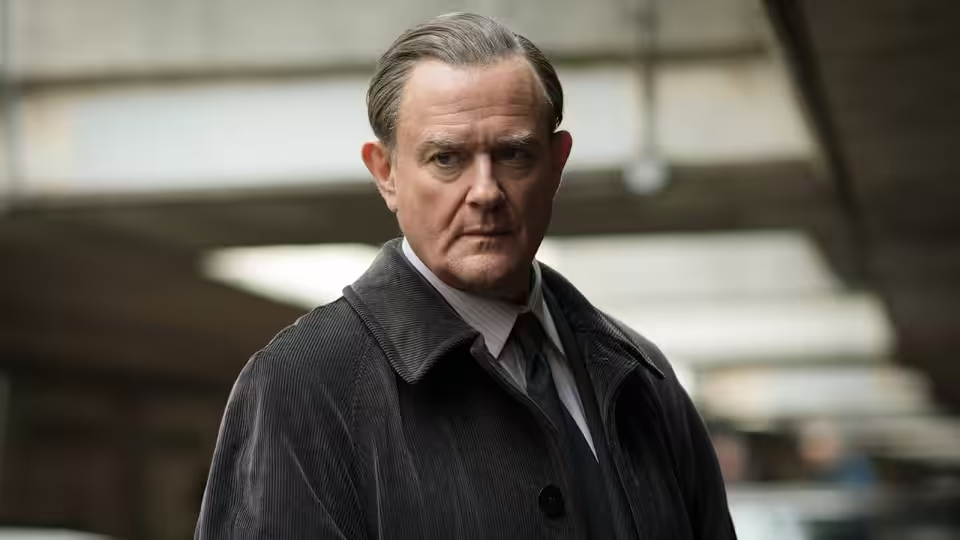
Hugh Bonneville gives DCI Brian Boyce the steadiness this busy story needs, lending the investigation weight without making it ponderous. Charlotte Spencer, as Nicki Jennings, helps keep the social commentary attached to a person, even when the script becomes insistent. The ensemble is a substantial part of the pleasure: Forsyth gives the performers sharp enough dialogue to make exposition tolerable. The attention to domestic lives also allows people to matter beyond their usefulness to the next development in the case.
Eleanor Sindall’s production design helps establish the differences in status that preoccupy Forsyth, particularly in the places where people live and work. Those surroundings make some of the script’s explanations unnecessary. Cinematographers Oli Russell, Stuart Bentley and Simon Tindall give this sprawling story a visual consistency that helps hold its different strands together. The presentation is handsome, although the more persuasive achievement is making the legitimate businesses feel part of the same story as the criminal enterprise.
Editors Mark Keady, Lindsey Woodward, Nicolas Chaudeurge and Peter Williams have a considerable organisational task in the switches between the police, the criminals and their private lives. The plotting generally remains readable, though the accumulation of connections sometimes slows the forward movement. Simon Goff’s music helps maintain momentum without becoming the main attraction. It is the writing and performance that make the business worth following, and the score sensibly leaves them room.
The clearest weakness is Forsyth’s insistence on spelling out his points about class and gender. Characters can seem briefly assigned to explain their place in society, when their circumstances have already done the job. These passages are more conspicuous because so much of the surrounding dialogue is brisk and assured. The fascination with criminal ingenuity also needs watching: the programme enjoys its villains enough that the darker implications of their business can receive less attention than their cleverness.
That affection need not disqualify a crime drama, but it does place a little more responsibility on the audience. The strongest stretches give us enough of the investigation and the domestic lives to resist treating everyone as an entertaining rogue. This remains an easy series to recommend to anyone who enjoys following a complicated criminal enterprise and can tolerate the occasional lecture. Put the telephone out of reach before the gold starts changing hands.