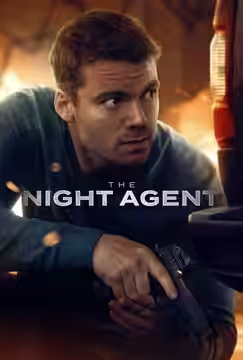
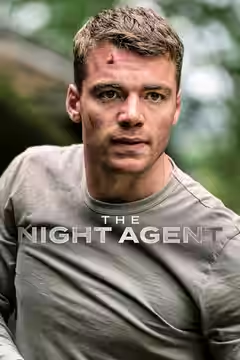
Shawn Ryan’s adaptation of Matthew Quirk’s novel is brisk, decently acted and almost entirely forgettable: a conspiracy thriller that explains itself every ten minutes so you never need to look up from your phone. Gabriel Basso and Hong Chau make it worth half an evening.
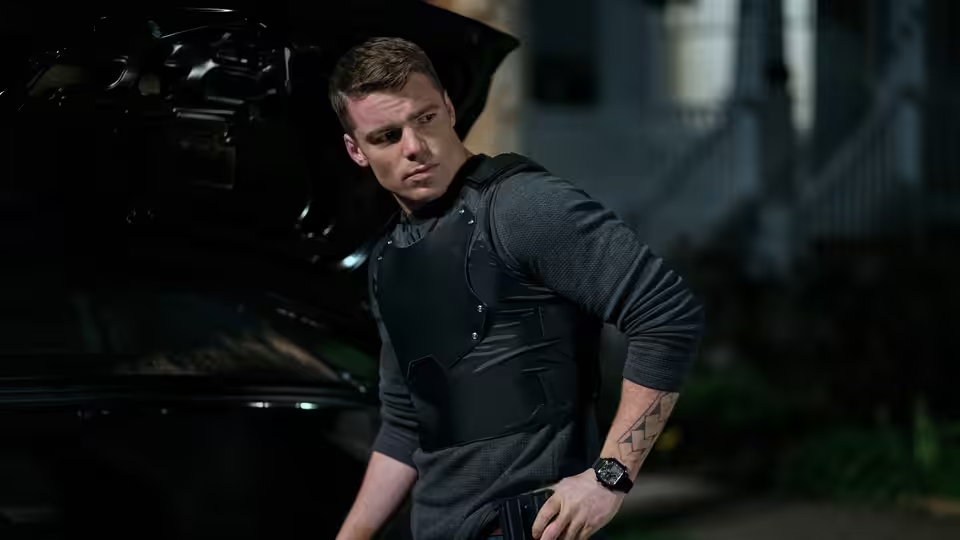
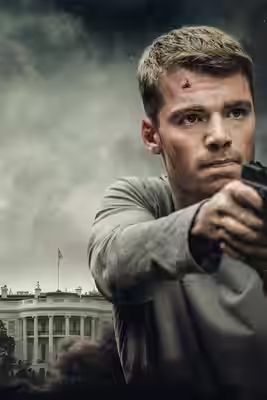
Shawn Ryan, who made The Shield, has built a thriller out of a single good image. Peter Sutherland (Gabriel Basso) sits in the basement of the White House at night beside a phone that is not supposed to ring. It rings. On the line is Rose Larkin (Luciane Buchanan), whose aunt and uncle have just been attacked in their home, and by the end of the first hour the two of them are running and they do not stop for ten episodes. The Night Agent is efficient, well cast and thin. We watched all of the first run in three evenings and a week later could not have told you what the conspiracy was.
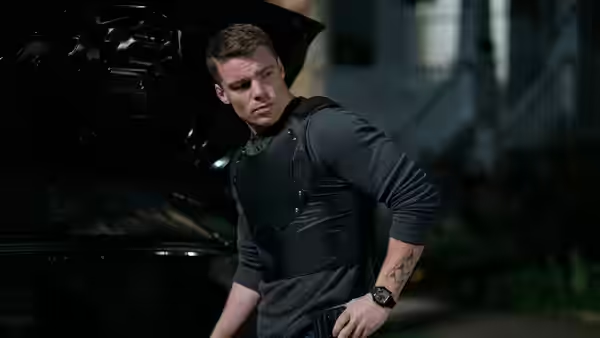
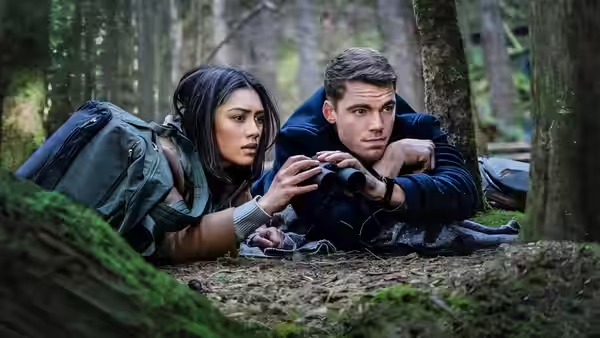
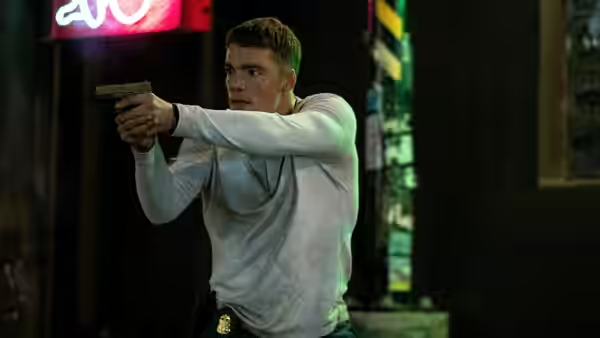
Basso is the reason to bother. He plays Peter as a man who has been told no for so long that he has stopped expecting yes: no grin, no quip, a slight stoop at the shoulders even when he is winning a fight. It is a plain, patient performance and the show leans on it more than it seems to know. Buchanan gives Rose more spine than the script writes for her, and the two of them are good together, bickering in cars about who is allowed to drive. Hong Chau, as Diane Farr, the official who sends Peter out and tells him only what he needs, does the most with the least. She never raises her voice and she is the only person on screen we were ever unsure about.
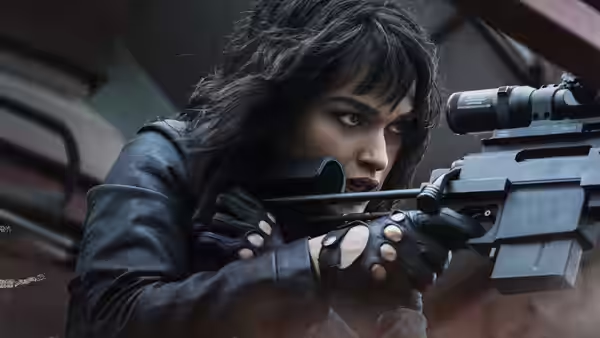
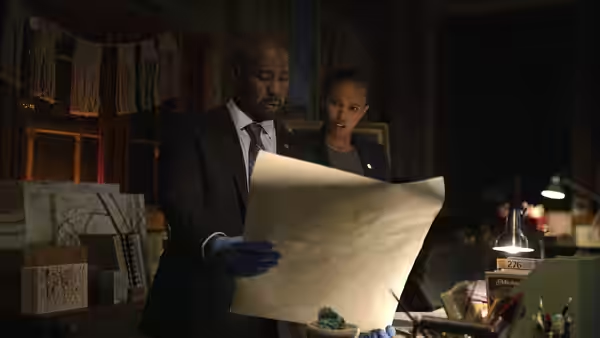
The supporting cast is better than the parts. Fola Evans-Akingbola plays Chelsea Arrington, a Secret Service agent who takes the job seriously in a show where almost nobody else does, and Sarah Desjardins makes Maddie Redfield, the young woman she guards, sulky and sympathetic at once. Eve Harlow and Phoenix Raei, as the killers Ellen and Dale, are the show’s one dry joke: two professionals who bicker about dinner and motel rooms between murders. D. B. Woodside, as Erik Monks, arrives later and brings a tired warmth the series could have used earlier.
The trouble is the writing, and there is a lot of it. A dozen writers are credited across the run, Ryan among them, and the result is dialogue that tells you everything twice. A character learns a thing; in the next scene they tell another character the thing; in the scene after that the second character tells a third. Every episode ends on a door opening or a gun raised, and the next begins by explaining why. Ten directors are credited, Seth Gordon and Ana Lily Amirpour among them, and we could not have told you where one handed over to the next: the show has one look, grey offices and orange night streets, and keeps it. Robert Duncan’s score is a low throb under the chases and a stab at each cliffhanger, and it does what it is asked and nothing more.
Here is what we felt. The first episode had us. The phone, the house in the dark, Rose crouched in a room while men moved through the one below: we sat forward and we were glad to. Somewhere around the sixth hour we noticed we were looking at our own phone while one character explained the plot to another who had been standing beside them when it happened, and the show had not noticed us leave. We came back for the fights, which are short and well staged, and for Chau, and that was enough to finish. It was not enough to care.
The second run adds Arienne Mandi as Noor Taheri, and the third does much the same again with new faces. The reviews for each run say what they said for the first, which is the point: it is the same show every time, and it is built to be.
The Shield was full of people who were wrong and knew it. Here everyone is either decent or a traitor, and the only question is which column each name goes in. Watch it the way it is made to be watched, two episodes at a time with something else in your hand, and it will do its job. Ask it to hold your whole attention and it will not. It carries a 15.