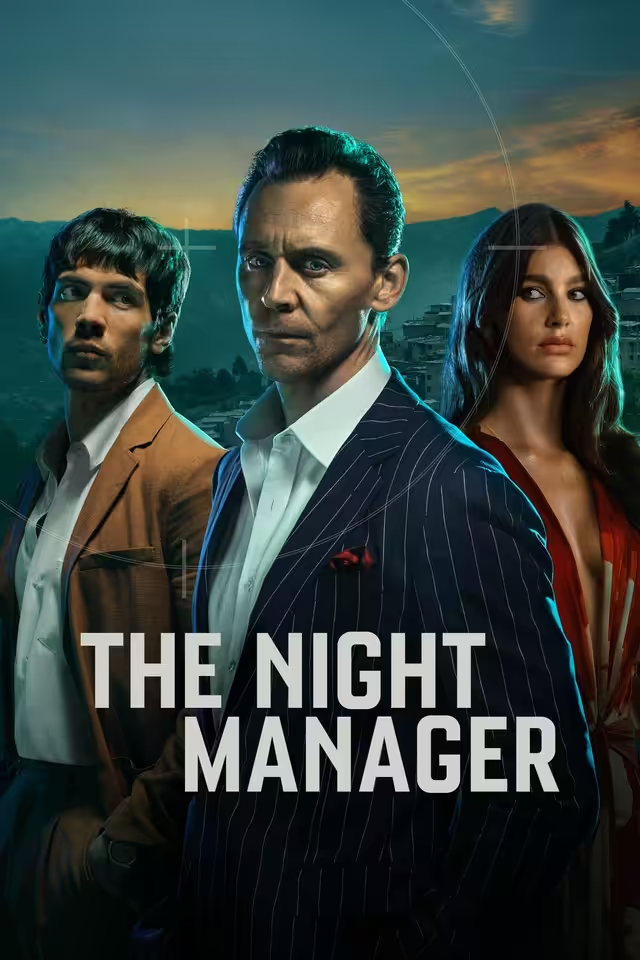
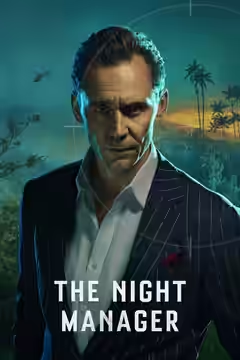
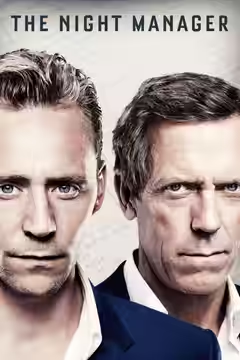
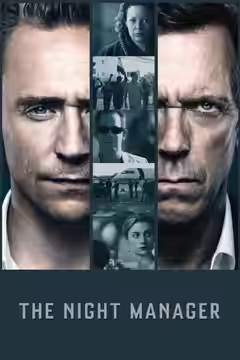
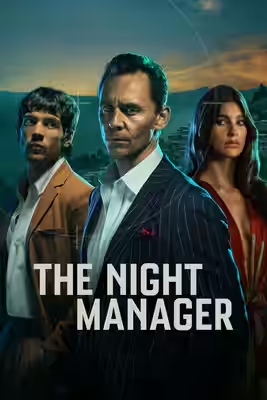
We recommend The Night Manager for the pleasure of watching Tom Hiddleston and Hugh Laurie size each other up. Susanne Bier makes persuasive entertainment from familiar spy machinery, though the moral complications are disappointingly slight.
The Night Manager is thoroughly enjoyable spy television, with a familiar story given enough care to keep us watching. Susanne Bier directs with confidence, and David Farr’s adaptation of John le Carré puts the pleasure of watching clever people assess one another close to the centre. It is a straightforward proposition, carried off with considerable skill. We recommend it for the actors and the suspense, with a reservation about how readily we can anticipate its plotting.
Tom Hiddleston’s Jonathan Pine is a persuasive guide through it. His charm has a useful restraint: he can hold our attention without constantly signalling that he deserves it. He makes Pine’s decency appealing, and we believe this man could handle himself in complicated company. Bier gives that stillness room, trusting us to notice the effort involved in keeping a reaction private while the other person is watching.
Hugh Laurie gives Richard Roper a more unsettling ease. Playing an arms dealer, he does not need to advertise nastiness every time he appears; his affability is enough to make us wary. We felt uneasy when Laurie smiled, because he made Roper seem entirely at peace with what he sells. That satisfaction makes the scenes with Hiddleston absorbing even when the plot is doing something we recognise.
Michael Snyman’s cinematography makes the expensive surroundings inviting, which is important to the drama. Roper’s life has to look desirable if we are to understand the ease with which people tolerate him. Tom Burton’s production design supports that impression, giving wealth the comfortable familiarity of something its owners barely need to notice. Bier lets us enjoy the glamour, and the images remain clear enough for the actors’ watchfulness to matter within it.
Ben Lester’s editing is most effective when it gives the leads time to weigh each other up. There is suspense in that waiting, even when the likely direction of a scene is apparent. Federico Jusid’s music keeps the unease present without competing with the actors for attention. These are useful disciplines in a spy drama: a conversation can hold us because the programme has taken the trouble to make listening interesting.
Farr’s writing is the main limitation. The supporting characters do not acquire enough independent weight, and the clearer their purpose becomes, the easier the story is to anticipate. Le Carré’s name invites expectations of divided loyalties and uncomfortable choices, but here we can settle on whom to trust fairly quickly. The actors keep suggesting more complicated people than the script supplies, and there are stretches when their efforts make us wish the writing would give them something less familiar to do.
Against the demands of an escapist spy thriller, though, this is assured work. Bier understands the attraction of capable people in dangerous company, and Hiddleston and Laurie give us enough to watch even when we have guessed where the story is going. It is a good choice for an evening when keeping track of a spy plot ought not to require a notebook.