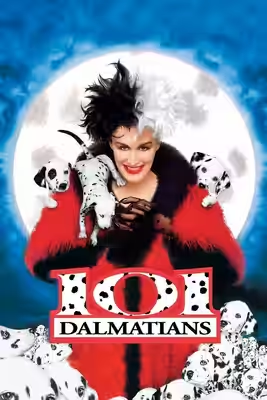
Glenn Close plays Cruella de Vil as if the cast owed her money, and while she is on screen this is a lively Christmas picture. The dogs are mute, the humans are dull, and the last half hour is Home Alone with fur.
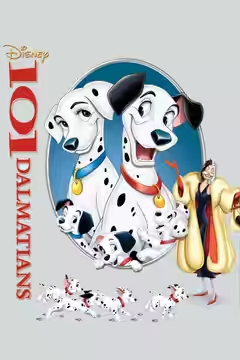
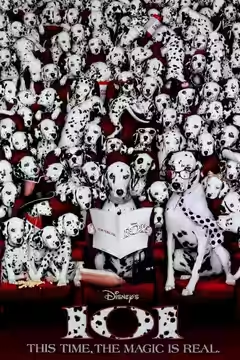
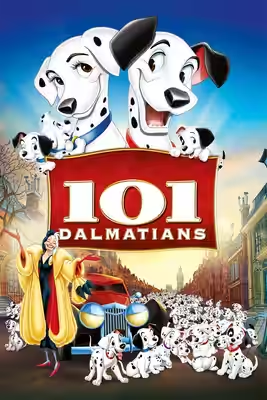
Stephen Herek’s 101 Dalmatians is a live-action remake of the Disney cartoon, itself taken from Dodie Smith’s novel, and John Hughes has written and produced it. One large decision was made before the first shot: the dogs will not speak. What is left is a film in which Glenn Close does a great deal and almost nobody else does anything, which is our verdict. It runs 103 minutes, carries a U certificate, opened in UK cinemas on 13 December 1996, and is at its best for about an hour.
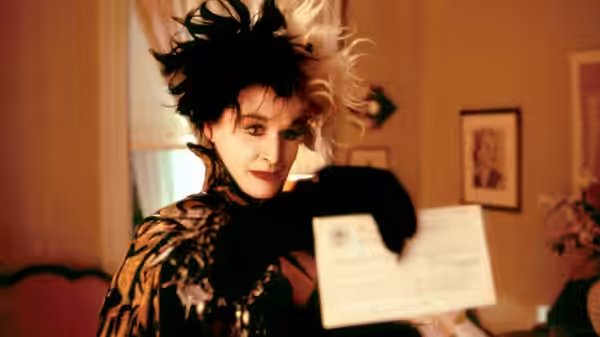
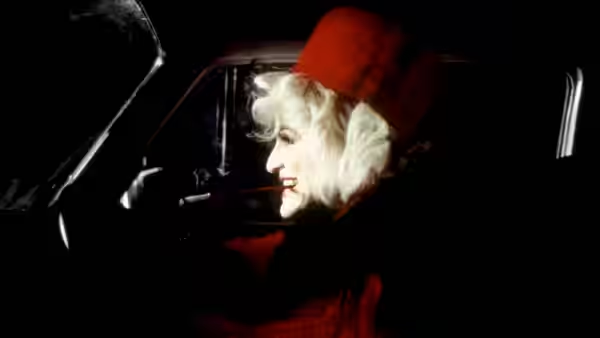
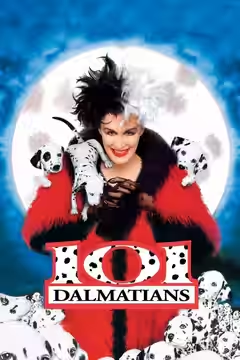
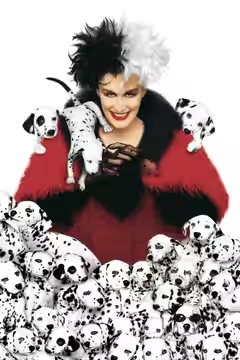
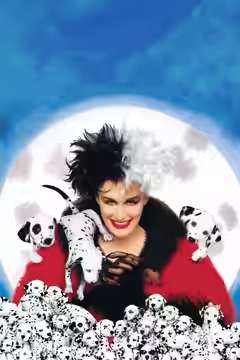
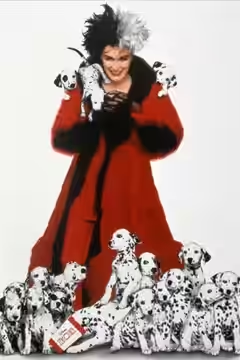
Close plays Cruella de Vil as a woman who has never once been told no. She arrives at the fashion house in a cloud of cigarette smoke, hair split black and white down the middle, and sweeps through a room of staff as if they were furniture. Anthony Powell and Rosemary Burrows have dressed her in fur, red leather and coats with collars that could take an eye out, and she wears each as a weapon. We laughed at her first meeting with Anita, because Close has found a way of being pleasant that is more frightening than any snarl, and we spent the rest of the film waiting for something equal to it.
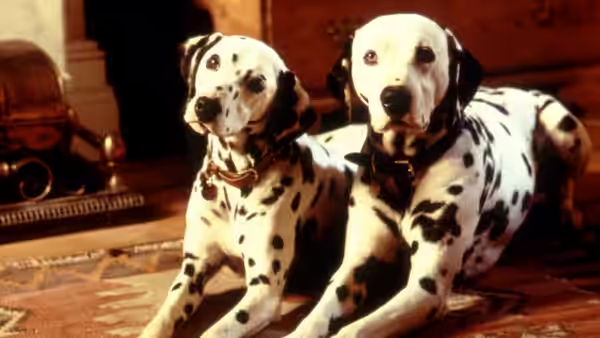
It does not come. Jeff Daniels plays Roger as an amiable American who designs video games and is pulled around London by his dog, and Joely Richardson’s Anita is kind and lightly drawn. Their meeting in the park, two dalmatians hauling two strangers into the same pond, is well cut by Trudy Ship, who keeps the dogs’ faces in the frame at the moments a cartoon would have given them a line. After that Hughes’s script leaves the pair with a house and nothing to do. Joan Plowright’s Nanny bustles around them with more energy than the script has earned.
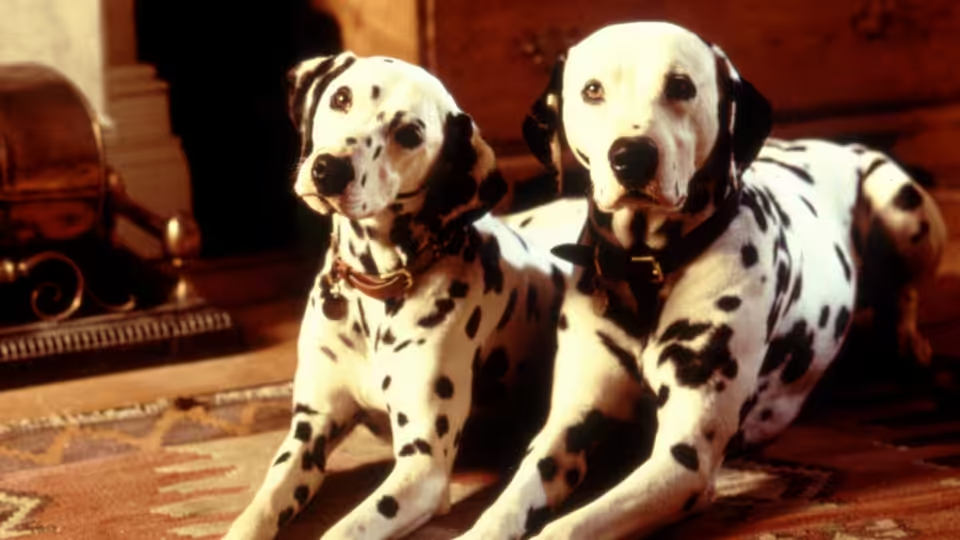
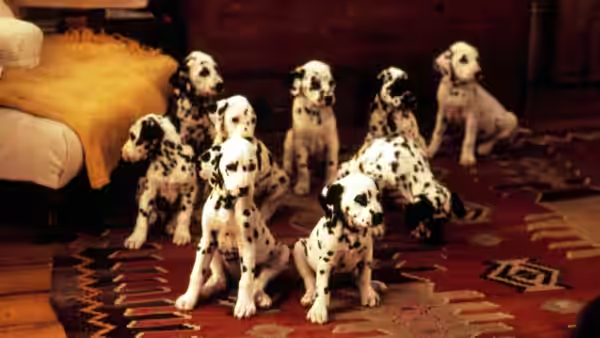
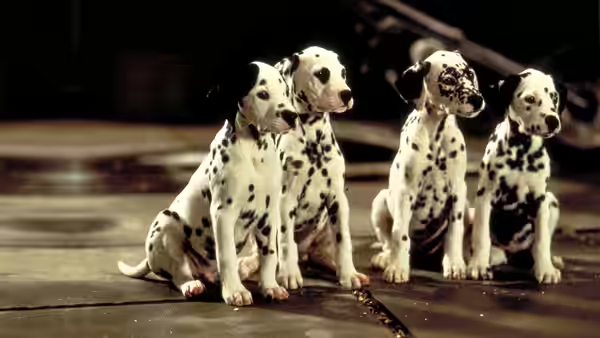
The animals are good. The trained dogs look at things and then at each other, and Herek holds on them long enough for us to supply the thought. Adrian Biddle shoots London in a flat grey light, snow in the squares and warm lamps in the windows, and Assheton Gorton’s production design gives Roger and Anita a tall thin house of red brick that looks like somewhere a dog would want to live. Cruella’s own house is black marble and spikes. Michael Kamen’s score does its job early and then starts telling us when to laugh.
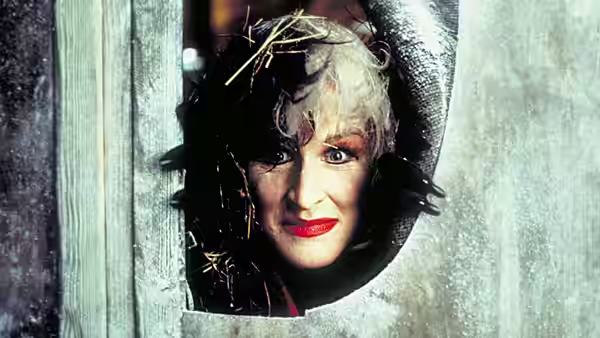
The last act hands the film to Hugh Laurie and Mark Williams, as the hired thieves Jasper and Horace, and to a sequence of injuries. They fall through floors. They are electrocuted. Hughes wrote Home Alone in 1990, and there is a long stretch here that is that film again with animals in place of a child, every gag flagged a beat before it lands. We were bored by it, and then slightly cross, because Laurie and Williams are good comic actors used as crash-test dummies. Worse, Close is pulled into the slapstick, and the film that spent an hour building a monster spends its last half hour making her ridiculous. John Shrapnel’s Skinner, a hulking man who does not speak, is a far more unsettling idea and gets about four minutes.
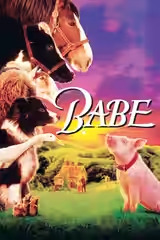
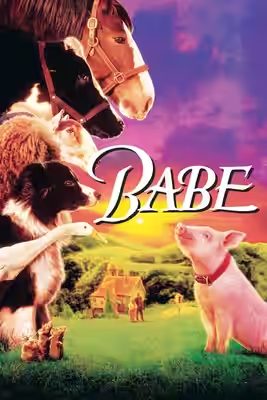
Herek made Bill & Ted’s Excellent Adventure in 1989 and can keep a daft idea moving; the first hour has that quality and the second does not. The cartoon gave its dogs a chain of barks across the rooftops and a plan; this one gives them running and leaves the plan to the humans, who have not got one. It is better made than most family comedies of its decade and less charming than Babe, which came out the year before and let its animals talk because it understood that was the whole point.
Most critics landed about where we have: nobody is calling this a bad film, only a thin one. Children under ten will enjoy the puppies and will not mind the rest. Adults should watch for Close and may find their attention wandering once she stops being allowed to be frightening. At home you can rewind the fashion house scenes, which is what we did.