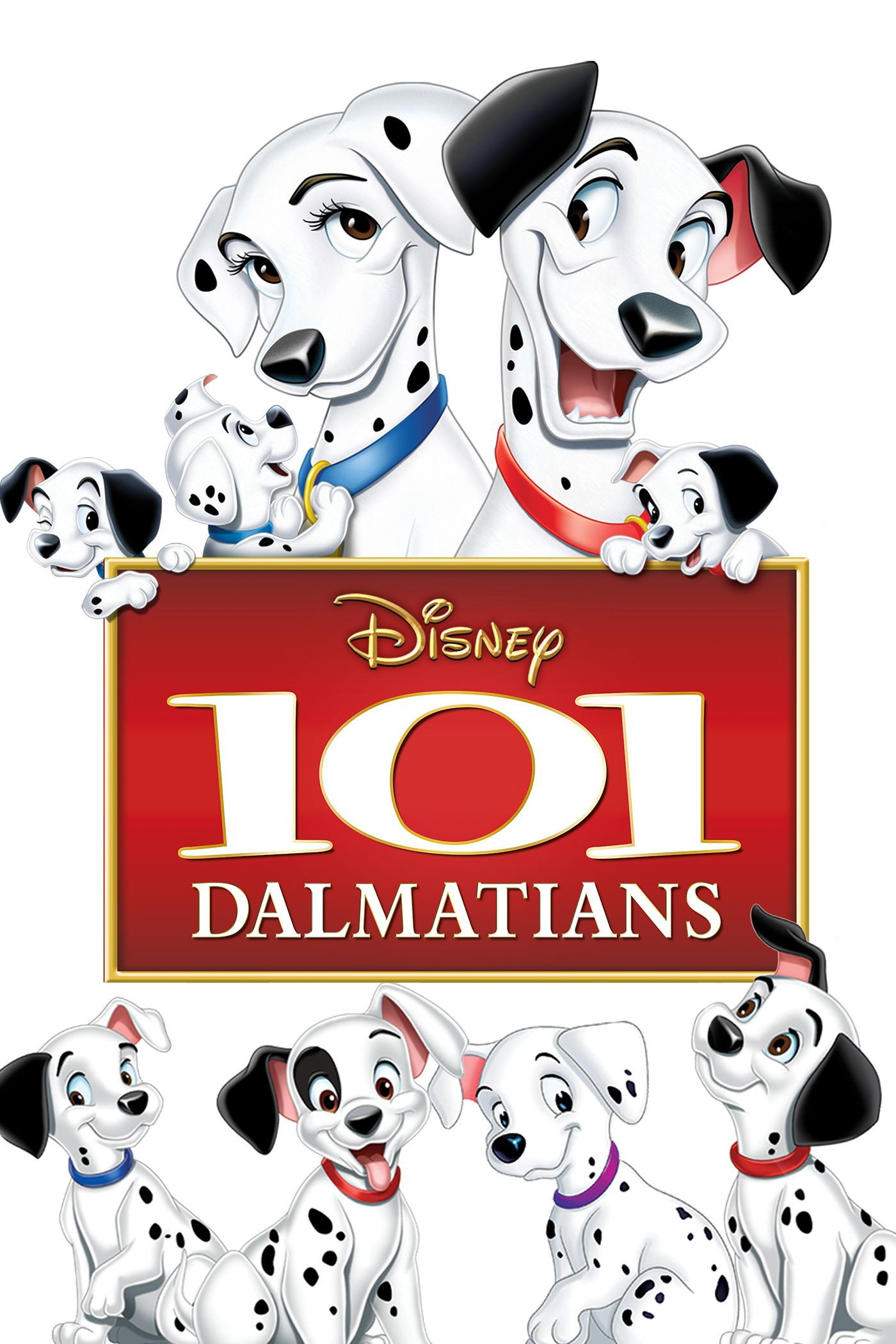
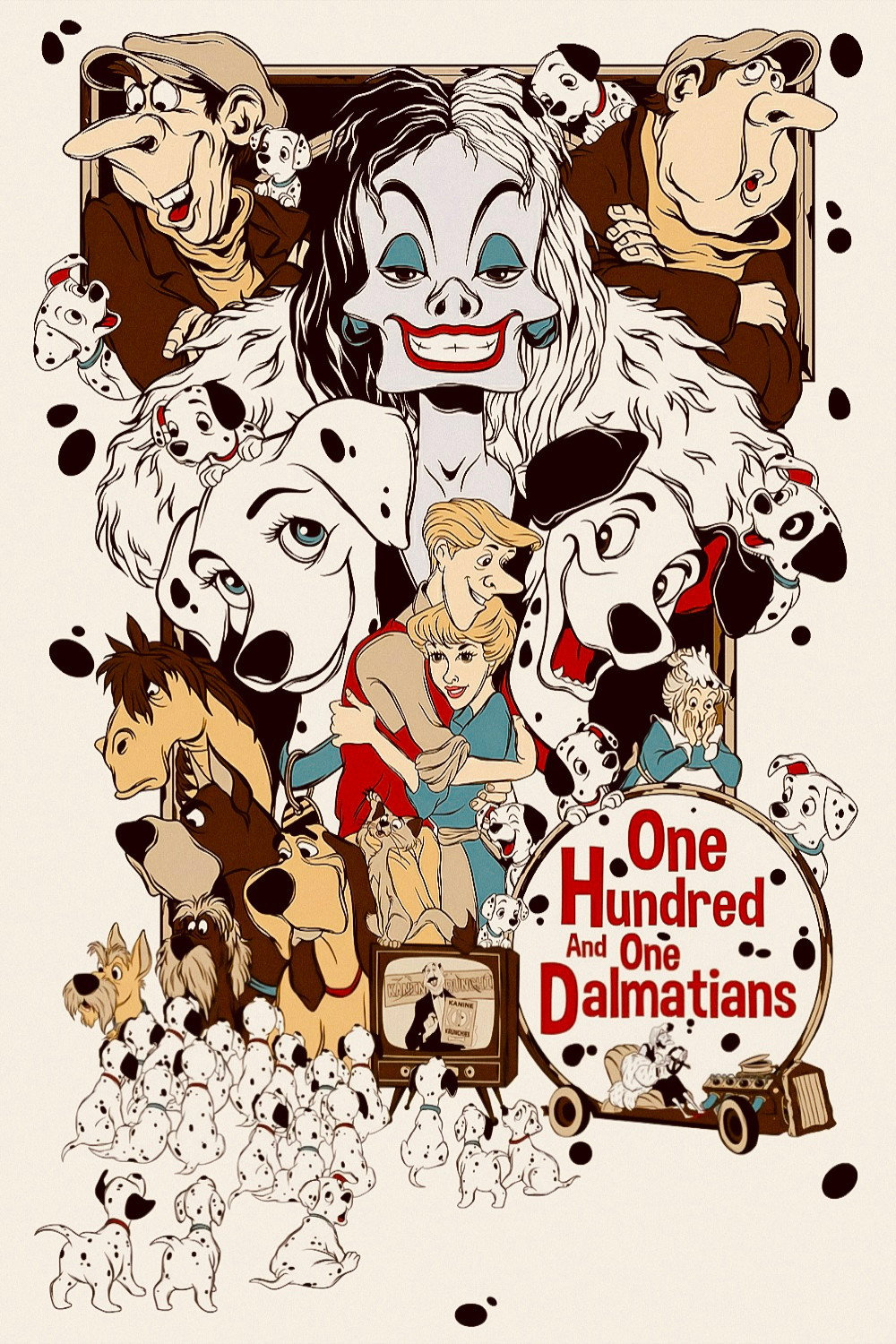
Disney’s dog-napping caper is short, dry and drawn in a rough pencil line that still looks modern, and it has a villain nobody at the studio has bettered. The puppies are the least interesting thing in it, and there are a great many of them.
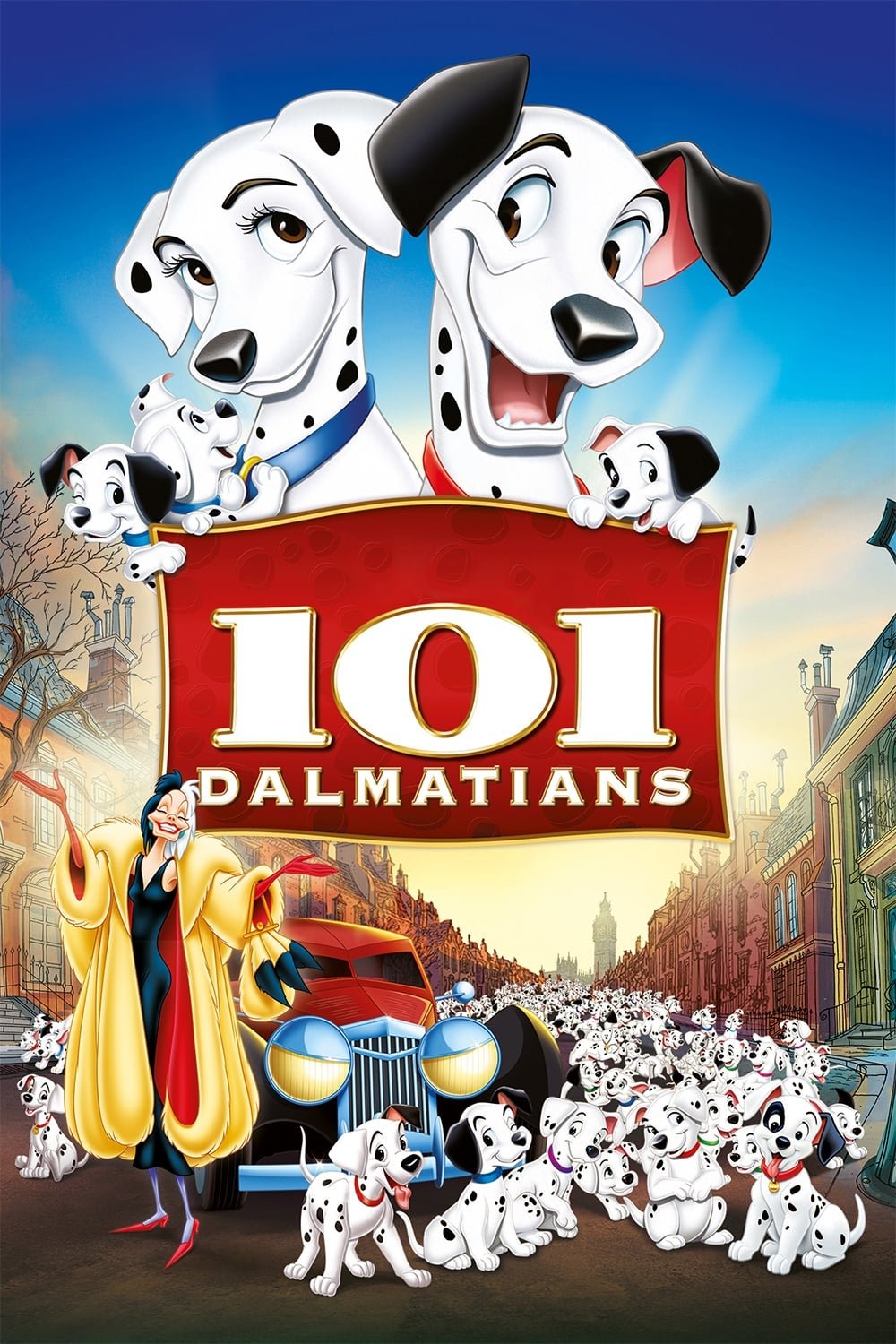
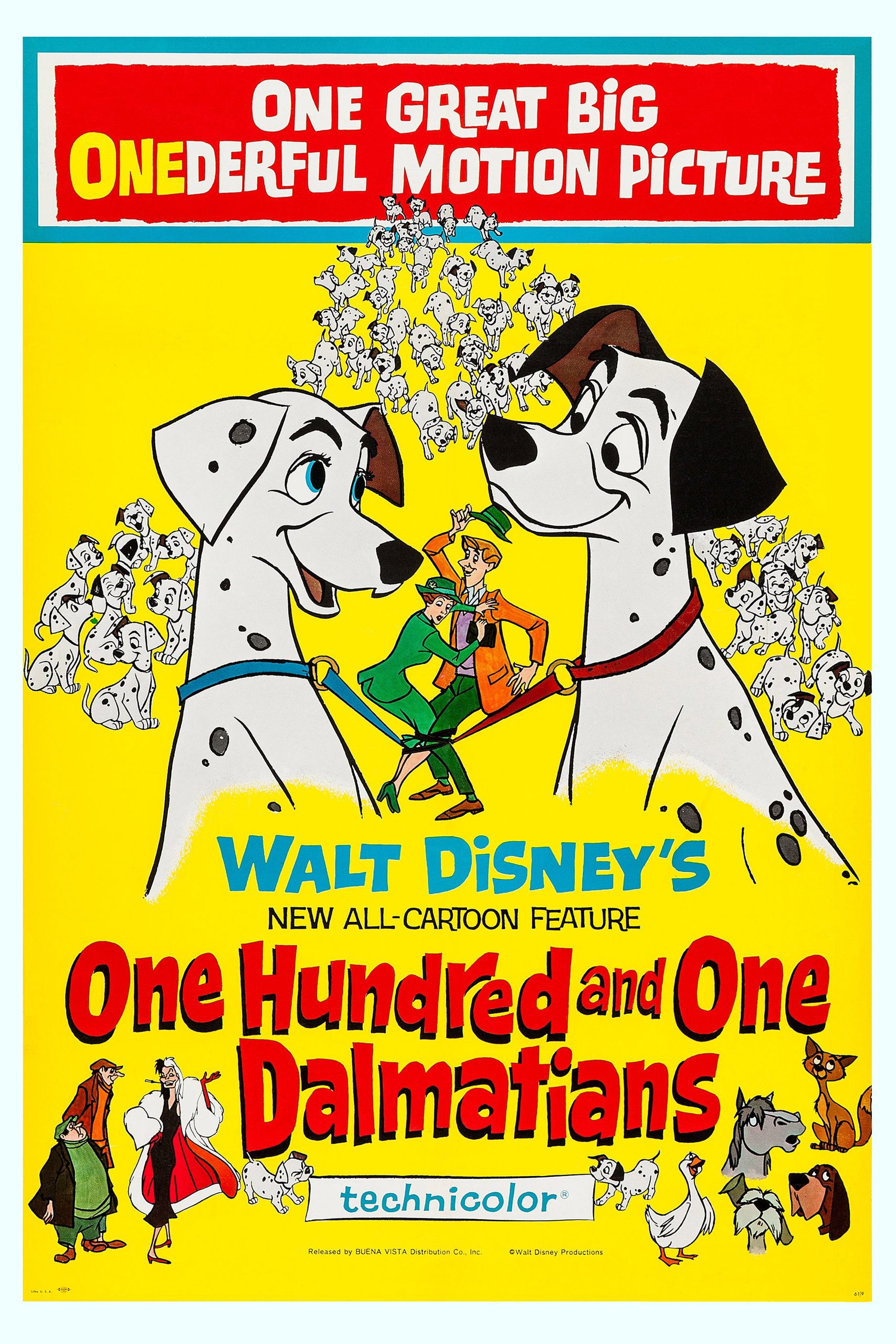
Dodie Smith’s novel about a London dog whose puppies are stolen for a coat reached the screen in 1961, at 79 minutes, with one writer credited for the story and three directors sharing the chair. That is short for a studio that had spent the previous decade on castles and forests, and the shortness is the first good thing about it. Bill Peet’s story keeps to the bone: a marriage, a litter, a theft, a rescue. Nothing is sung twice. It is the driest film the studio had made, and we recommend it, with the caveat that the puppies are the weakest thing in it.
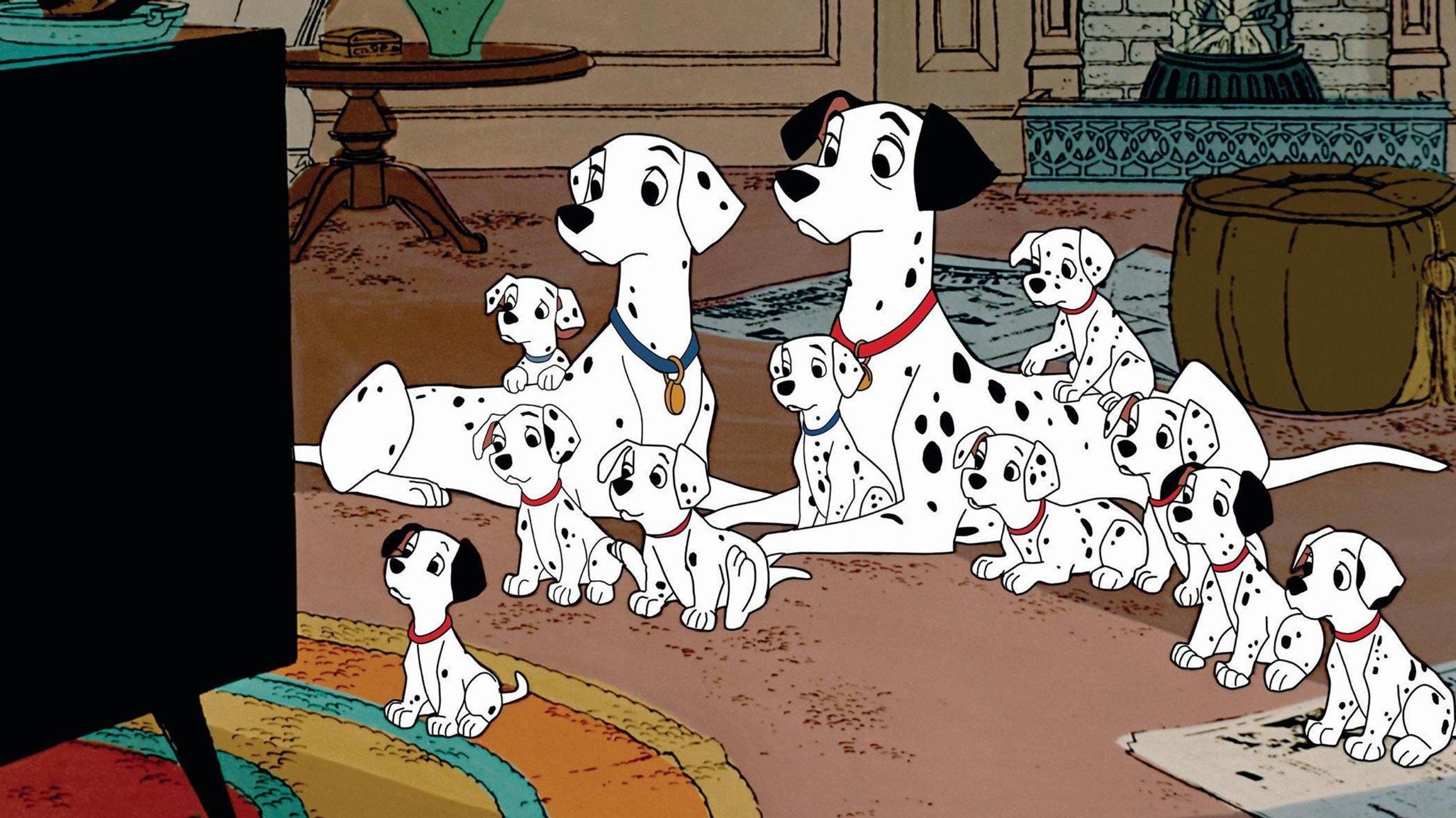
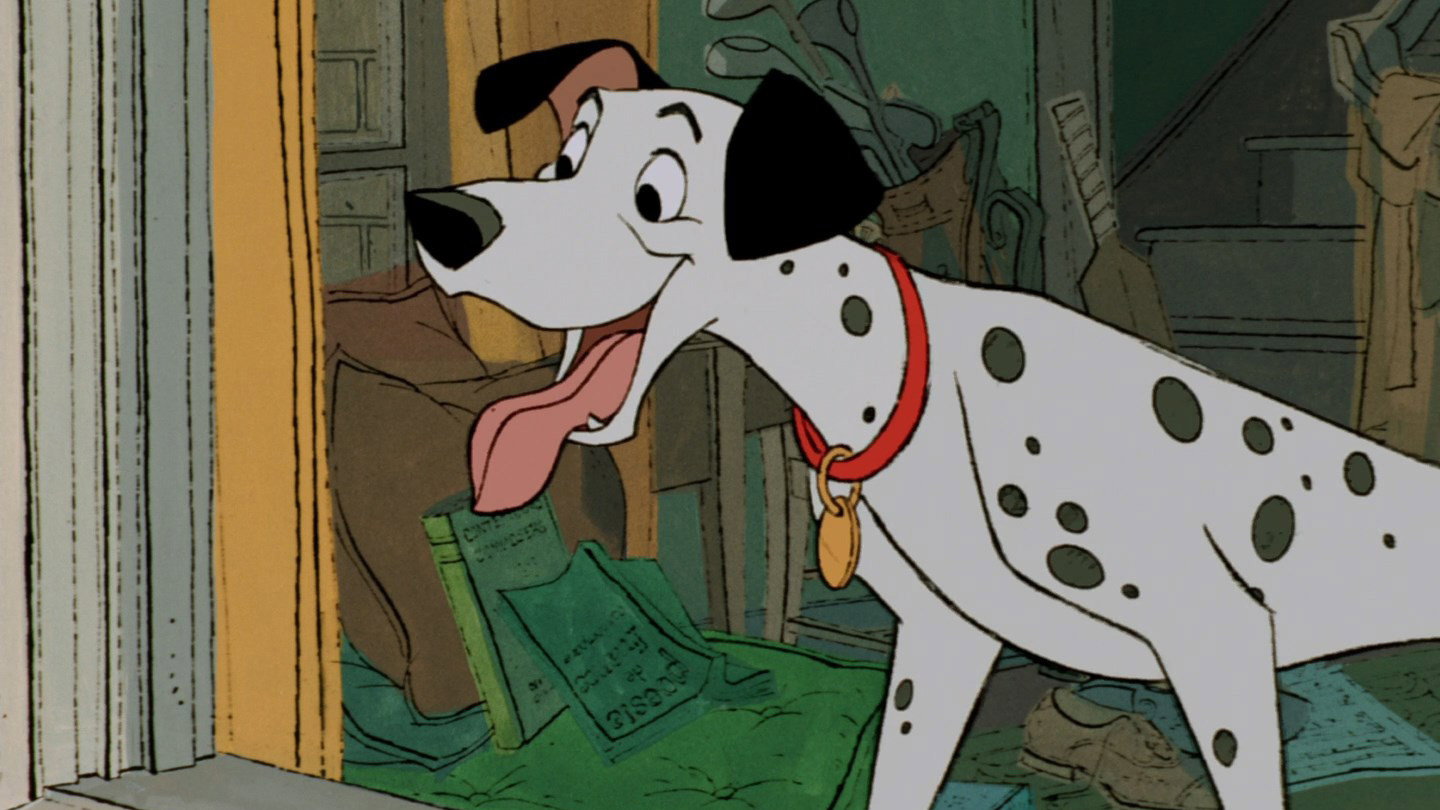
The look was new. Ken Anderson’s design puts the animators’ pencil lines straight onto the screen, by way of a photocopier rather than an inker’s brush, so every outline is a little rough and the colour sits under it like a wash. London is grey brick, black railings and a wet park; Roger’s flat has a piano and a bus going past the window. The reviews have said for years that Walt Disney, who produced it, did not care for any of this, and you can see why. It looks like a sketchbook. It has also dated less than anything else the studio made that decade.
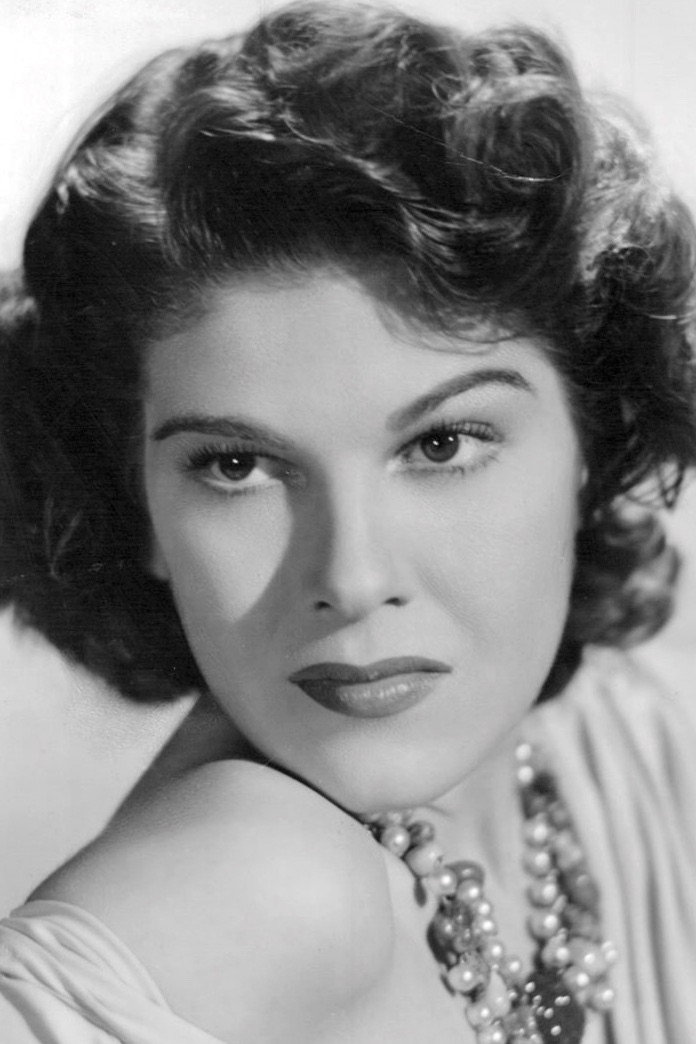
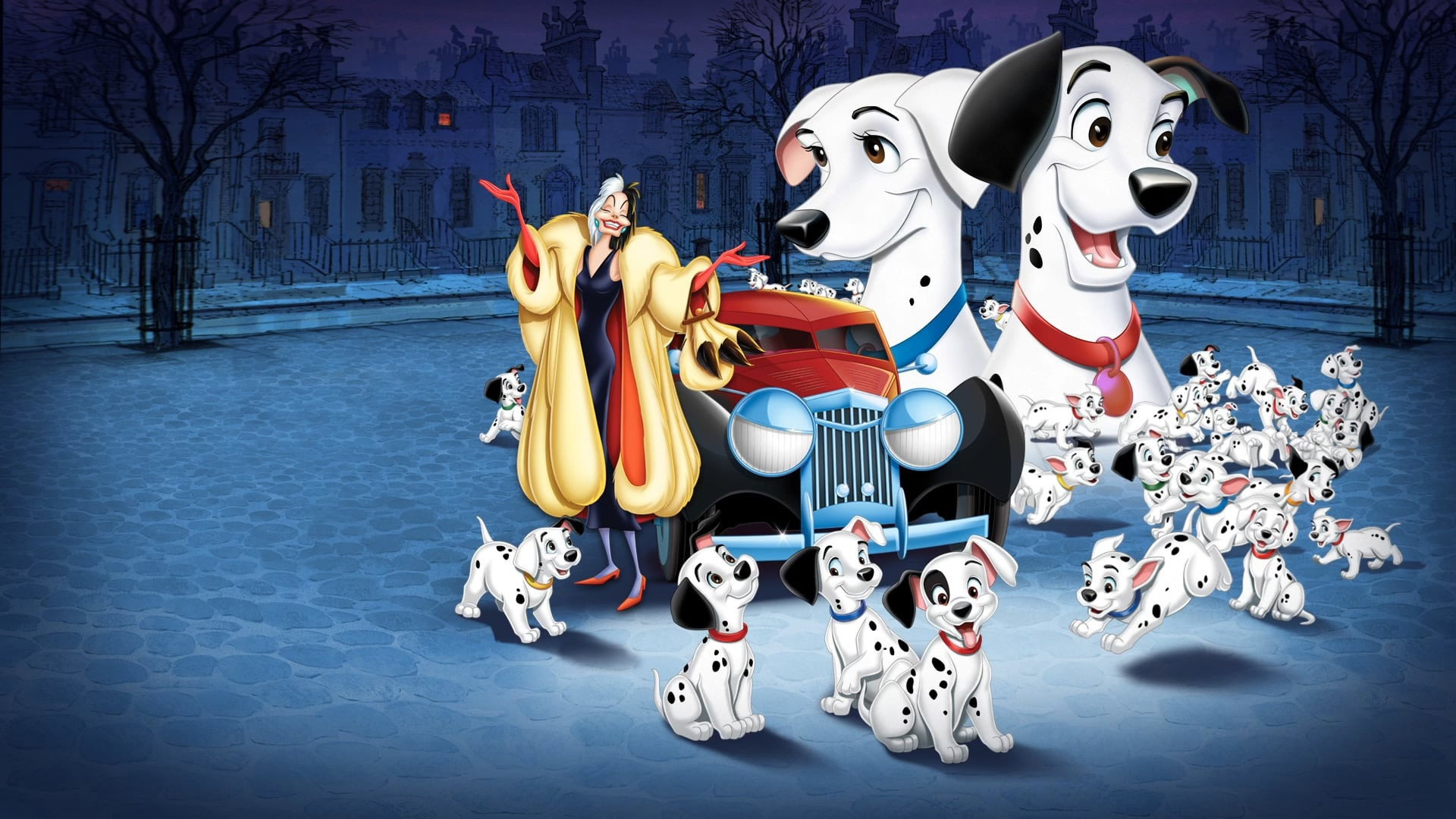
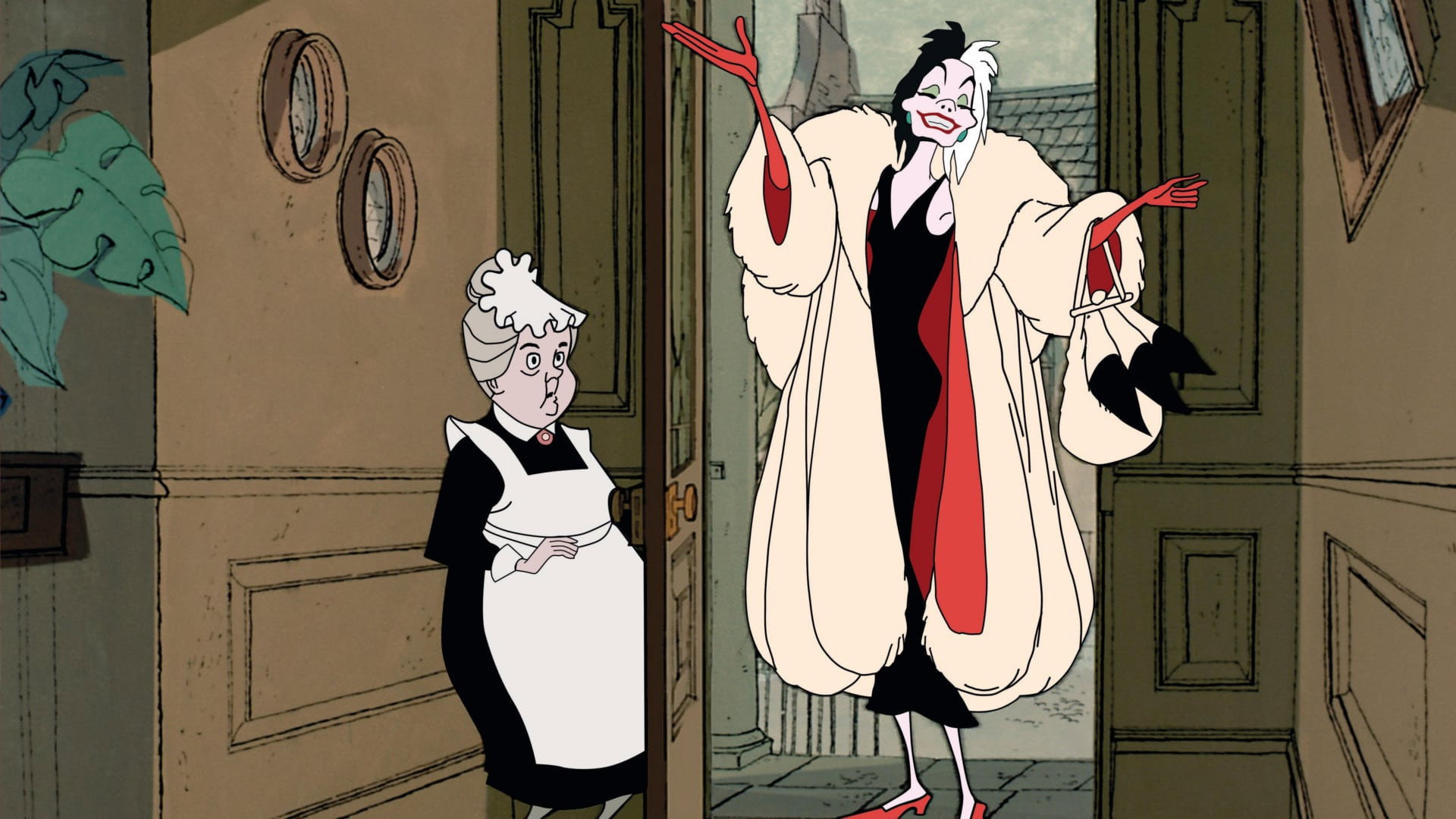
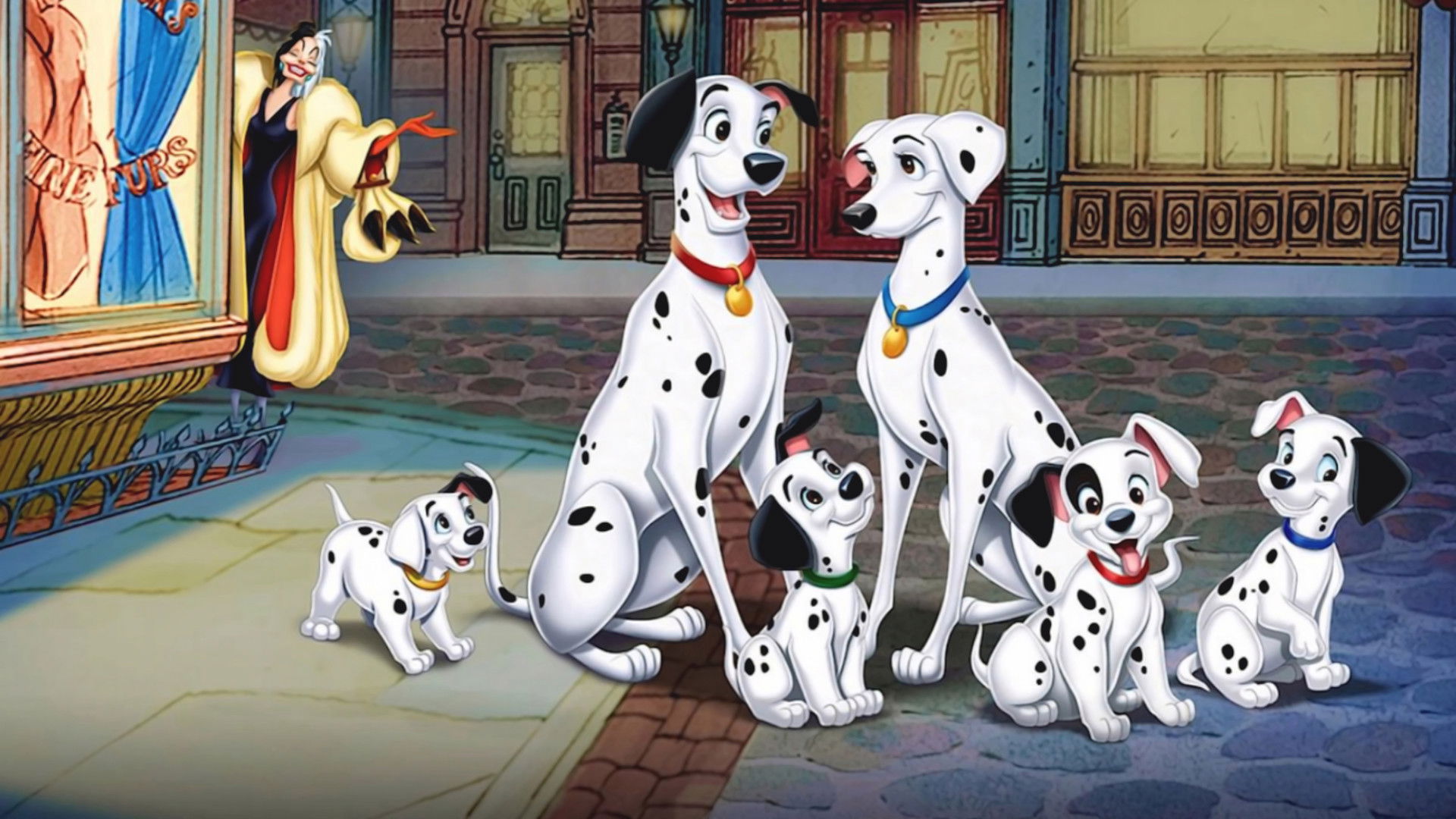
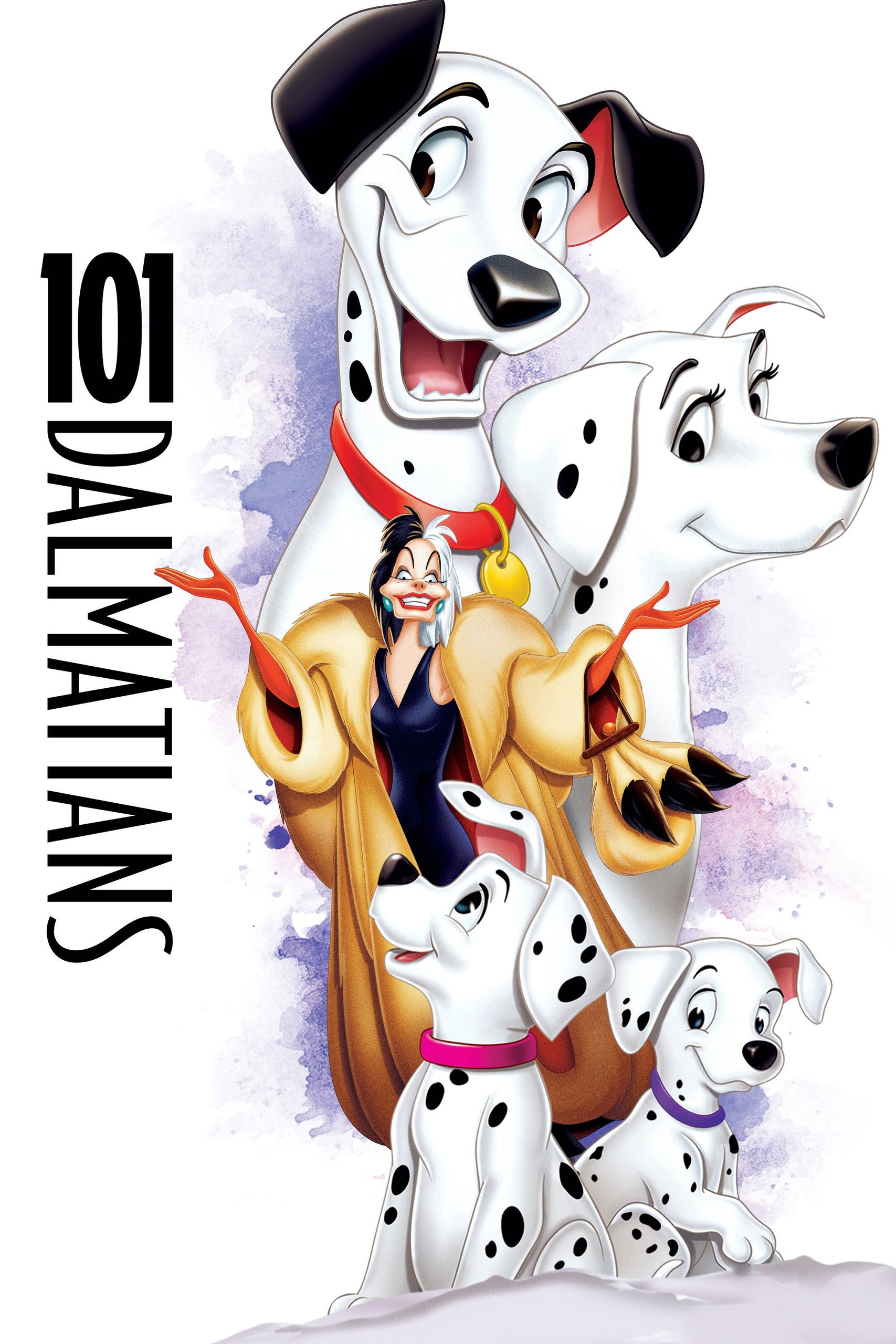
Then there is Cruella. Betty Lou Gerson gives her a voice that starts in a drawl and ends in a shriek, and the animators give her a face that is all cheekbone and a coat that is all fur. She arrives at the flat trailing green smoke, calls Anita “darling” while insulting her, and asks to buy the puppies before they are born. Roger (Ben Wright) says no. We were frightened of her as children and uneasy again now, and not because of the shrieking. She says exactly what she wants, out loud, in a sitting room, and nobody present knows how to make her stop. Roger writes a rude song about her to cheer himself up, and the film uses it as its theme.
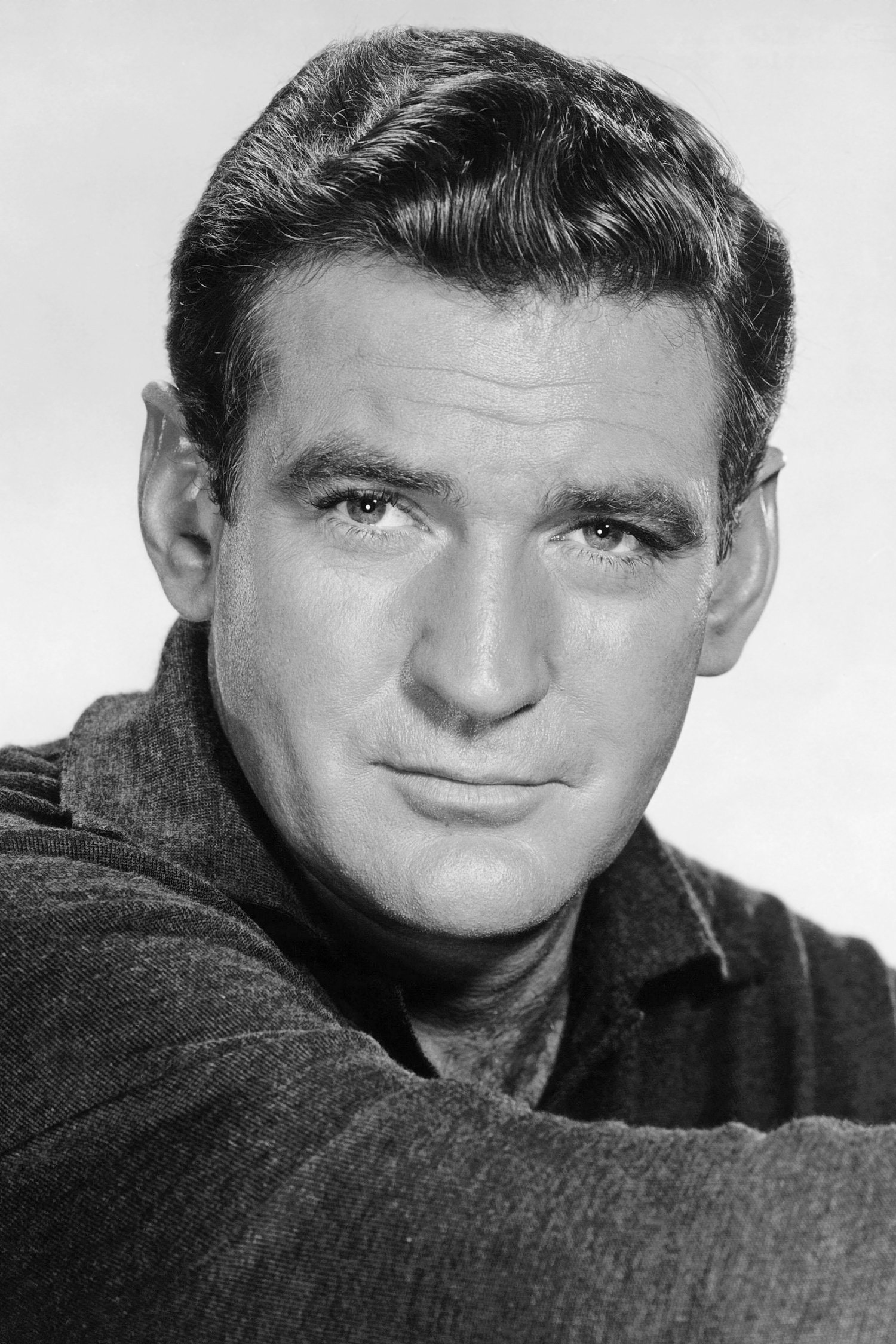
The middle hour belongs to the dogs. Pongo, voiced by Rod Taylor in a tone that ought to be reading the shipping forecast, sends word of the theft by barking at dusk, and the message crosses London one dog at a time, out through the suburbs to a farm in the country. It moved us more than a relay of barking has any right to. Every dog in the chain is a stranger doing a favour, and the film shows the whole city at nightfall to make the point. At the far end are the Colonel, an old sheepdog voiced by J. Pat O’Malley, who also plays the thief Jasper, and Sergeant Tibbs (David Frankham), a cat who does the work. Their scenes in the derelict house where the puppies are held are the funniest in the film, because Jasper and Horace (Frederick Worlock) would rather watch a quiz show than guard anything.
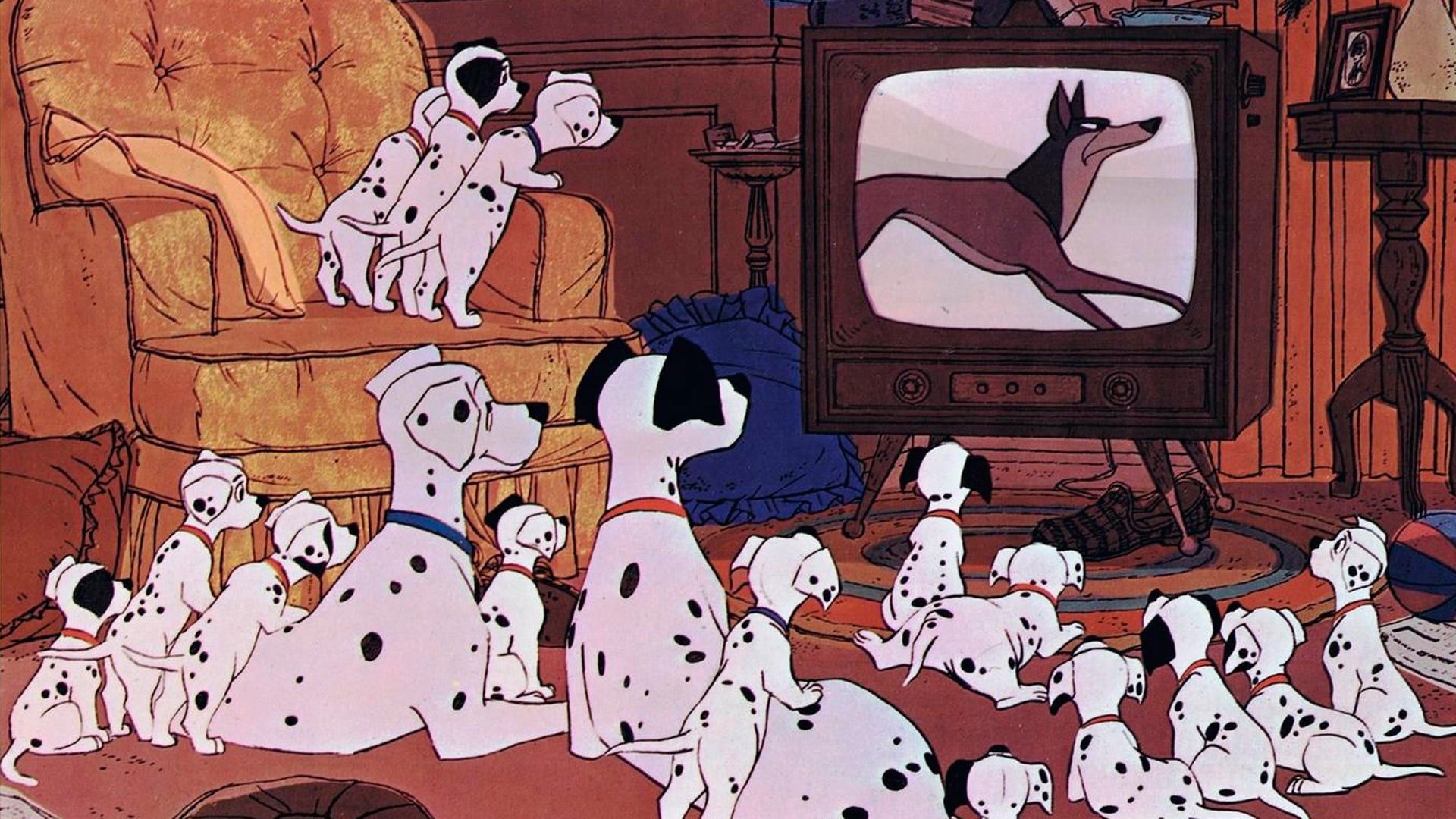
What does not work is the puppies. There are fifteen of them and later many more, and they have two personalities between them: one is hungry and one wants to watch television. When the dogs sit down in front of a set, the film sits down with them. Roger and Anita (Lisa Davis) are pleasant and thin, and Nanny (Martha Wentworth) is there to shout. George Bruns’s score is brassy and quick in the chases and sticky in the nursery. The last stretch, which we will not describe beyond saying it involves snow, goes on a beat or two past the point where we had stopped worrying.
Against the studio’s own standards it has less polish than Sleeping Beauty, two years earlier, and more nerve. The studio drew this way for the next twenty years, mostly less well. Donald Halliday and Roy M. Brewer Jr. cut it so that nothing outstays its welcome except the television, which is presumably the joke.
It is a U certificate and it was made for children, but the smaller ones will need a hand during the drive through the snow. So might you. Sit them close and let Cruella do the rest.