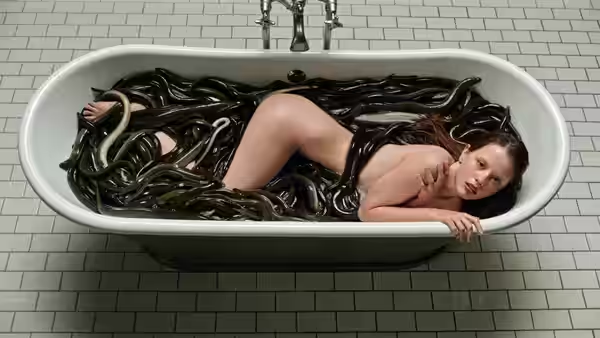
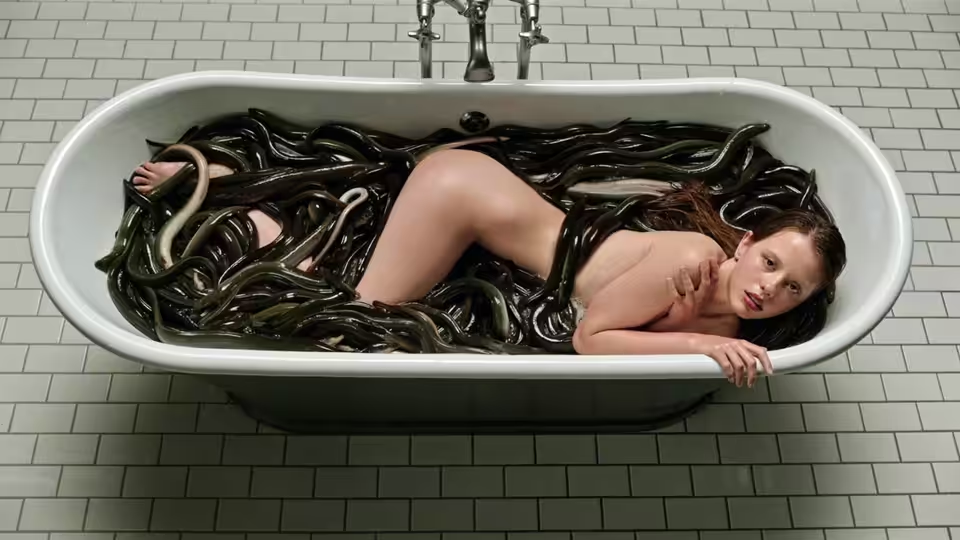
Hannah (Mia Goth) lies in a bathtub surrounded by eels
Film review

A Cure for Wellness

2017 · Directed by Gore Verbinski · 2h 26m

In a sentenceTwo and a half hours at an Alpine spa, and we came out feeling worse than when we went in

Lockhart (Dane DeHaan), a young executive at a New York financial firm, is sent to the Swiss Alps to bring back the company’s chief executive, Pembroke (Harry Groener), who has written from a wellness centre to say he is not coming home, and whose signature is needed for a merger. The centre occupies a castle above a village that will not talk about it. Its director, Volmer (Jason Isaacs), tells Lockhart to return after visiting hours. On the road down, his car hits a deer, and he wakes three days later in the centre with his leg in plaster, now a patient. Everyone drinks the water. Hannah (Mia Goth), a pale girl on a bicycle, has been there longer than anyone, and Victoria Watkins (Celia Imrie) tells him over her crossword what the castle was two hundred years ago.

Plays from YouTube when you press play; nothing loads from them until then.

Fi1m review

Gore Verbinski’s sanatorium is the handsomest haunted house in years, all green lawns, white tiles and blue water, and for an hour we were happy to be locked in. Then the film keeps going, gives away its own answer, and ends somewhere cheap.

Gore Verbinski has made a 146-minute gothic about a wellness spa in the Swiss Alps, and the length is the first thing to say about it, because it is the thing you will feel. Lockhart (Dane DeHaan), a young executive, is sent to fetch his firm’s chief executive, Pembroke (Harry Groener), home from the place before a merger goes through. He arrives, is turned away, crashes his car on the mountain road and wakes three days later as a patient with his leg in plaster. That is a good set-up for a ninety-minute film. Verbinski and his writer Justin Haythe have decided it will do for two and a half hours, and it will not.

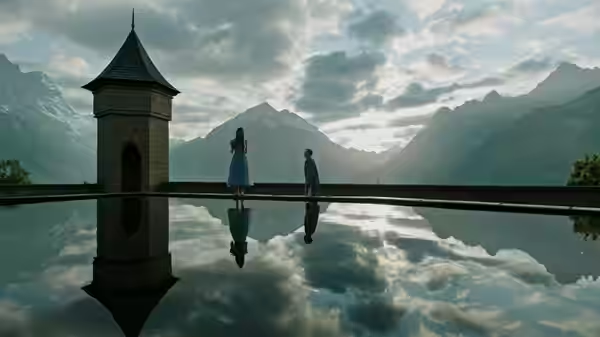
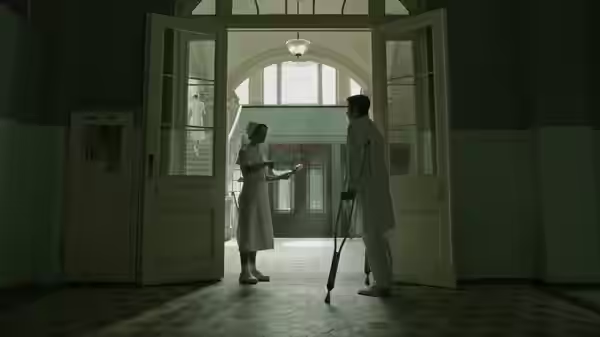
What they have built is the handsomest asylum we have seen in some time. Eve Stewart’s production design gives the castle white-tiled bathing halls, brass pipework, iron steam cabinets and an old wing nobody is meant to enter, and Bojan Bazelli photographs all of it square-on and symmetrical, patients in white robes laid out across green lawns like teeth. The water, which everyone drinks from blue bottles, is lit so that it glows. Jenny Beavan’s robes and bathing caps make the inmates look like one body with many heads. Benjamin Wallfisch writes a music-box lullaby that the patients hum back to each other, and it is the one idea in the score, used well.

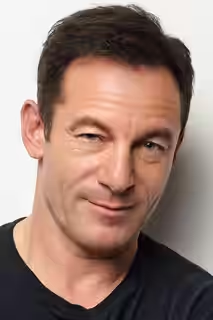
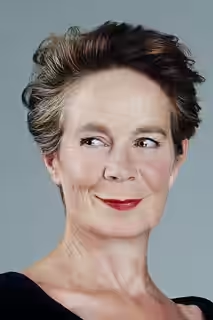
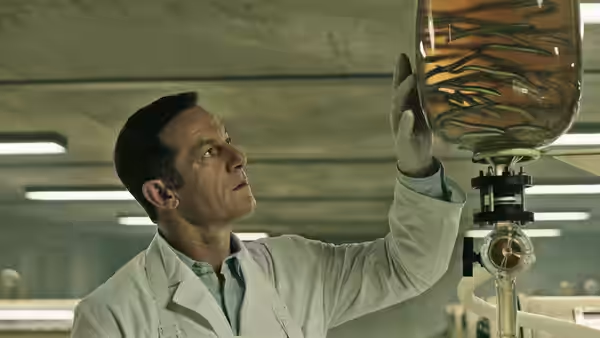
Jason Isaacs runs the place as Volmer, and he is the best thing in it. He plays the director as a soft-spoken, courteous man who answers every question fully and tells you nothing, and he never once raises his voice. Celia Imrie, as a fellow patient called Victoria Watkins, does the crossword, drinks the water and passes on the castle’s history, and her two or three scenes with DeHaan are the only ones with any dryness in them. Mia Goth plays Hannah, the pale girl on the bicycle who has been a patient longer than anyone, as a child in a woman’s body, which is what the film asks of her and, later, the reason we grew uneasy with it.

DeHaan is harder to warm to, and we think that is on purpose. Lockhart arrives sweating and grey, a man who looks ill before anyone has treated him, and he is rude to everyone. Haythe gives him a dead father and a mother in a home and then forgets both. He is a man to whom things happen, which is fine in a haunted-house picture, but at this length we wanted a reason to be on his side, and the script never offers one.

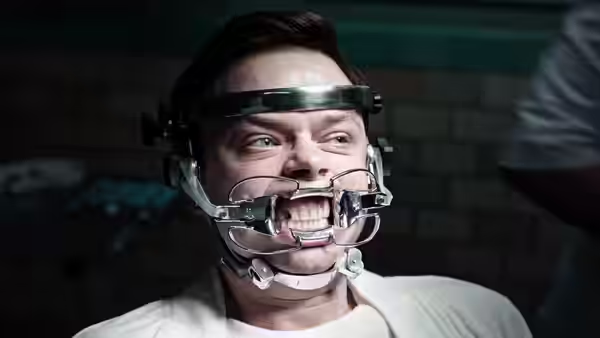
There is a scene in a dentist’s chair, about an hour in, that we will not describe except to say that it involves a drill and that we looked away. We were then slightly ashamed, because it was the first thing in a long while to make us sit up, and a horror film should not need a drill to wake us. The sensory-deprivation tank, with its eels, is better. Bazelli shoots it from above, a man floating in black water while something moves beneath him, and the dread comes from the framing rather than from anything jumping out.

The trouble is everything between those moments. Pete Beaudreau and Lance Pereira cut the film as though no corridor could be walked only once, and Lockhart is forever creeping down the same passage with the same torch. The mystery is one most viewers will have solved by the end of the first hour, and the film then spends a second hour watching Lockhart fail to. Verbinski has frightened us before. The Ring, in 2002, built its dread by holding things back, and it did not need 146 minutes to do so. Here he has every resource going and uses all of it, repeatedly.

The final half hour goes somewhere we will not describe, but we will say that the tone turns lurid, the castle’s history is acted out rather than hinted at, and the use made of Goth’s character left us uncomfortable in a way the film did not seem to notice. Most critics have landed near where we have: admiration for the surfaces, impatience with everything under them. See it for the baths, the lawns and Isaacs, and see it at home, where you can stop at the hour mark and come back to it in the morning. The 18 certificate is earned, mostly in the dentist’s chair.

Critical consensus AI synthesised

51
Positive
6
Mixed
7
Negative
9

The reviews lean mixed to negative, but most critics agree on one thing: the film looks remarkable. Nearly every review, including the harshest, praises Verbinski’s craft, in particular the cinematography and production design that turn the spa into a place of sustained dread, and several admire how long the film holds its atmosphere of suspicion before explaining anything. Even The Hollywood Reporter, which dismisses the film as foolish, counts the photography and design as achievements.

Where they part is on whether that surface is enough. The common complaints are length, a muddled plot and a final act that many find disappointing or absurd. The spread is wide, from warm approval at Little White Lies and Consequence to outright pans at The New Yorker, which objects to the sexualised treatment of the young Hannah. The film’s defenders, at The AV Club and The Ringer, argue its strangeness is the point and worth the longueurs.

Little White Lies
22 February 2017 · 4/4/4 · Anton Bitel
80

The review finds the film an intoxicating blend of mystery, surrealism and gothic asylum thrills. It praises the exquisite gothic trappings and the way the setting reflects modern anxieties about money, status and mortality.

Read the full review →
The AV Club
16 February 2017 · B · A.A. Dowd
77

Dowd finds the film too long and narratively unsatisfying, but praises its singular, excessive weirdness. He singles out Verbinski’s fantastical visual style and atmospheric spectacle as the film’s lasting pleasures.

Read the full review →
Slant Magazine
7 February 2017 · ★★★/4 · Carson Lund
75

Lund finds the film visually inventive and ultimately worthwhile, though its themes are muddled and its story more conventional than its influences. He especially praises the anticipation of Verbinski’s camera movements and the film’s striking set pieces.

Read the full review →
Screen Daily
7 February 2017 · Fionnuala Halligan
64*

The visible page does not reveal the critic’s verdict. Its standfirst describes the film as an extended Gothic psycho-horror, but offers no specific praise or complaint.

Read the full review →
The New York Times
16 February 2017 · Manohla Dargis
64*

The review text is unavailable, so its verdict cannot be established. No specific praise or complaint can be identified from the page provided.

Read the full review →
The Guardian
26 February 2017 · ★★★ · Wendy Ide
60

Ide finds the film weirdly impressive but says its lack of pacing and focus undermines its atmosphere. She praises the production design and sound, while criticizing the plot’s incoherence and excessive length.

Read the full review →

Straight answers AI written, from our review

Is A Cure for Wellness worth watching?
A Cure for Wellness is worth watching only for the look of the place, and we scored it 56. Eve Stewart's white-tiled sanatorium and Jason Isaacs's soft-spoken director hold the first hour; the second hour repeats it, and the final half hour turns lurid. Patient horror fans who admire production design will find something here, and may want to stop at the hour mark.
How long is A Cure for Wellness, and what is it rated?
A Cure for Wellness runs 2h 26m. It is a horror and mystery film.
Where can I watch A Cure for Wellness in the Philippines?
A Cure for Wellness is not on any streaming or rental service in the Philippines at the moment. It is available in 37 other countries; change your country at the top of the page to see where. Availability is checked daily.
How violent or frightening is A Cure for Wellness, and is it suitable for children?
A Cure for Wellness is an 18 in the UK and R in the US, and it is not suitable for children. The certificate is earned mostly in one dentist's chair scene with a drill, which made us look away, and in a tank sequence with eels. The last half hour also uses Mia Goth's childlike character in a way that left us uncomfortable.
How does A Cure for Wellness compare to Shutter Island?
A Cure for Wellness is the better-looking of the two, and Shutter Island is the better film. Both send a man to an asylum he should not have entered, and both run longer than they need, but Scorsese keeps his to a saner length and gives it a performance worth following. Verbinski has the baths and the lawns; Scorsese has the story.
What should I watch after A Cure for Wellness?
After A Cure for Wellness, try Shutter Island (2010, Fi1m 80): Another island asylum, another man who should not have come; Scorsese keeps it to a sane length. Then The Skin I Live In (2011, Fi1m 80): Almodóvar’s clinic horror, with Banderas as the doctor you would least like to meet; and The Ring (2002, Fi1m 70): Verbinski frightening an audience by withholding, which he has since forgotten how to do.

Cast

If you liked this, try…

  1. Shutter Island (2010, Fi1m 80)Another island asylum, another man who should not have come; Scorsese keeps it to a sane length.

  2. Suspiria (1977) · not reviewed yetArgento’s academy of horrors, where colour does the work this film gives to running time.

  3. Crimson Peak (2015) · not reviewed yetDel Toro’s rotting house is gothic done with conviction and a plot that keeps up.

  4. The Skin I Live In (2011, Fi1m 80)Almodóvar’s clinic horror, with Banderas as the doctor you would least like to meet.

  5. The Ring (2002, Fi1m 70)Verbinski frightening an audience by withholding, which he has since forgotten how to do.