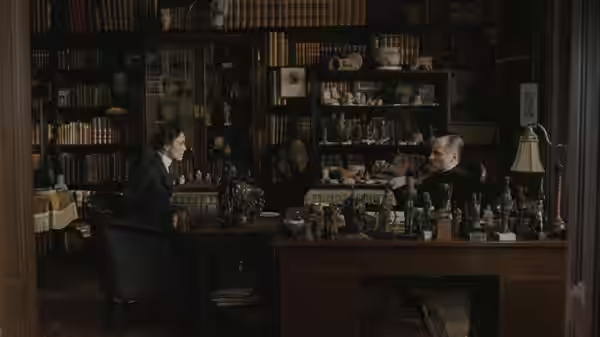
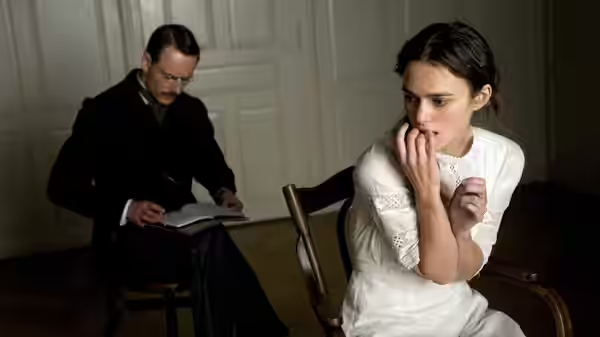
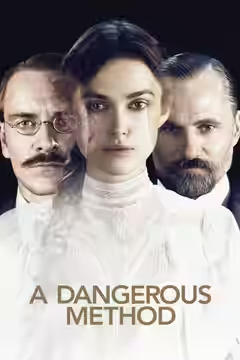
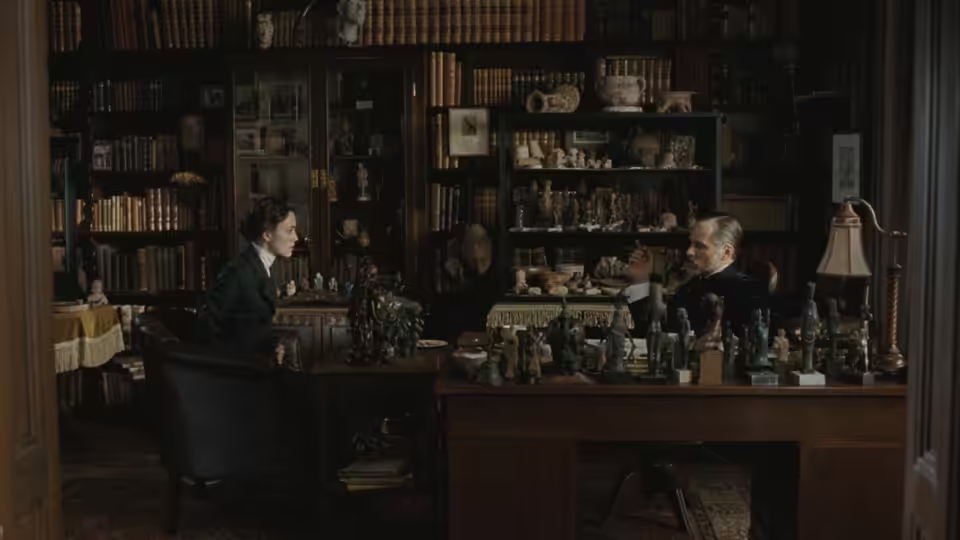
A woman and a man sit across from each other in a book-lined study
Film review

A Dangerous Method

2011 · Directed by David Cronenberg · 1h 39m

In a sentenceFreud and Jung argue about sex for ninety minutes while Keira Knightley is the only one having any

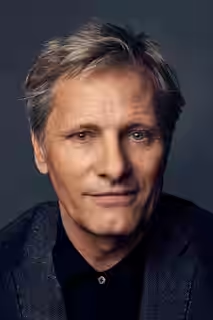
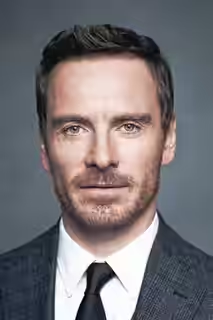
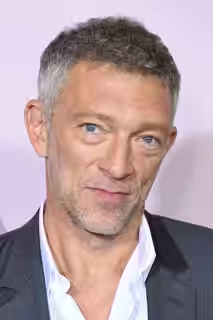
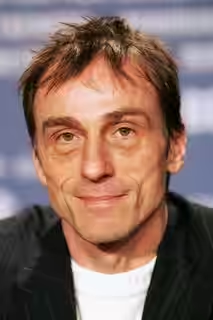
Zurich, 1904. Sabina Spielrein (Keira Knightley), a young Russian woman, is carried screaming into the Burghölzli hospital run by Professor Eugen Bleuler (André Hennicke). The young doctor Carl Jung (Michael Fassbender) decides to try a new treatment on her: he sits behind her, out of sight, and asks her to talk. It works well enough that Jung writes to Sigmund Freud (Viggo Mortensen) in Vienna, and the two men begin a correspondence, then a friendship. At home Jung’s wealthy wife Emma (Sarah Gadon) is pregnant. Spielrein, recovering, wants to study medicine herself. Freud sends Jung a difficult patient, the doctor Otto Gross (Vincent Cassel), who believes nothing should ever be repressed and says so at every opportunity.

Plays from YouTube when you press play; nothing loads from them until then.

Fi1m review

David Cronenberg’s account of the quarrel between Freud and Jung is cool, exact and better company than its reputation for talk suggests. Mortensen and Fassbender are excellent; Knightley takes some getting used to, and the letters slow everything down.

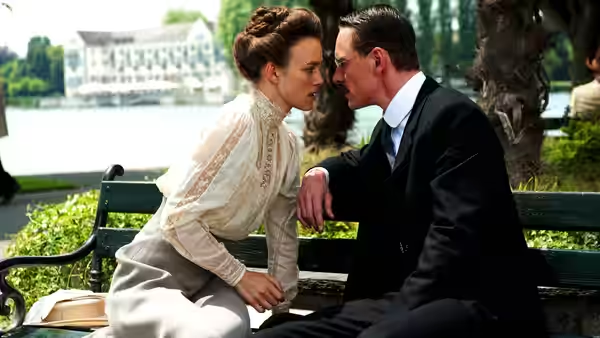
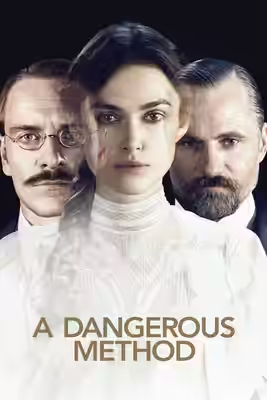
David Cronenberg has spent more than thirty years filming what goes wrong with bodies. Here he films what goes wrong with a friendship, and nearly all of the damage is done in words. A Dangerous Method is Christopher Hampton’s account, from his own play and John Kerr’s book, of the years in which Carl Jung (Michael Fassbender) took on a screaming Russian patient, Sabina Spielrein (Keira Knightley), wrote to Sigmund Freud (Viggo Mortensen) about her, and started the quarrel that split psychoanalysis in two. It is cool, clever and precisely made. It is also, for long stretches, people reading letters aloud, and it never pretends otherwise.

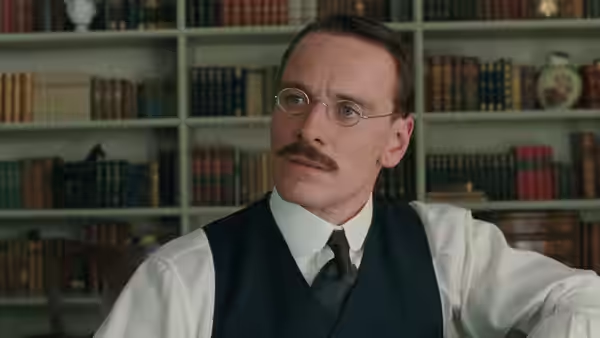
Mortensen’s Freud is the best thing in it. He plays the man as a Viennese host, cigar always lit, courteous to the edge of menace, who has decided in advance what everything means and is amused rather than threatened when the younger man disagrees. Fassbender gives Jung a stiff Swiss rectitude with appetite moving underneath it, and watches Freud the way a clever son watches a father he intends to outlast. Their first meeting, a conversation that runs deep into the night, is the most enjoyable talk we have heard in a period drama in years. Neither man raises his voice. Both are fighting.

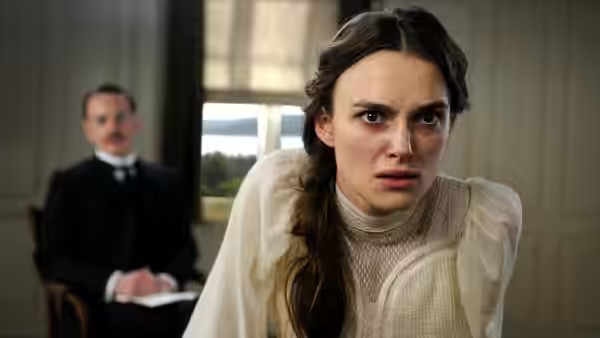
Knightley is the argument. She arrives thrashing in a carriage, jaw shoved forward, hands clawing at her face, and for her first two scenes we did not know where to look. We were embarrassed, and we could not tell whether for Spielrein or for the actress. Then Jung sits behind her and asks his questions, and the performance settles as the character does. By the middle Knightley is playing a woman who wants to be a doctor and knows more about her own case than either man treating it, and she plays that plainly, without the jaw. We ended up on her side. Vincent Cassel’s Otto Gross comes through the film like a draught through an open door, preaching against repression, and the picture is more alive while he is in it.

Peter Suschitzky shoots Zurich in flat white lake light and Vienna in brown. James McAteer’s Freud study is packed to the ceiling with statuettes and books, while Jung’s house on the water is pale, ordered and too large for its furniture. Denise Cronenberg dresses Knightley first in a hospital shift and then in high collars that look like a decision she has made. Howard Shore’s score is built out of Wagner, whom Jung and Spielrein discuss at length, and it is used sparingly, mostly under the letters. Cronenberg keeps the camera at conversational distance and lets the actors do the work.

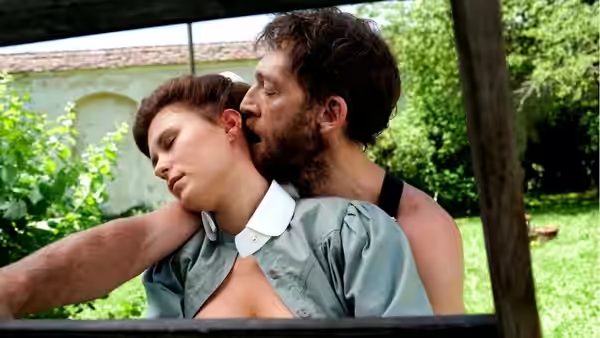
The letters are the problem. Hampton sends the film to the post every ten minutes: Jung writes to Freud, Freud writes back, Spielrein writes to both, and Ronald Sanders cuts each one as a face in voiceover, so the argument we most want to see happen face to face happens on paper. Sarah Gadon’s Emma Jung is given a pregnancy, a fortune and about six lines, and the film knows it is short-changing her. The scenes in which Jung and Spielrein act out her fantasies are shot with the same dry composure as the dinners. That is honest and it flattens them; the film treats desire as one more topic on the agenda.

Against Cronenberg’s own record this is a quiet, odd entry. Dead Ringers (1988) and Spider (2002) put the damage on the actors’ bodies; here nobody bleeds and nearly everybody talks. Some critics have taken that as a loss of nerve. We think it is deliberate, and there is one moment that proves it: a bookcase in Freud’s study cracks, loudly, on its own, while Jung insists the sound is a message, and it unsettled us more than anything in his louder work, because nobody reacts as if it matters.

See it for Mortensen, for the dinner, and for the way Knightley climbs out of a performance that starts badly. Bring patience for the correspondence. It runs 99 minutes and carries a 15, largely for a few scenes involving a belt that are handled, like everything else here, with the lights on.
Critical consensus AI synthesised

66
Positive
13
Mixed
4
Negative
3

Most critics come down in favour, thirteen of the twenty, though the warmth is cooler than the count suggests. The praise clusters on the acting: Keira Knightley’s Sabina Spielrein is singled out again and again as bold and physically committed, with several reviews calling it her finest work, while Viggo Mortensen and Michael Fassbender are credited with making Freud and Jung feel like men rather than footnotes. Christopher Hampton’s script is admired for the quality of its talk, and a number of reviews rank the film among Cronenberg’s most mature and disciplined.

The reservations cluster around that same talk. The dissenters find the film stiff, stagy and repressed, with the Financial Times likening it to a radio drama with pictures and The Wrap calling it a prestige bore. The spread is wide, from 90 at festival to 30 on release, and the coolest notices are largely British. Even they tend to exempt Knightley, though the Los Angeles Times thinks her miscast early on.

Sight and Sound
3 September 2011 · festival review · Barbara Wurm
90*

Cronenberg’s masterly period piece uncovers the historical and philosophical backbone of modernity through the triangle of Freud, Jung and Spielrein. It offers a charming feminist touch in portraying Spielrein as the most credible figure in both bed and psychoanalysis.

Read the full review →
The Hollywood Reporter
2 September 2011 · festival review · Todd McCarthy
90*

The critic praises the film as precise, lucid and thrillingly disciplined, highlighting outstanding performances by Knightley, Mortensen and Fassbender in exploring the relationship between Freud and Jung.

Read the full review →
Film Comment
1 September 2011 · Amy Taubin
85*

The critic calls the film a poignant, witty, intellectual adventure movie focused on the early years of psychoanalysis and the relationship between Freud and Jung. She singles out Keira Knightley's bold, risk-taking performance as Sabina Spielrein for particular praise.

Read the full review →
Little White Lies
· DJ
80*

A fascinating and fine film that dives into the minutiae of early psychoanalytic inquiry and ranks among Cronenberg’s most mature works. It earns extra marks for Knightley’s career-best performance while exploring sexual dynamics and intellectual transcendence.

Read the full review →
Los Angeles Times
23 November 2011 · Kenneth Turan
80*

The film succeeds through smart, satisfying talk and excellent performances by Mortensen and Fassbender, who bring compelling life to Freud and Jung. Knightley is miscast in key early scenes, but the script and direction make it a strong thematic match for Cronenberg.

Read the full review →
Screen Daily
2 September 2011 · festival review
70*

An elegant and absorbing chamber piece driven by thoughtful, stylish performances from Knightley, Fassbender and Mortensen. It is a cool, mannered, perfectly structured film with sublime cinematography, costumes and production design, resolutely about the mind despite its sensual core.

Read the full review →

Straight answers AI written, from our review

Is A Dangerous Method worth watching?
A Dangerous Method is worth watching for anyone who enjoys a period drama built on argument rather than incident, and we scored it 70. Viggo Mortensen's Freud and Michael Fassbender's Jung are excellent, and their first night-long conversation is the best talk we have heard in a costume picture in years. Bring patience for the letters read aloud, which slow it every ten minutes.
How long is A Dangerous Method, and what is it rated?
A Dangerous Method runs 1h 39m. It is a drama film.
Where can I watch A Dangerous Method in Türkiye?
A Dangerous Method is not on any streaming or rental service in Türkiye at the moment. It is available in 11 other countries; change your country at the top of the page to see where. Availability is checked daily.
How violent or frightening is A Dangerous Method, and is it suitable for children?
A Dangerous Method carries a 15 certificate in the UK and is not for children, though it is a film of conversation rather than violence. Nobody bleeds; the certificate is earned largely by a few sexual scenes involving a belt, shot with the same dry composure as the dinners. Keira Knightley's early scenes of screaming hysteria may unsettle younger teenagers more than anything explicit.
How does A Dangerous Method compare to Spider-Man?
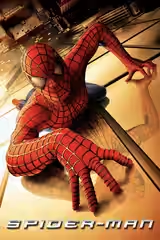
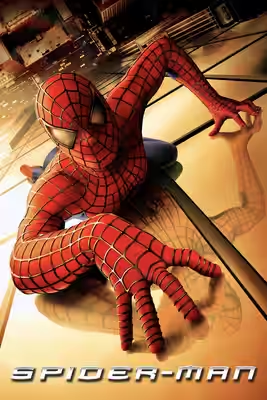
A Dangerous Method and Spider-Man have almost nothing in common beyond a release from the same century: one is a cool, talky drama about Freud and Jung, the other a warm, funny adventure with digital action. Sam Raimi's film is the easier evening and the better company for a family. Cronenberg's is for viewers who want to watch two clever men fight without raising their voices.
Is A Dangerous Method based on a true story or a book?
A Dangerous Method is based on real events: the years in which Carl Jung treated Sabina Spielrein, befriended Sigmund Freud and then quarrelled with him, splitting psychoanalysis in two. Christopher Hampton adapted it from his own play and from John Kerr's book. No prior knowledge of Freud or Jung is needed; the film explains its own arguments, mostly in letters.
What should I watch after A Dangerous Method?
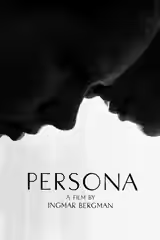
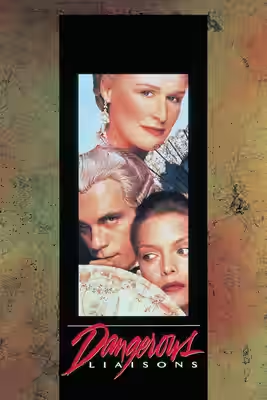
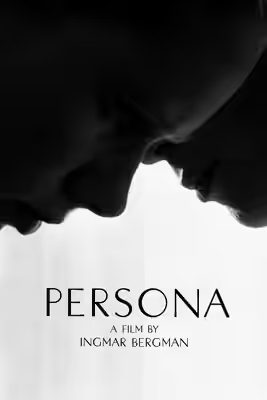
After A Dangerous Method, try Spider (2002, Fi1m 78): Cronenberg’s other film about a mind coming apart, with Ralph Fiennes and almost no dialogue. Then Dangerous Liaisons (1988, Fi1m 84): Christopher Hampton’s other screenplay about desire conducted by letter, and far crueller; and Persona (1966, Fi1m 89): Bergman’s two women, a nurse and a patient, and the talk that swallows them both.

Cast

If you liked this, try…

  1. Spider (2002, Fi1m 78)Cronenberg’s other film about a mind coming apart, with Ralph Fiennes and almost no dialogue.

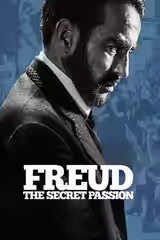
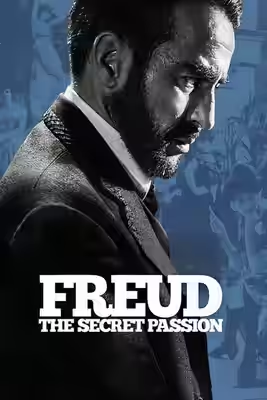
  2. Freud (1962) · not reviewed yetJohn Huston’s dark, strange biopic of the young Freud, with Montgomery Clift at his most haunted.

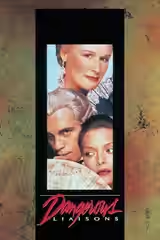
  3. Dangerous Liaisons (1988, Fi1m 84)Christopher Hampton’s other screenplay about desire conducted by letter, and far crueller.

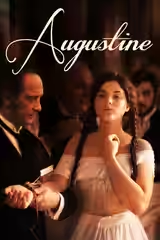
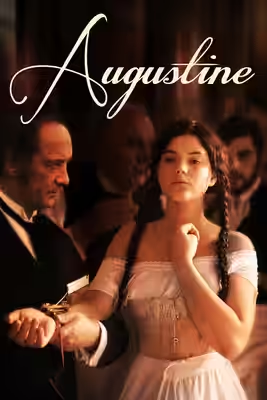
  4. Augustine (2012) · not reviewed yetCharcot and a hysteric in 1880s Paris; the same doctor-patient trap, from her side.

  5. Persona (1966, Fi1m 89)Bergman’s two women, a nurse and a patient, and the talk that swallows them both.

Free account

Know what to watch tonight

Two lists that know where things are streaming, collections you can share, your own score beside ours, and Discover that remembers what you have seen.

  • Want to see, sorted by what is streaming now
  • Seen, with your score out of ten
  • No adverts, ever