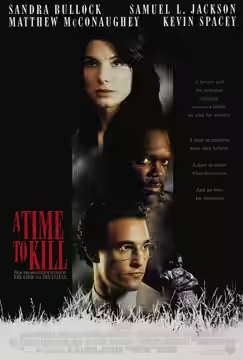
Samuel L. Jackson gives Joel Schumacher’s Grisham adaptation a centre it has not earned. Around him the film sweats, shouts and stacks every scene so that only one answer is possible, then congratulates us for reaching it. Well acted, and not to be trusted.
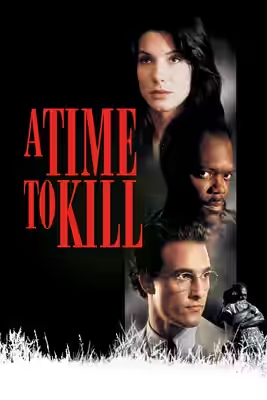
Joel Schumacher’s film of John Grisham’s first novel opens in Clanton, Mississippi, with the rape and beating of a ten-year-old girl, Tonya Hailey (Rae’Ven Larrymore Kelly), by two white men in a pickup truck. Her father Carl Lee Hailey (Samuel L. Jackson) shoots them both on the courthouse stairs, then asks a young white lawyer, Jake Brigance (Matthew McConaughey), to keep him from the death penalty. Akiva Goldsman’s screenplay puts a real question on the table: can this man get a fair trial from a white jury in this town, and should he. The film spends 149 minutes answering it the way everyone in the cinema wants it answered, with a choir.
We were horrified by the opening, and we should have been. Schumacher shoots the assault in pieces: beer cans thrown from a truck, a bag of groceries going into the dirt, a child’s face afterwards. Kelly is on screen for a few minutes and the whole film rests on them. What troubled us was what came next. Having shown us the worst thing it has, the film spends the rest of its running time cashing it in, using it to close down each argument before anyone has made it.
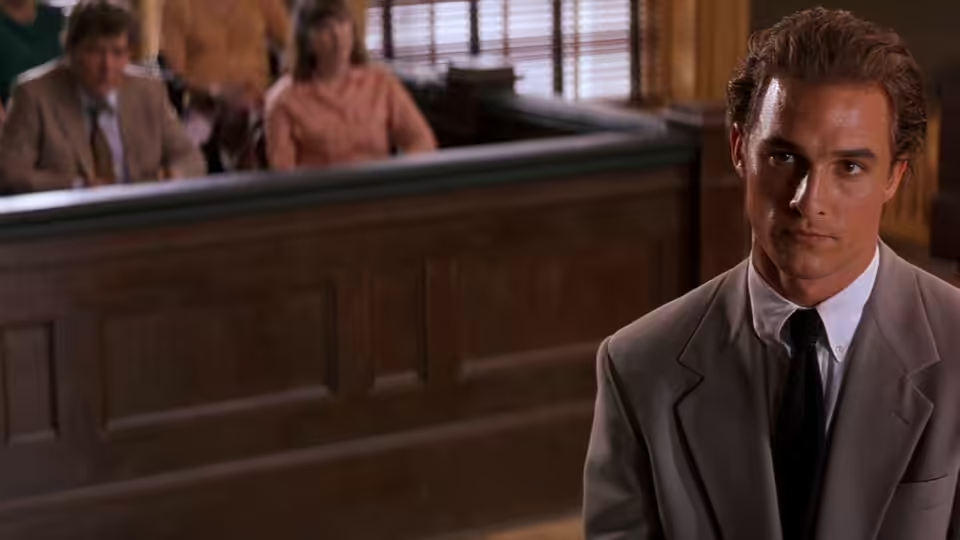
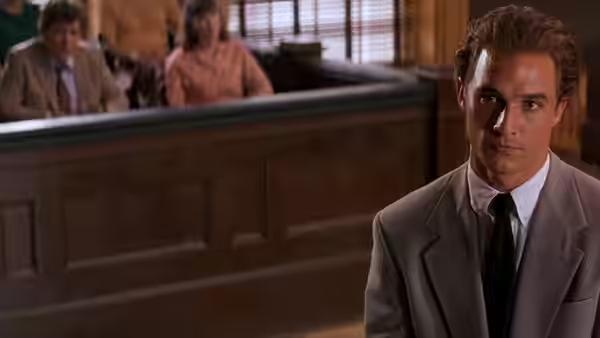
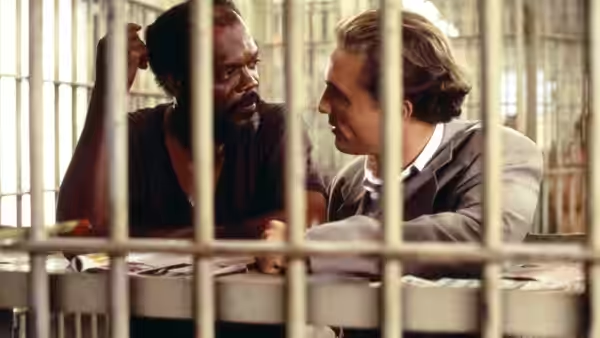
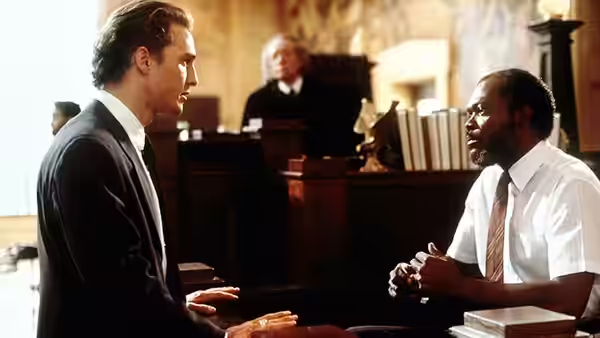
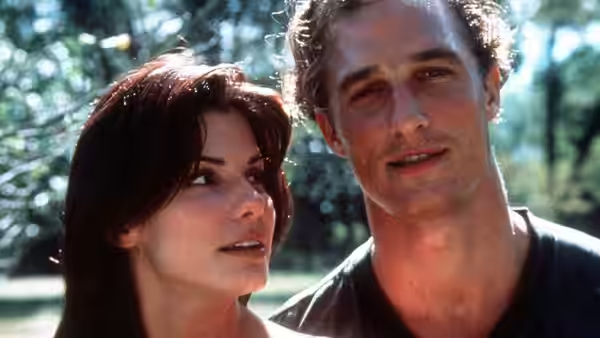
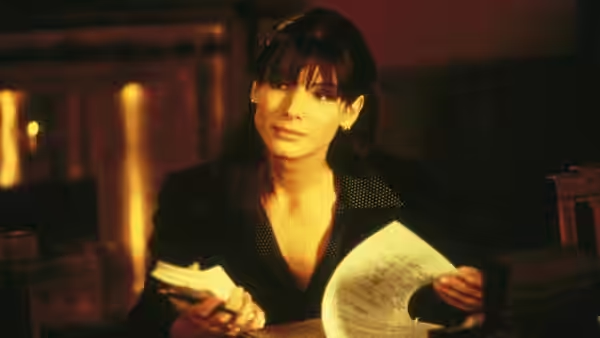
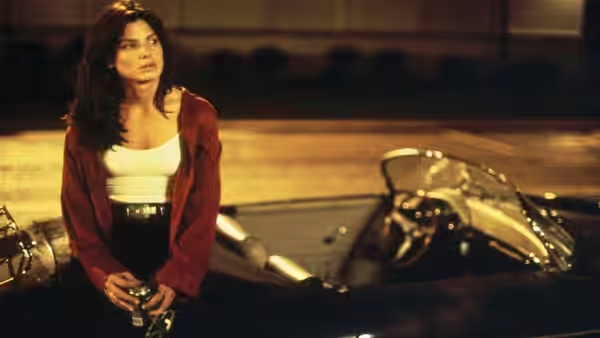
Jackson is the reason to watch. He plays Carl Lee as a man who has done the sums and knows the total, and he barely raises his voice. In the jail scenes with McConaughey he is the one person in the film who is not performing for a gallery, and those scenes are the best thing here. Kevin Spacey’s Rufus Buckley, the district attorney, is a politician in a good suit who is plainly enjoying the case, and Spacey enjoys him. McConaughey has the jaw, the sweat and the voice for a closing address; what he is not given is much to do between the sweating and the address. Sandra Bullock’s Ellen Roark, a law student who turns up to help and keeps turning up, is a great deal of energy pointed at a thin part. Oliver Platt gets the jokes.
Peter Menzies lights everything as heat: sweat on every forehead, amber sun through slatted blinds, dust hanging in the air of Larry Fulton’s courthouse, with its wide steps and white columns. Elliot Goldenthal’s score, brass under massed voices, tells us what to feel a beat before the scene does, every time. William Steinkamp cuts the courtroom to the gallery rather than the witness box; each point scored gets a reaction shot, and the camera holds on it until we have got the message.
The Klan is where the film comes apart. Freddie Lee Cobb (Kiefer Sutherland), brother of one of the dead men, goes looking for men in hoods, and from the moment they appear this is a different picture, a pulp thriller about burning crosses with a trial attached. Every white character who doubts Carl Lee is a Klansman or a coward. Every argument against a man shooting two prisoners on a public staircase is put in the mouth of Buckley, whom we have been told to dislike. A film that wants to debate whether a killing was right needs one decent person to argue that it was not. There is nobody. By the time of the closing address we were stirred, and then faintly ashamed of ourselves, because we could feel which strings had been pulled and in what order.
Schumacher had filmed Grisham before, in The Client (1994), and that was the better film because it was smaller: a boy, a lawyer and a secret, with no case to make about America. This one wants to be about race, justice and the South, and it has only a thriller’s tools to do it with. Grisham’s plots run like machines, and the machine here is well oiled. It is the thinking on top that is missing.
Most critics split much as we have. If you want two and a half hours of good actors in a hot room and a story that will not let you drift, it does that job, and the 15 certificate is earned inside the first ten minutes. Watch it for Jackson, who plays the whole film as though he already knows how it will end. He does, and so, by about the twenty-minute mark, do we.