Ridley Scott’s follow-up to Prometheus is more frightening than its predecessor and just as careless with its people. The first hour is grim and effective; the second belongs to Michael Fassbender, twice, and to a script that indulges him.
Ridley Scott has gone back to the story he left in mid-air at the end of Prometheus, and he appears to have read the complaints. Alien: Covenant has more blood, more creatures, a faster first hour and, for a while, far less talk about who made us and why. It is more frightening than Prometheus. It is no better at people, and it goes wrong in the same place: when the humans stop running and start listening to an android.
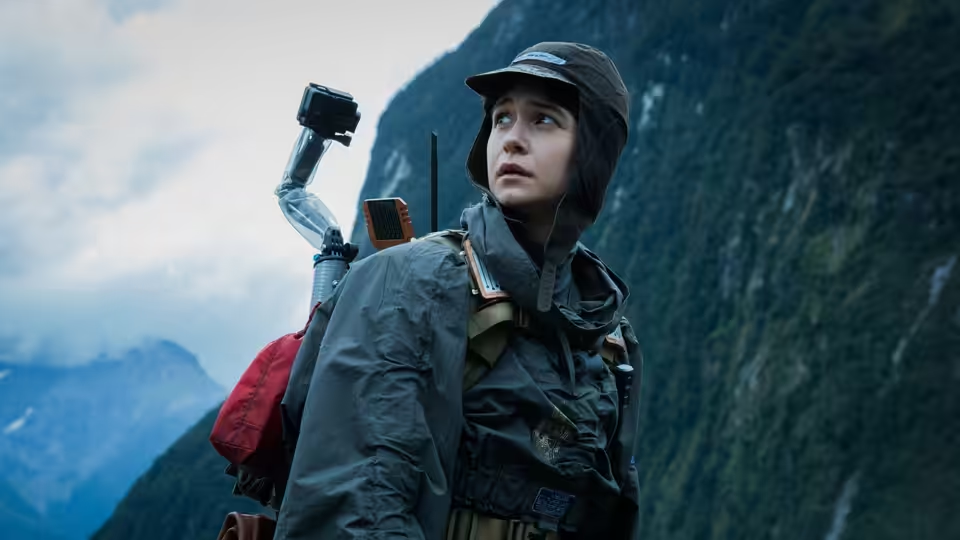
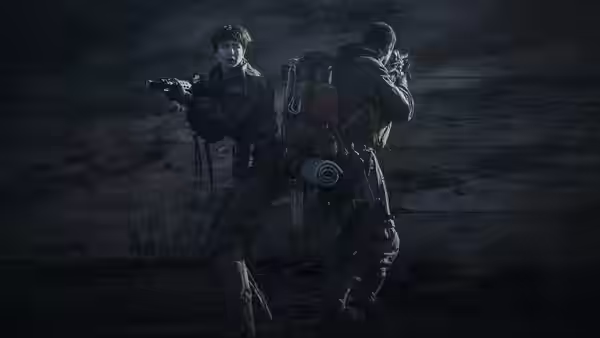
The first hour is the case for it. Dariusz Wolski shoots the planet under a lid of grey cloud, the light flat and cold, the wheat pale and the mountains black behind it, and the crew walk into it without helmets because a readout says they can, a folly that costs them this time. A man breathes in something from the ground and a few minutes later is on a table in the lander’s medical bay, with Karine (Carmen Ejogo) trying to hold him down and Faris (Amy Seimetz) on the other side of the glass, locking the door on her and reaching for a gun. We were frightened in the old, plain way, hands on the armrest, thinking about nothing but whether the door would hold. Pietro Scalia cuts it close and quick, and Chris Seagers has built the bay small and white, which is why the blood shows.
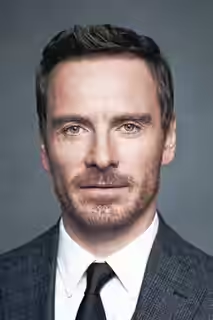
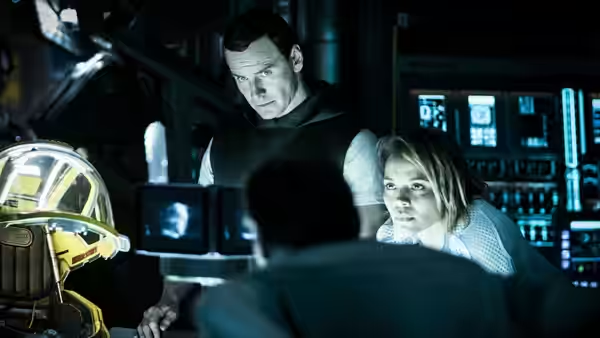
Then a hooded figure leads the survivors to a dead city, and the film becomes about Michael Fassbender. He plays Walter, the Covenant’s android, built to be more obedient and less inventive than the earlier models, and David, the android from the Prometheus voyage, alone on this planet for a long time. Walter has an American flatness and a stillness that reads as restful; David has the tilted head and soft courtesy of the earlier film, gone sour. One scene, in which David teaches Walter to play a flute in a cave, is either the strangest thing Scott has directed or the funniest. We laughed, and were not sure we were meant to. The screenplay, by John Logan and Dante Harper, gives David a great deal to say about creators and what they owe their creations, and he says all of it, and Scott lets him.
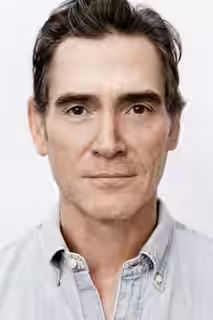
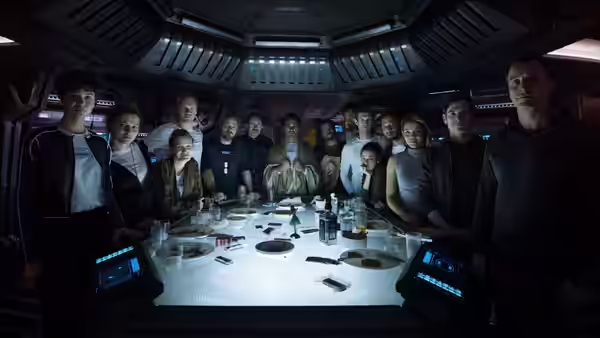
The crew are married couples, sent out in pairs to found a colony, which is a good idea for a horror film, because every death leaves a widow or widower among the survivors, and the script does almost nothing with it. Katherine Waterston’s Daniels is grieving and capable and written as an outline of Ripley without Ripley’s temper. Billy Crudup gives Oram a nervous faith the film raises and then forgets. Danny McBride is the surprise: Tennessee is the one crew member who sounds like a person, and his scenes in orbit, arguing over whether to fly the ship down into a storm, are the film’s most human. Demián Bichir, Carmen Ejogo and Amy Seimetz make what they can of a line or two each. Janty Yates puts them in work clothes rather than uniforms, which helps.
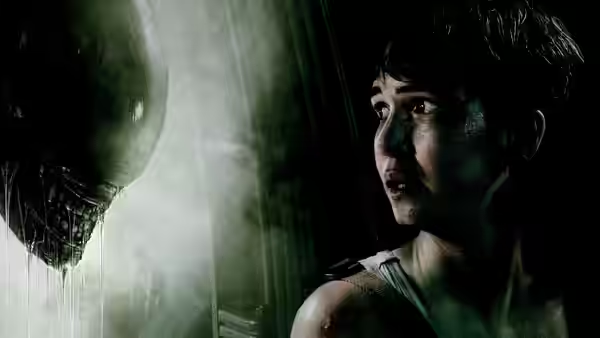
Once the city is reached, the film settles into the shape of every Alien film: the crew is thinned, the creature we know arrives, there is a chase through a ship. The creature we know is the least frightening thing here. Scott’s new one, born pale and growing by the hour, unsettles because we have not seen it before; the black one we have been looking at since 1979, and it is now largely computer-generated and moves like it. The last set piece, on the top of a lander in flight, is loud and clearly shot and left us nothing. By then we were watching an expensive animation and had stopped fearing for anyone. Jed Kurzel’s score, sharing the credit with Harry Gregson-Williams, is low strings and a horn phrase anyone who has seen Alien will recognise, and it is at its best when quietest, out in the wheat.
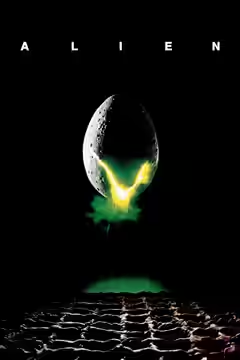
Alien had one creature, one ship, and a crew who bickered like people with a job. Prometheus had questions it would not answer. Covenant tries for both. The horror is real for an hour; the ideas are all in one android’s mouth. The final stretch takes a turn we will not describe.
See it for the medical bay, and for Fassbender twice, in a room with the lights off. Do not expect to remember anyone’s name a week later; the film does not seem to. It runs 122 minutes and carries a 15.