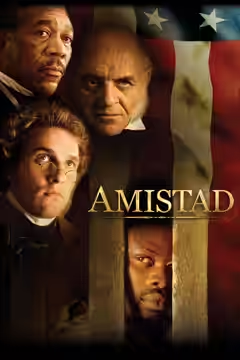
Spielberg’s account of the 1839 Amistad revolt contains one of the most harrowing sequences he has ever shot and a fierce, watchful Djimon Hounsou. Around them, David Franzoni’s script keeps handing the film to lawyers, and the lawyers keep it.
Steven Spielberg’s Amistad opens in a hold so dark that for a minute we can make out only rain, lightning and a pair of hands. The hands belong to Cinque (Djimon Hounsou), and they are working a nail loose from the timbers. He frees himself, frees the others, and the captives take the ship. The rest of the film is about what the United States did with them once they were caught, and Spielberg tells it as a trial with one long, terrible memory in the middle. The memory is among the best things he has directed. The trial is not.
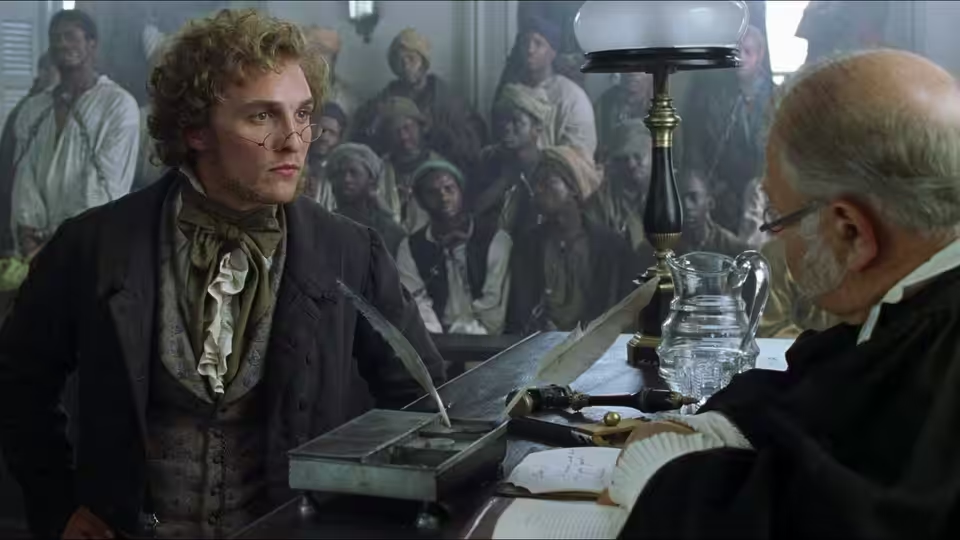
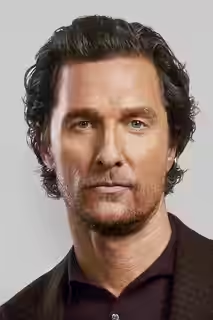
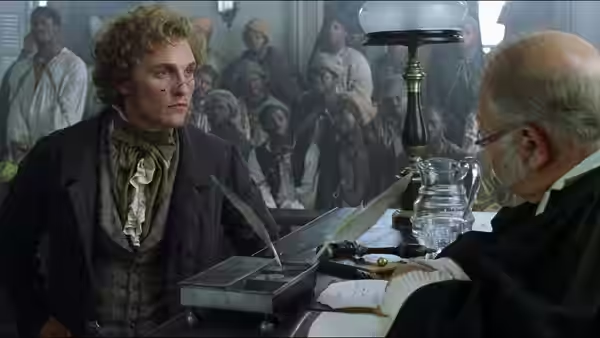
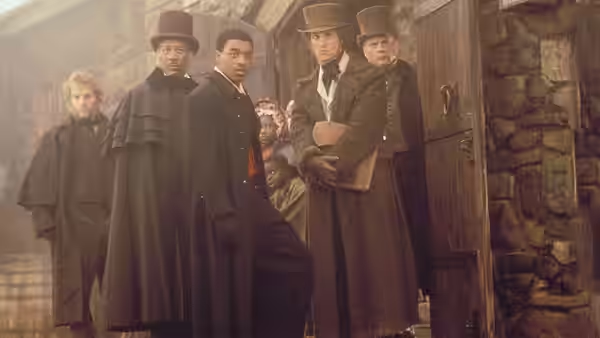
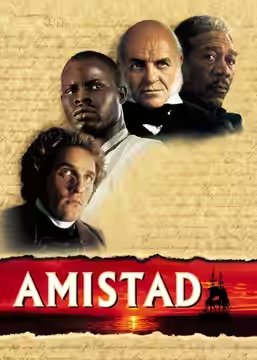
The schooner is seized off the American coast and the Africans are put in a Connecticut jail while men in cravats argue over who owns them. Spain, through Queen Isabella (Anna Paquin), still a child, wants them back. The naval officers who took the ship want salvage. Two abolitionists, Tappan (Stellan Skarsgård) and Theodore Joadson (Morgan Freeman), a freed man invented for the film, hire a property lawyer, Roger Sherman Baldwin (Matthew McConaughey), because property is what the case is legally about. President Martin Van Buren (Nigel Hawthorne) wants it gone before the election, and his Secretary of State John Forsyth (David Paymer) does the shoving.
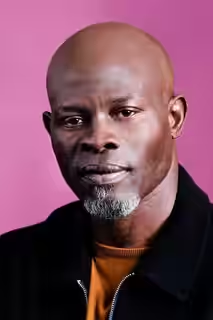
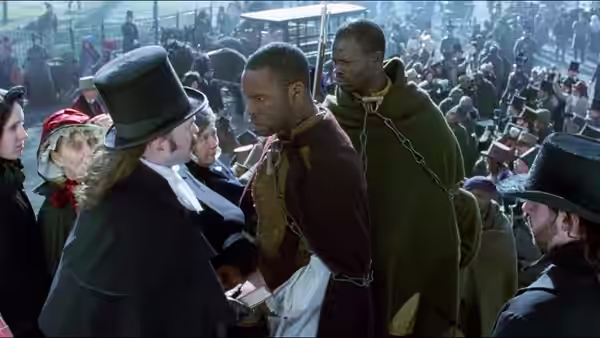
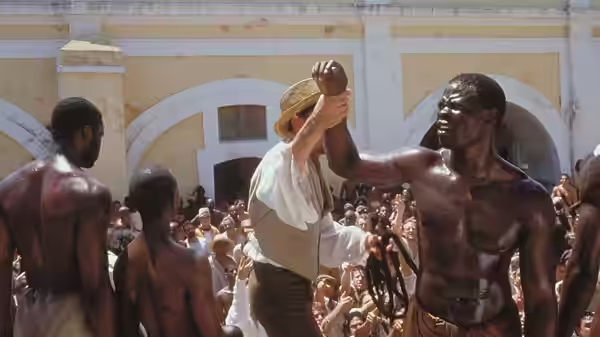
Hounsou is the reason to watch. He plays Cinque with his whole body, bolt upright in the dock with contempt on his face, hurling himself at the bars, and later, once a translator is found, speaking with a care that makes the lawyers look slapdash. When he stands in the courtroom and shouts the little English he has, we sat forward. The film knows he is its centre and still keeps cutting away from him to people with more lines.
The sequence that justifies the film comes when Cinque at last tells the court what happened before the revolt. Janusz Kamiński shoots the slave fortress and the crossing in hard grey daylight, so nothing is hidden. Men and women are packed on shelves in the hold; when the food runs short, the sick are chained to a sack of stones on deck and tipped over the side, and the camera watches them go down. We were horrified. We wanted it to stop and the film would not stop, and we think that was the right decision. John Williams’s score, elsewhere thick with choir, is at its sparest here.
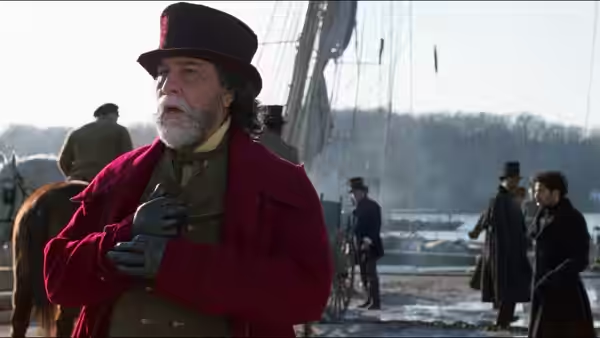
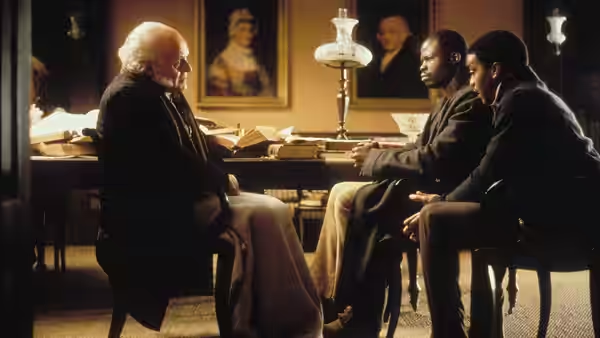
Rick Carter’s sets are quietly good: the hold low, black and wet, the New Haven jail stone and whitewash, the courtrooms getting larger and grander as the case climbs, which tells you where the power is without a word. Ruth E. Carter puts the abolitionists in black broadcloth heavy enough for a funeral and the captives first in rags, then in stiff shirts donated by a mission, and the shirts do more than several of the speeches. Michael Kahn cuts the sea and the fortress with patience and the court with less, so that motions and appeals blur into one another.
That blur is the trouble, and David Franzoni’s script causes it. Every white character is given a position and a speech in which to state it. McConaughey plays Baldwin as a cheerful opportunist who grows a conscience in about three scenes. Freeman is handed a fine coat and almost nothing to do in it; Joadson stands at the back of rooms looking pained. Hawthorne’s Van Buren is a fretful clown, Pete Postlethwaite’s prosecutor Holabird a sneer in a wig. And Anthony Hopkins’s John Quincy Adams, the old ex-president, is given a closing argument long enough for the film to slow visibly around it. Hopkins is good in it. It is still a speech about Africans delivered to a room the Africans have, in effect, been removed from. Somewhere in the second hour we were bored, and then annoyed at being bored by a film that contained that crossing.
Spielberg made this between Schindler’s List (1993) and Saving Private Ryan (1998), and it is the stiffer, more respectful cousin of both. Schindler’s List rarely needed a speech; this one is built out of them, and Williams’s rising voices keep telling us the moment is historic when the faces had already said so.
It runs 155 minutes and carries a 15 certificate, earned by the crossing alone. Watch it for Hounsou and for those minutes at sea, and be patient with the cravats. They talk for a long time, and they are not talking to him.