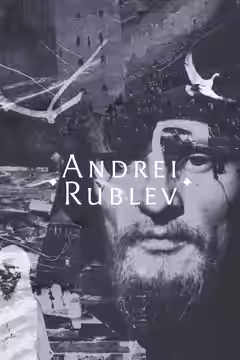
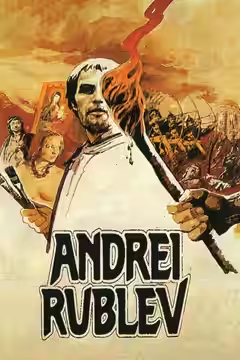
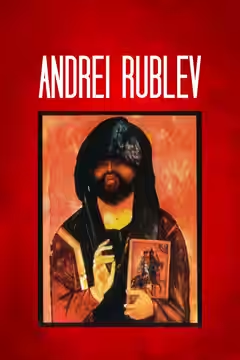
Andrei Tarkovsky’s portrait of an artist earns its demands through the humanity of Anatoly Solonitsyn and the force of Vadim Yusov’s images. Some symbolism remains stubbornly obscure, but we recommend giving it the time and attention it needs.
Andrei Tarkovsky’s Andrei Rublev is demanding, sometimes needlessly obscure, and worth the concentration it asks for. Its subject is an artist trying to work amid violence, and it takes that difficulty seriously without making him automatically admirable. At 183 minutes, it gives us ample time to consider how much use painting can be to people who are suffering. It also makes the question uncomfortable enough that we cannot settle for a reassuring answer about the importance of art.
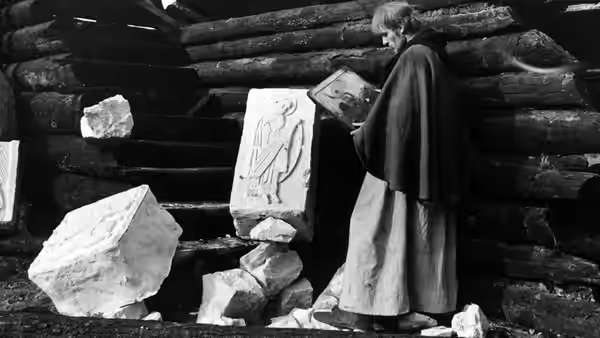
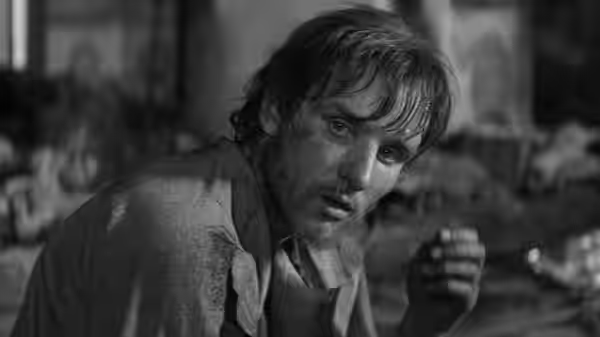
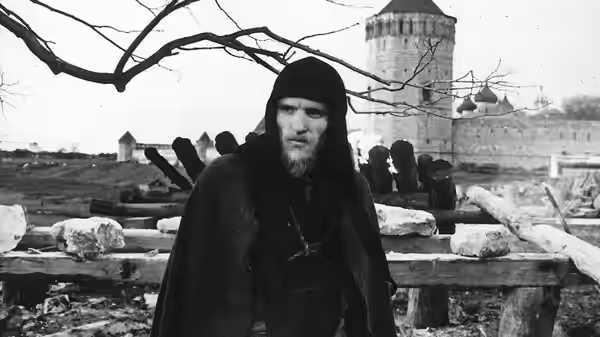
Anatoly Solonitsyn is central to that achievement. His Rublev seems vulnerable to what he sees, and the performance keeps the artist’s uncertainty from becoming an invitation to admire his sensitivity. We were moved by his struggle to continue working amid so much suffering, because Solonitsyn makes that persistence seem difficult to justify even to himself. The performance gives us someone to care about through passages where the film’s meaning is harder to follow.
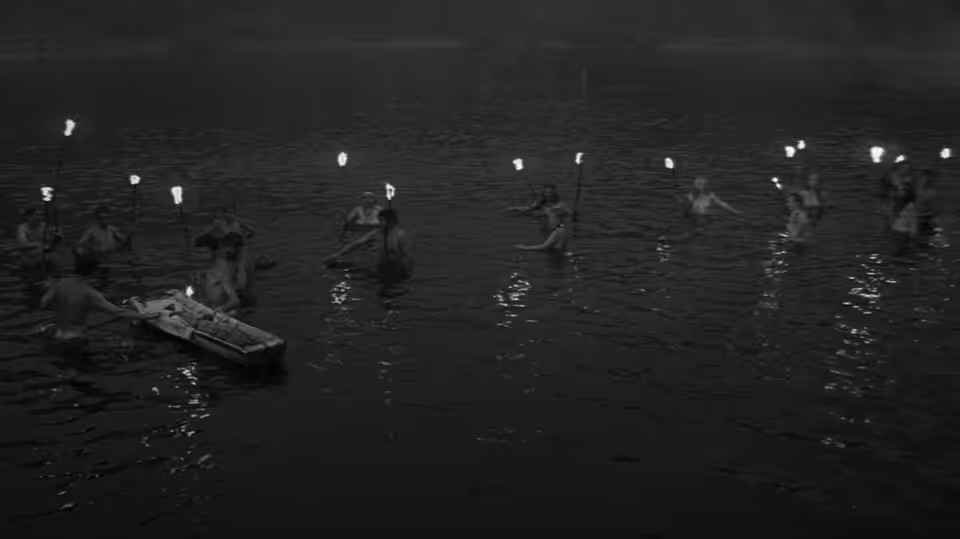
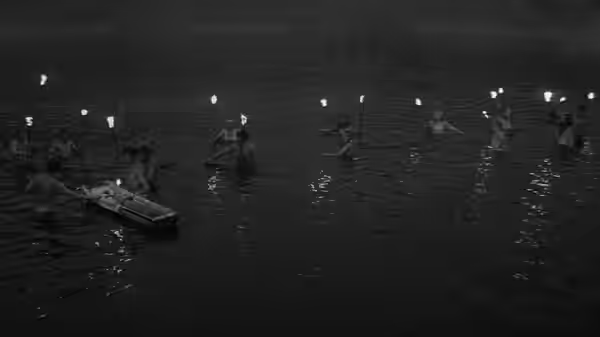
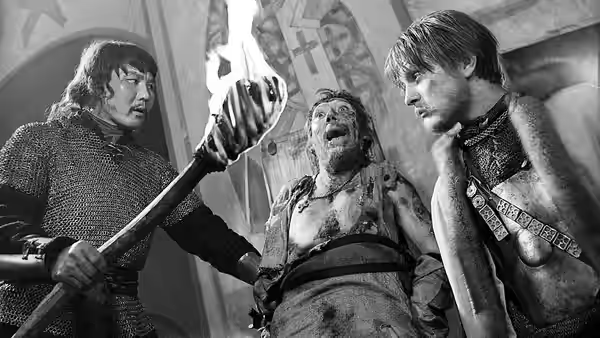
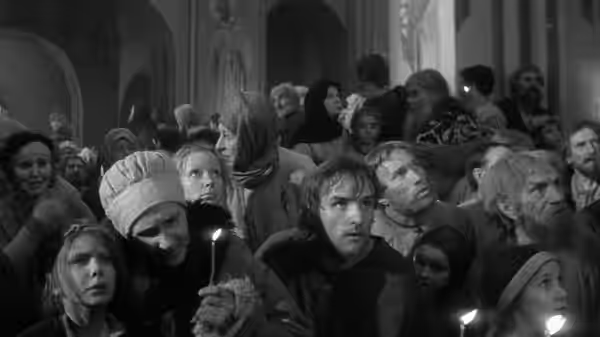
Vadim Yusov’s cinematography gives the crowded landscapes room to hold our attention; there is more to look at than the person carrying the story. The compositions reward that wandering eye, and the camera movements make us feel the extent of the world around Rublev. Production designers Sergey Voronkov, Evgeniy Chernyaev and Ippolit Novoderyozhkin help make those surroundings convincing as places where people live. We never feel that the scenery exists simply to flatter the artist.
The sheer weight of the images can become tiring, however. Vyacheslav Ovchinnikov’s music sometimes seems to insist on a seriousness we have already understood, adding to that heaviness. This makes the lighter touches especially welcome: the film has room for people to be something other than miserable or significant. They make its humanity easier to believe, and prevent the solemnity from becoming uniform.
The larger reservation is narrative clarity. Editors Olga Shevkunenko, Tatyana Egorycheva and Lyudmila Feiginova give the images time, but there are stretches where patience does not bring greater understanding. Tarkovsky’s symbolism can leave us puzzling over what an image means while losing touch with the person it concerns. We do not need everything explained, though the film occasionally leaves us wanting a clearer connection between its images and its people.
For all that, the screenplay by Andrei Tarkovsky and Andrei Konchalovsky takes Rublev’s doubts seriously. Artist biographies often hurry to explain a talent, as though a handful of experiences can account for everything a person makes. Here, the question of whether Rublev can keep working is allowed to remain difficult, and the people around him do not exist merely to encourage him. That is a substantial reason to stay with the film when its symbolism becomes less persuasive.
We recommend it warmly, with a firm caveat about the concentration it requires. There are passages we admire without fully understanding them, and a few where we would welcome less insistence on the mystery. Set aside an uninterrupted evening; this is not a film to fit around other plans.