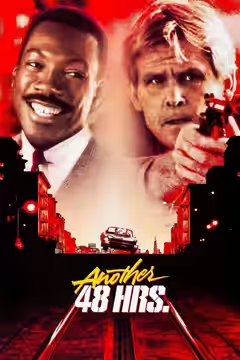
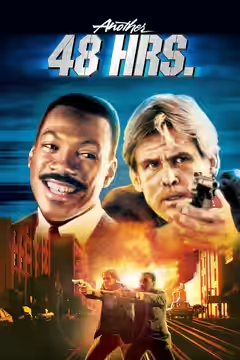
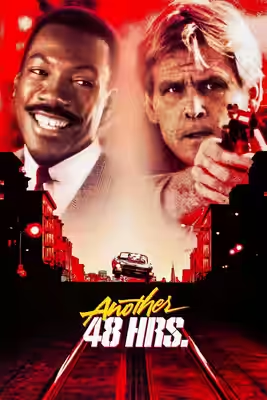
Eddie Murphy and Nick Nolte still work well together in a poor sequel. Walter Hill lets a hurried crime plot and too much violence crowd out the comedy that might have justified another meeting.
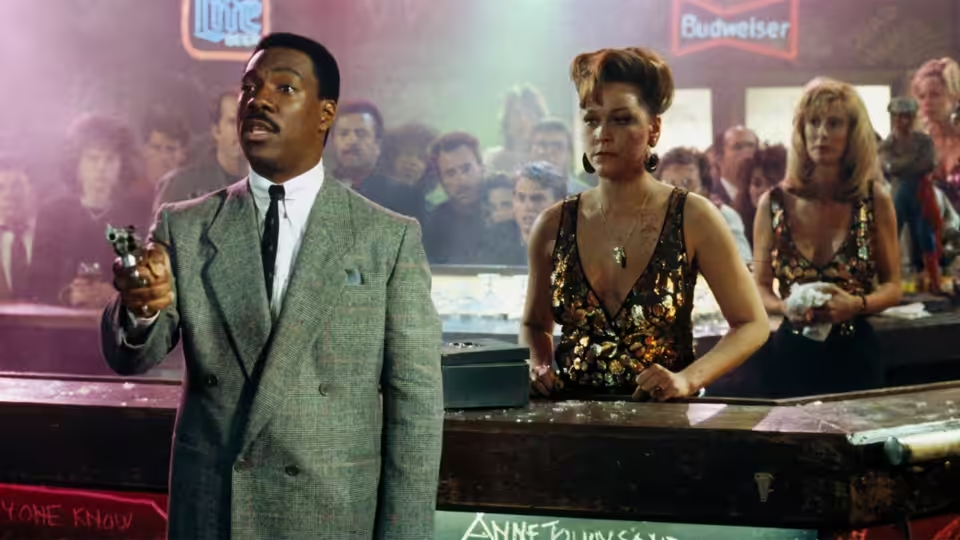
Another 48 Hrs. has the one ingredient that ought to make a reunion worthwhile: Eddie Murphy and Nick Nolte remain good company together. Walter Hill makes too little of it, favouring a crowded crime plot and repeated violence over the chance to let them be funny. There are recognisable personalities here, but too few good scenes for them to share, and the film is poor. At 95 minutes, it ought to be brisk; instead, it feels hurried whenever there is something to explain and protracted whenever somebody might get hurt.
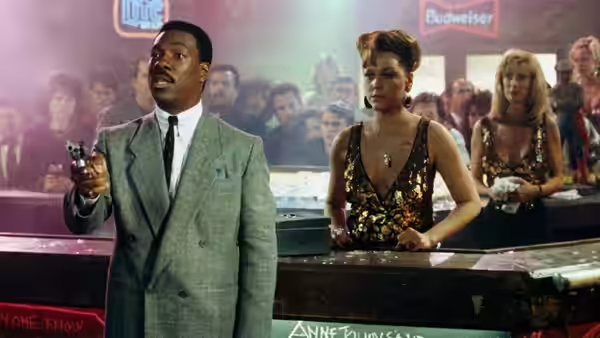
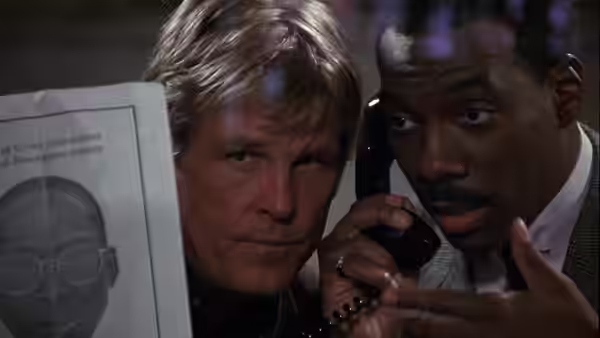
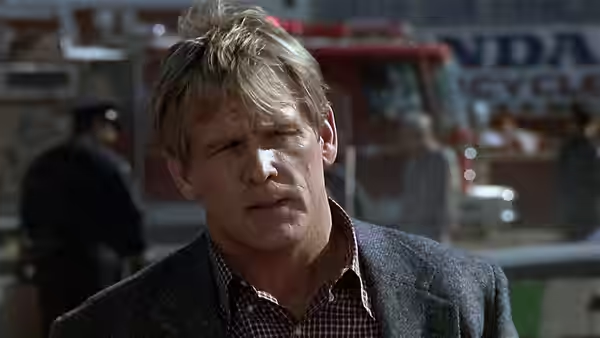
Eddie Murphy plays Reggie Hammond with comic timing that can still rescue a moment, while Nick Nolte’s Jack Cates gives him someone worth sparring with. We laughed at Eddie Murphy’s timing in the exchanges with Nick Nolte. We were then worn down by the violence that kept interrupting the comedy. The chemistry survives, and it makes the wasted opportunity harder to forgive. Neither performer needs an elaborate criminal scheme simply to hold our attention while the other is talking.
The screenplay, credited to Larry Gross, John Fasano and Jeb Stuart, keeps complicating a story whose broad direction remains easy to anticipate. Eddie Murphy receives the story credit, which makes the shortage of room for comedy particularly frustrating. More plotting is not automatically a fault, but here it asks for attention without creating much curiosity about what will happen next. The film seems impatient to get through its explanations, as though a sufficient quantity of action afterwards might compensate for our not being interested.
Donn Aron, Carmel Davies, Freeman A. Davies and Tim Ryder share the editing credit, and the finished film has an awkward sense of pace. The crime business rushes along while the mayhem wears out its welcome. A hurried plot can be exciting when each development changes our understanding of the people involved; here the complications mostly delay the next exchange worth hearing. Speed rarely produces excitement, and the comic partnership keeps losing time it could have used. James Horner’s music cannot restore much fun to passages already weighed down by the action.
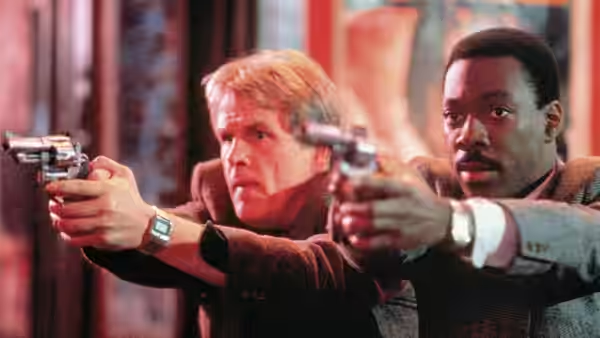
Matthew F. Leonetti’s cinematography and Joseph Nemec III’s production design serve the action without giving the film much character beyond it. Their work is not an embarrassment, but neither provides a reason to stay interested when the partnership is pushed aside. The emphasis on violent encounters makes the picture feel monotonous despite its busy plotting. A crime comedy can be rough without letting each violent encounter feel like another interruption, and the film gives us too little humour to make that roughness enjoyable.
The pleasure of a mismatched-pair crime comedy is straightforward enough: two people who aggravate each other become amusing company for us. Danger can sharpen their disagreements, but it needs to leave them space to respond in ways that belong to these particular characters. Most critics find this reunion tired and overburdened with action, and we agree. Repeating the partnership was a reasonable ambition; giving the performers so little fresh material makes the return hard to defend. Unless seeing these two together is enough by itself, give this reunion a miss.