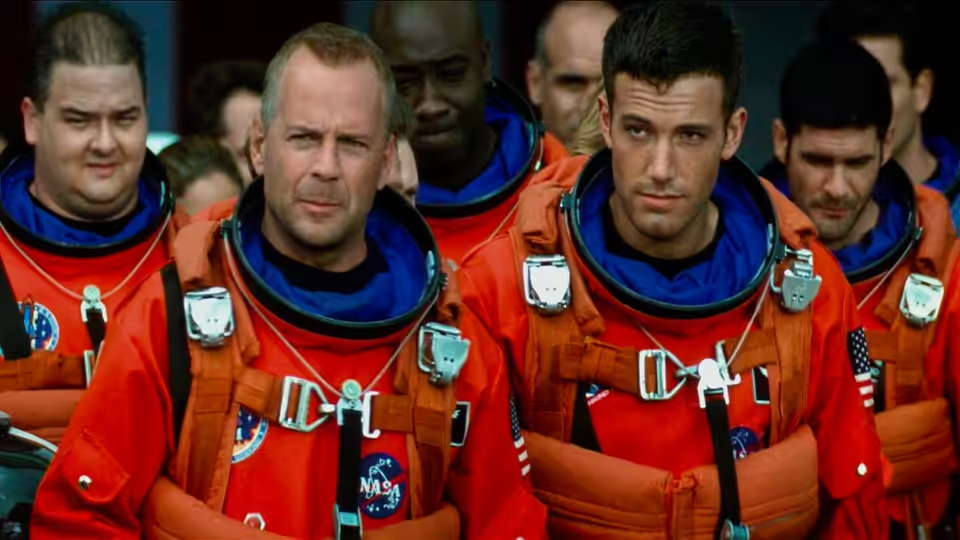
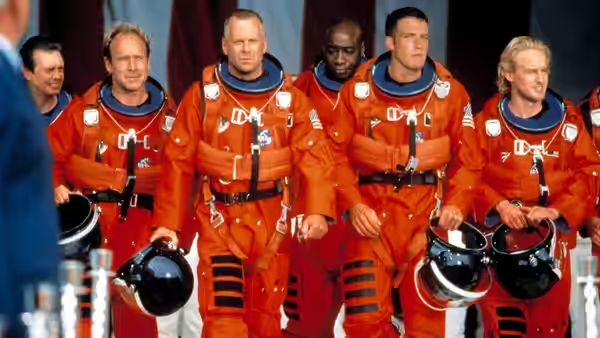
Michael Bay’s asteroid disaster film has the cast and the explosive spectacle to make its foolishness enjoyable. The frantic cutting and laboured tenderness make 151 minutes a tougher assignment than it needs to be.
Michael Bay approaches the end of the world as if leaving a moment unfilled would be a failure of duty. Armageddon is enjoyable, exhausting nonsense, with enough wit and physical excitement to justify some, though not all, of its 151 minutes. It wants the ordinary expertise of drillers to look heroic against an extraordinary threat. That is a sturdy idea for a disaster film, and the trouble is how often Bay seems to think it needs another explosion.
The screenplay by Jonathan Hensleigh and J.J. Abrams sends Bruce Willis’s Harry S. Stamper and his drillers to put nuclear bombs inside an asteroid. We do not need plausible science to accept that invitation; we need a task we can follow and people worth following. The premise provides both, while the broad characterisations give the actors room to be funny without stopping to explain themselves. When the script turns towards romance and solemn declarations, the dialogue becomes harder to forgive than the mission.
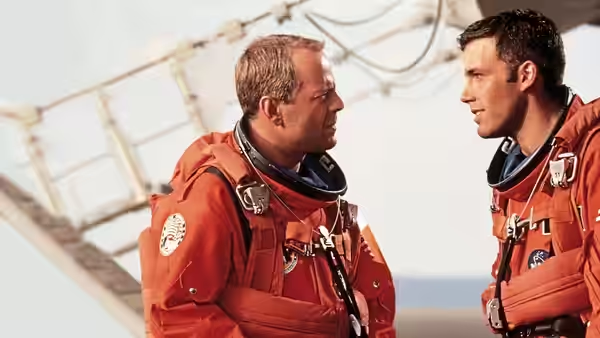
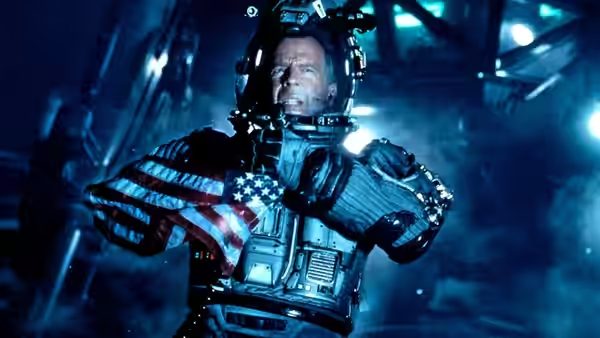
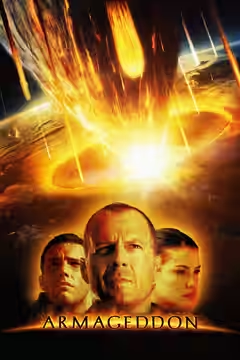
Willis understands how useful a little reluctance can be in a film determined to applaud its hero. His Harry gives the enterprise a human centre, and the supporting cast supplies welcome friction rather than merely standing about to certify his importance. Steve Buscemi’s Rockhound is particularly well suited to the film’s irreverence, while Billy Bob Thornton, as Dan Truman, brings welcome steadiness. Ben Affleck’s A.J. Frost and Liv Tyler’s Grace Stamper fare less well when the writing asks for tenderness: the effort is visible, but so is the calculation.
John Schwartzman’s cinematography gives the detonations enough force in individual images to make the scale of the danger register. We were thrilled by the explosions, then irritated when another burst of destruction arrived before we had absorbed the last. The images earn the first response; Bay’s insistence on keeping them coming earns the second. Michael White’s production design gives the mission a persuasive physical scale, although the cutting leaves too little time to get our bearings within it.
The editors, Glen Scantlebury, Chris Lebenzon and Mark Goldblatt, keep the pressure high and give almost nothing room to settle. At its most effective, that speed makes the mission feel desperately urgent. Too often, however, the next cut interrupts our understanding of what the previous shot established, and the second half becomes difficult to follow for reasons that have nothing to do with suspense. A disaster film needs us to know what has gone wrong before asking us to worry about the next thing.
Trevor Rabin’s score is more effective at urging the action onwards than at making the personal scenes convincing. The music pushes for emotion where Hensleigh and Abrams have supplied too little ordinary behaviour to support it. Bay is comfortable with bluster and jokes, but his handling of affection is heavy, and the actors cannot always make these people seem close. Willis offers something solid enough to care about; around him, the film repeatedly asks for feelings it has not taken time to build.
The familiar pleasure of a disaster film is watching people become useful under pressure, and Bay recognises the appeal of giving that job to drillers. There is affection in the film’s belief that practical workers deserve this sort of extravagant heroism, even when its flag-waving makes that affection feel rather selective. We would have liked more confidence in those people and less anxiety about holding our attention. Keep it for company prepared to laugh at the solemn bits as well as the jokes.