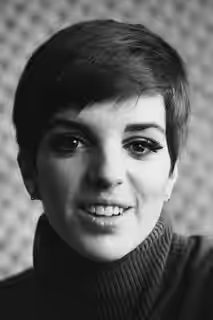
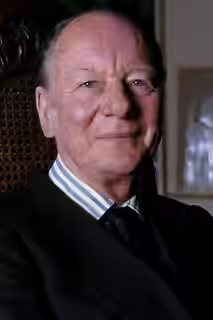
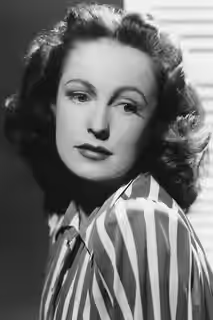
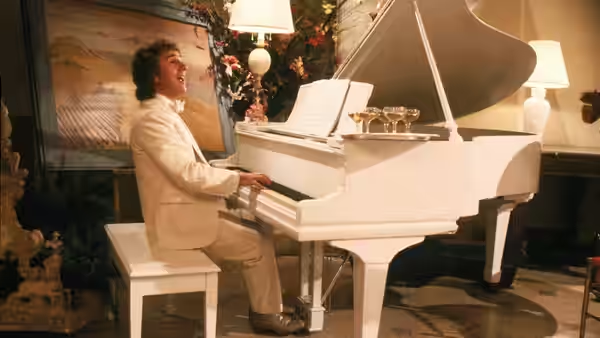
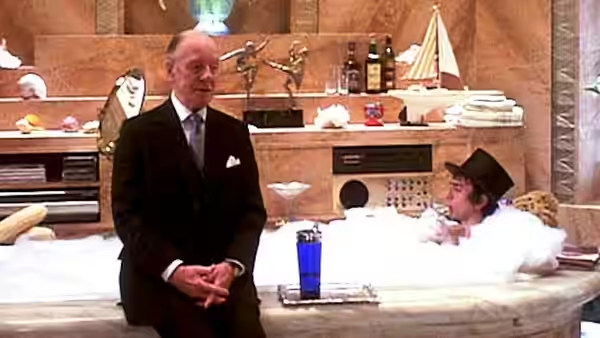
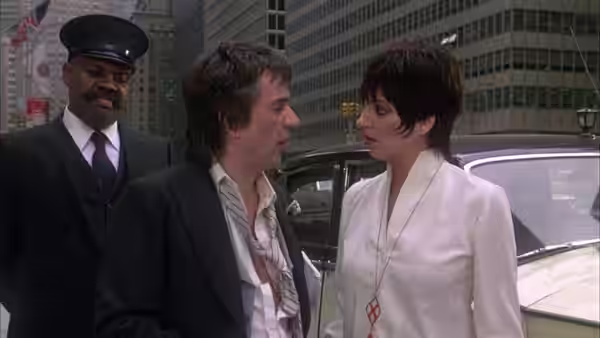
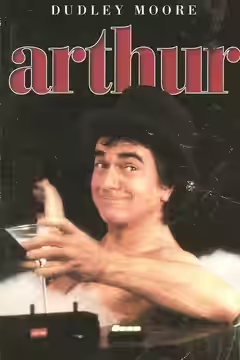
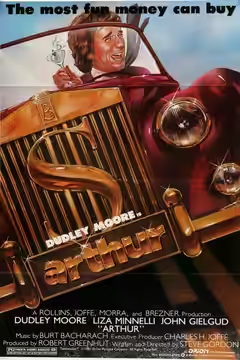
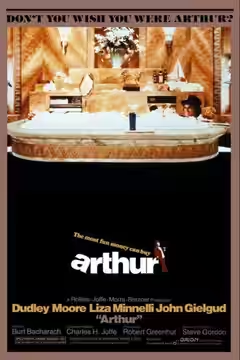
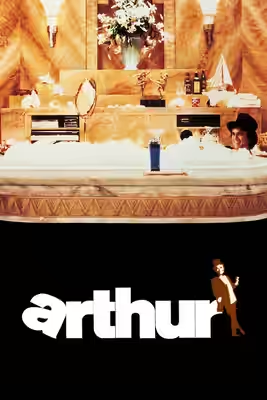
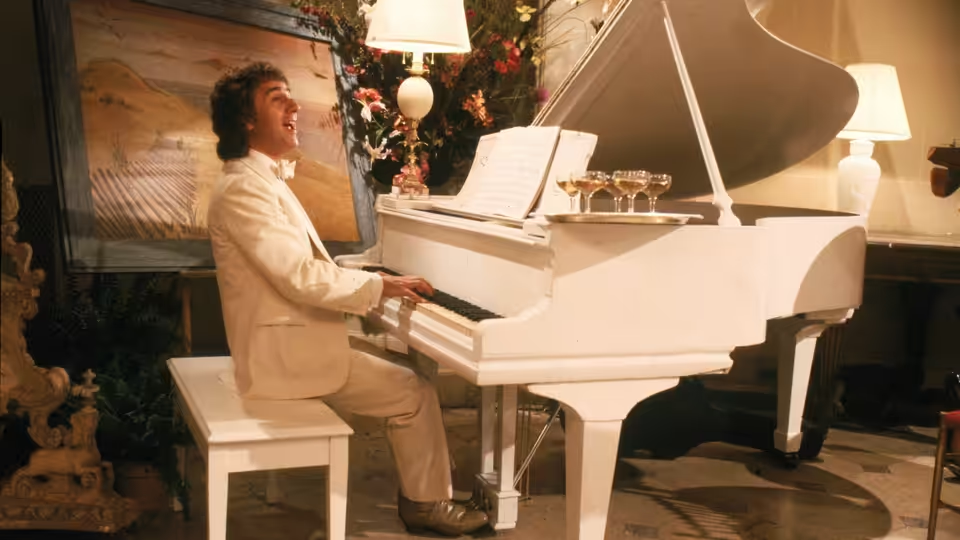
Arthur Bach (Dudley Moore) plays a grand piano in an ornate room
Film review

Arthur

1981 · Directed by Steve Gordon · 1h 37m · Medierådet A

In a sentenceDudley Moore giggles at his own jokes for an hour and a half; Gielgud declines to, and wins

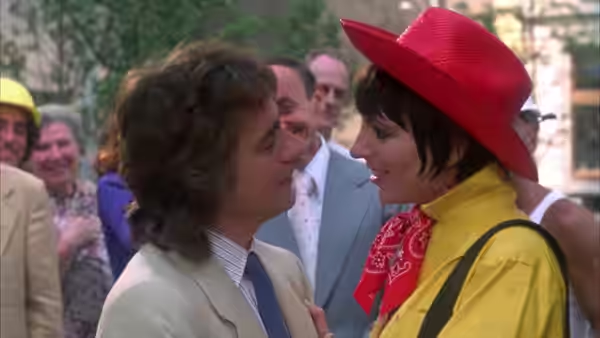
Arthur Bach (Dudley Moore) is the heir to a New York fortune and is drunk for most of his waking hours. He is dressed, fed, scolded and poured into cars by his valet Hobson (John Gielgud), driven about by his chauffeur Bitterman (Ted Ross), and otherwise left to pick up women and giggle at his own jokes in the Plaza. His father Stanford (Thomas Barbour) gives him an ultimatum: marry Susan Johnson (Jill Eikenberry), the daughter of a self-made businessman called Burt (Stephen Elliott), or be cut off from the family money, which his grandmother Martha (Geraldine Fitzgerald) controls. Arthur agrees, then goes shopping and watches a waitress, Linda Marolla (Liza Minnelli), steal a tie. He covers for her, follows her out, and the engagement starts to look like a problem.

Fi1m review

Steve Gordon’s comedy about a rich drunk who must marry for money is slighter than its reputation, and Dudley Moore’s giggle wears out well before the 97 minutes do. John Gielgud, giving each line the least effort it will bear, is the reason to stay.

Arthur Bach is a millionaire, a drunk and a child, in roughly that order, and Arthur is a comedy about what happens when someone finally asks him to grow up. His father tells him to marry Susan Johnson or lose the family money. He says yes, because saying yes is easier, and then meets a waitress called Linda Marolla stealing a tie in a department store. Steve Gordon, who wrote and directed, has built a very old plot out of this, the idle rich man and the girl from the wrong end of town, and he knows it. The film is pleasant, short at 97 minutes, and gets by on two performances. One of them is better than the film.

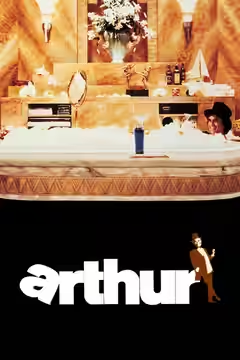
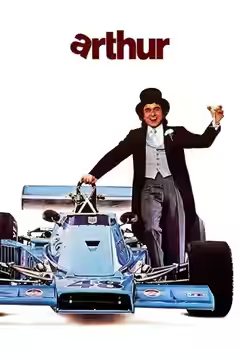
Dudley Moore is the one on the poster. He is small, quick and likeable, and he can fall off a bar stool with more grace than most actors can walk across a room. The first scenes, with Arthur picking up a prostitute called Gloria (Anne De Salvo) and taking her to dinner at the Plaza, are the funniest he gets: he treats her with perfect courtesy and she has no idea what to do with it. The trouble is the giggle. Moore laughs at Arthur’s jokes before anyone else can, and by the fourth or fifth time we had stopped laughing with him and started waiting for him to finish. A drunk act is a short act. Gordon’s script asks it to carry whole scenes, and the scenes sag under it.

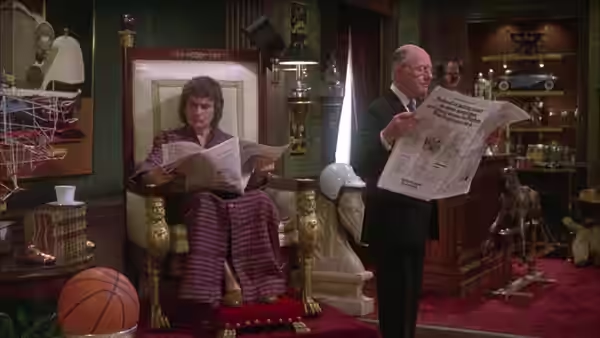
John Gielgud carries the rest. Hobson runs Arthur’s bath, reads his post and insults him in sentences so even and so unhurried that it takes a moment to hear what has been said. Told that Arthur is going to take a bath, he replies that he will alert the media. We laughed out loud, on a sofa, alone, and what did it was the total absence of effort: Gielgud plays every line as if he has said it a thousand times and is faintly bored to be saying it again. It is a performance made almost entirely of pauses. Moore works hard and Gielgud does nothing, and the nothing is funnier every time.

Liza Minnelli has the harder part, because Linda is written as a type, the plucky working girl who tells the truth, and the script gives her nerve but not much else. Minnelli supplies the rest herself. She is loud, direct and a little frightening, and she talks to Arthur as though he were a person, which nobody else in the film does. Barney Martin, as her father Ralph, has a few scenes of pure grumbling and makes them count. Geraldine Fitzgerald’s Martha Bach is the one adult Arthur is afraid of, and Fitzgerald plays her with a smile that never gets anywhere near her eyes. Jill Eikenberry’s Susan is given almost nothing to do except be the wrong woman, and Stephen Elliott’s Burt Johnson is a thug in a good suit.

Gordon directs the way a writer directs: he points the camera at the person who is talking. Fred Schuler shoots New York in the warm browns and brass of hotel bars and the flat grey of the avenues, and it looks comfortable rather than rich. Stephen Hendrickson’s production design puts Arthur in rooms that are large and empty, which is right, and Jane Greenwood dresses him in a dinner jacket at hours when nobody should be wearing one. Susan E. Morse keeps the scenes tidy and gets out of them on the laugh. Burt Bacharach and Peter Allen’s song turns up often enough that we could hum it by the end, and we did not entirely want to.

The second half takes a turn we will not describe. It changes the temperature of the film, and we found ourselves more affected than a comedy this loose had any right to make us, mostly because of Gielgud’s face in a scene where he is not given a joke at all. It is also where the film stops being funny for long stretches, and Gordon does not quite know how to get it started again. The rich-man-and-the-waitress plot was done faster and with sharper teeth in the thirties, and Arthur never pretends to be in that company. It is a star vehicle with one very good passenger.

Most critics have liked it a little more than we do, and we understand why: Moore was a pleasure to have around, and in 1981 he was having a moment. Watch it for Gielgud, forgive the giggle, and have a drink yourself, which helps.
Critical consensus AI synthesised

3 of 6
Positive
3
Mixed
0
Negative
0
Radio Times
★★★★ · Tom Hutchinson
80

Hutchinson finds the film an enjoyable boozy comedy, though its drunken-millionaire character can feel clichéd. He praises Dudley Moore’s charm and timing, and especially John Gielgud’s wonderfully assured performance.

Read the full review →
RogerEbert.com
17 July 1981 · ★★★ · Roger Ebert
75

Ebert regarded the comedy as an enjoyable vehicle for Dudley Moore. He singled out Moore’s comic performance as its chief strength.

Read the full review →
Empire
1 January 2000 · William Thomas
70*

The review recommends the comedy, though Arthur’s drunken antics become tiresome. It singles out John Gielgud’s butler as a welcome source of comic relief.

Read the full review →

Straight answers AI written, from our review

Is Arthur worth watching?
Arthur is worth watching for John Gielgud, who plays the valet Hobson with so little visible effort that every insult lands, and we scored it 72. Dudley Moore's drunk act and his habit of giggling at his own jokes wear thin well before the 97 minutes are up. It is a slight, pleasant comedy with one performance better than the film around it.
How long is Arthur, and what is it rated?
Arthur runs 1h 37m and is rated A by the Medierådet in Denmark. It is a comedy and drama film.
Where can I watch Arthur in Denmark?
Arthur is available to rent from Amazon Prime Video from kr 39.00. Availability is checked daily; the links above go straight to each service.
How violent or frightening is Arthur, and is it suitable for children?
Arthur has no violence or frightening content to speak of; it is a 15 in the UK and a PG in the US, and the certificate reflects a hero who is drunk for most of his waking hours and picks up a prostitute in the first scenes. Nothing is shown that would alarm teenagers, but a film whose comedy depends on heavy drinking is not one for small children.
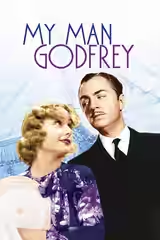
How does Arthur compare to My Man Godfrey?
Arthur and My Man Godfrey tell the same story of an idle rich household and the person who steadies it, and the earlier film does it at twice the speed and with sharper teeth. William Powell and Carole Lombard carry a tighter farce; Arthur gets by on Gielgud and a soft second half. Choose Godfrey for the comedy, Arthur for the butler.
What should I watch after Arthur?
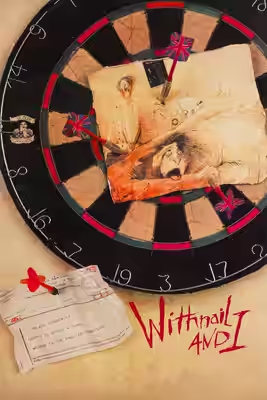
After Arthur, try My Man Godfrey (1936, Fi1m 82): The rich-idler plot done at twice the speed, with a butler who has a past. Then Withnail & I (1987, Fi1m 88): The British drunk comedy, in which being drunk is funny and then it is not; and Trading Places (1983, Fi1m 80): Another New York money comedy, meaner and faster, with a better villain.

Cast

Awards

Academy Awards, 1982

Nominated
Best Actor
Nominated
Best Writing, Original Screenplay
Won
Best Supporting Actor

If you liked this, try…

  1. My Man Godfrey (1936, Fi1m 82)The rich-idler plot done at twice the speed, with a butler who has a past.

  2. Bedazzled (1967) · not reviewed yetMoore and Peter Cook, before the giggle, selling a soul for a Wimpy bar.

  3. Withnail & I (1987, Fi1m 88)The British drunk comedy, in which being drunk is funny and then it is not.

  4. Trading Places (1983, Fi1m 80)Another New York money comedy, meaner and faster, with a better villain.

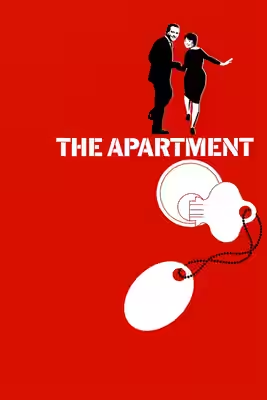
  5. The Apartment (1960, Fi1m 91)A comedy that turns sad halfway through and knows exactly how to come back.

Free account

Know what to watch tonight

Two lists that know where things are streaming, collections you can share, your own score beside ours, and Discover that remembers what you have seen.

  • Want to see, sorted by what is streaming now
  • Seen, with your score out of ten
  • No adverts, ever