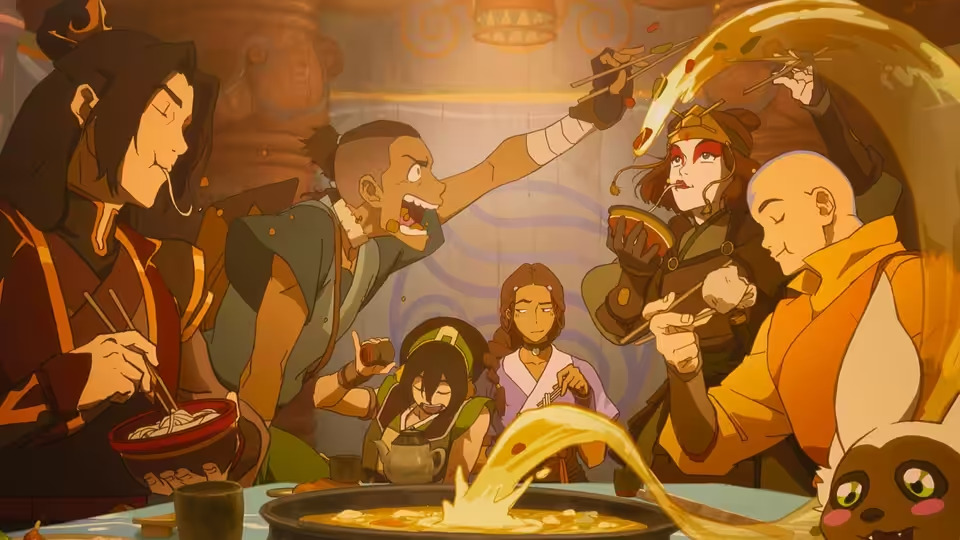
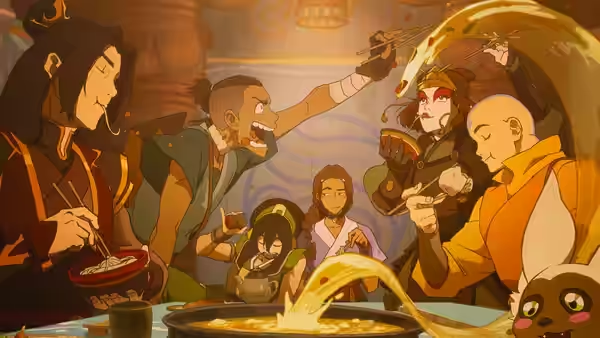
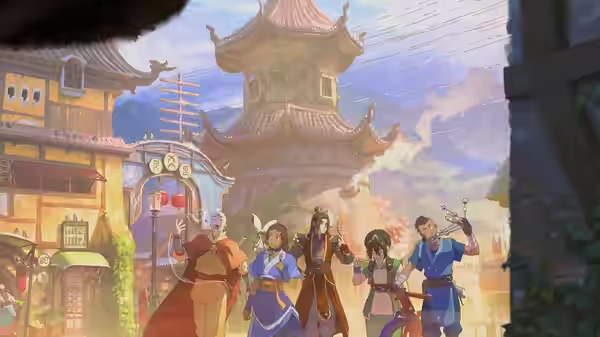
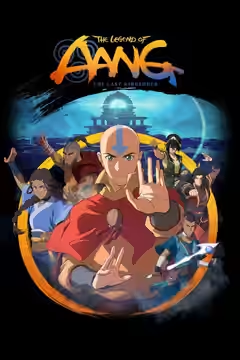
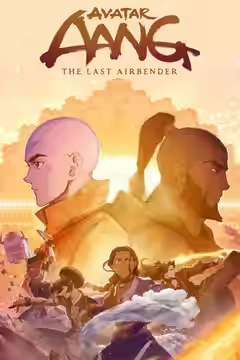
Lauren Montgomery brings Aang and his friends back as adults, and the drawing and the fights are as good as the series ever managed. The story underneath is thin and in a hurry, and it saves its best scenes for people who love these characters.
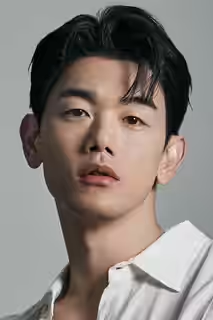
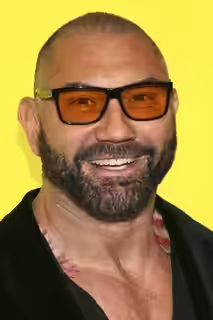
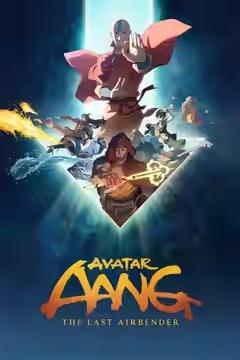
The animated series Avatar: The Last Airbender ended in 2008, and this is the first time its characters have been back on screen in the form their audience remembers, drawn rather than acted. Lauren Montgomery, who directed episodes of the original, takes Aang (Eric Nam) into adulthood and gives him a new opponent in Tagah (Dave Bautista), a man built as a dark reflection of the Avatar himself. The idea underneath is a good one: what does the last of a people owe to that people, and what does he do about the ones who wiped them out. The film is 99 minutes long and beautifully drawn, and it gets to about half of that idea.
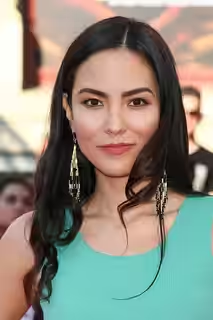
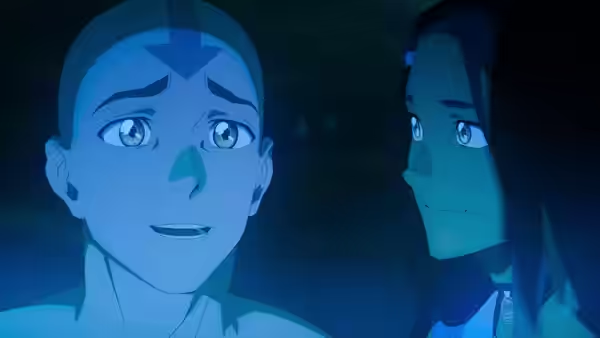
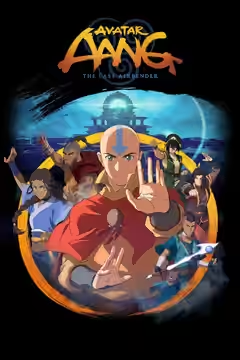
The voices are new, and it takes ten minutes to stop hearing that. Nam plays Aang as a grown man who has not lost the boy’s lightness, and it works; the character has always been lighter than the world he lives in. Steven Yeun’s Zuko is steady and a little tired, which suits him. Jessica Matten’s Katara, Román Zaragoza’s Sokka and Dionne Quan’s Toph are all fine, and all of them are given far less to do than their billing suggests. Sokka in particular is here to be Sokka, briefly, and then to stand at the edge of the frame. Dee Bradley Baker, who made Appa’s noises in the original, makes them again, and the bison remains the most reliable emotional instrument this world owns.
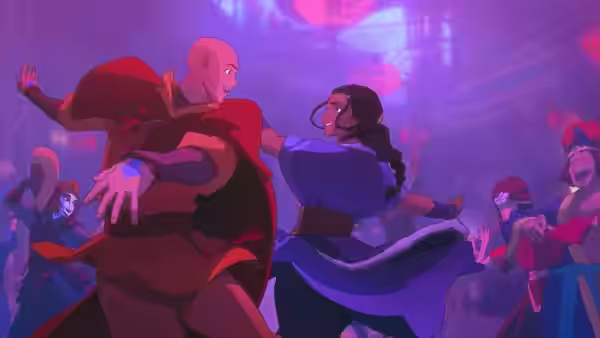
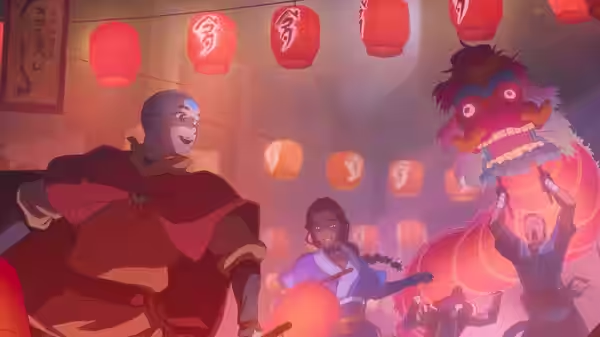
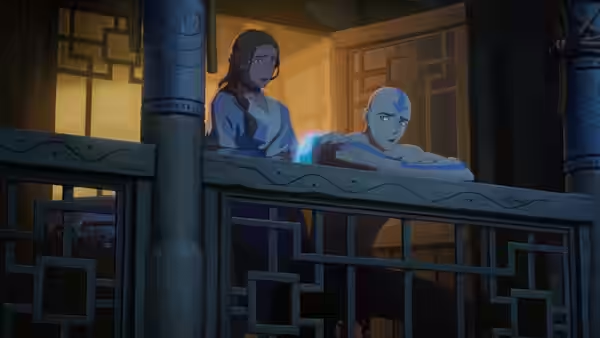
Where the film earns its keep is in motion. The animation is 2D with some 3D under it, and Damon O’Beirne’s camera moves through the fights rather than watching them from the side, so a gust of air or a wall of earth has weight and direction. Jake Panian’s design keeps the Four Nations recognisable and lets them age along with the people, which is the right call. We felt a proper lift the first time Aang bends at full stretch as an adult, a jolt of pleasure at seeing something we had known as a children’s serial given this much room. That feeling recurs in every action sequence and in almost nothing else.
The screenplay, by Tim Hedrick and Christopher Lee Yost from a story credited to Bryan Konietzko, Kenneth Lin, Michael Dante DiMartino and Hedrick, wants to talk about genocide and the cycle of violence, and it is not shy about saying so. It is shy about staying on the subject. Tagah is introduced, his grievance is stated, and then the film leaves for the spirit world, where the past Avatars Sonam (Freida Pinto) and Xian (Ke Huy Quan) offer counsel and a creature called Gorillavark (Taika Waititi) offers jokes. The detour is pleasant and it costs the film its middle. By the time we are back with Tagah there are perhaps thirty minutes left, and the argument the film promised has become a fight.
Michelle Mendenhall cuts it fast, which is fine in the fights and a fault in the talk; several scenes end a line before they have finished. Jeremy Zuckerman scored the original series and knows exactly what this world sounds like, and his cues do a good deal of the emotional work the writing leaves undone. There were moments where we noticed the score asking us to feel something the scene had not yet earned, and we resented it slightly, and then the picture moved again and we forgave it.
Against the standard of the series, which took three seasons and gave every member of its cast a reason to be there, this has about one episode’s story in it. Most critics have landed a little warmer than we have, and we understand why: the film is generous to people who loved the show, and there are a great many of them. It is less generous to anyone else. A newcomer will follow the plot and miss most of what makes its fans go quiet.
Watch it anyway, if you knew these people as children, and sit close. If you did not, start with the series, which does everything this film does and takes the time to mean it.