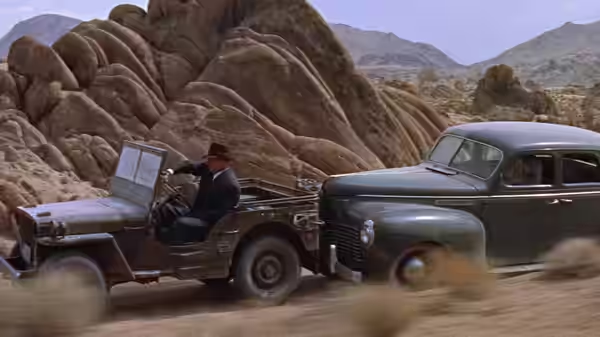
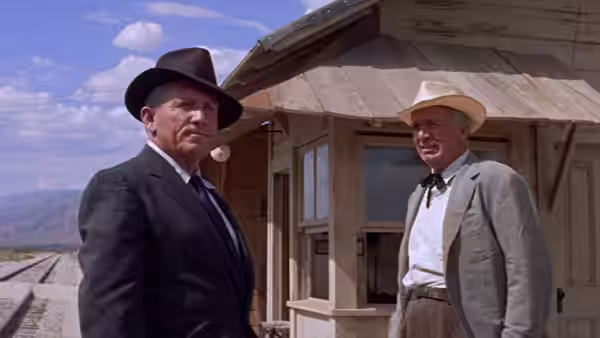
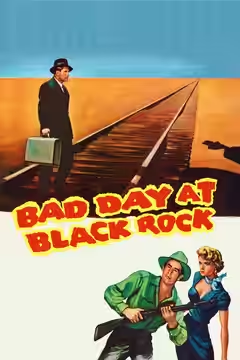
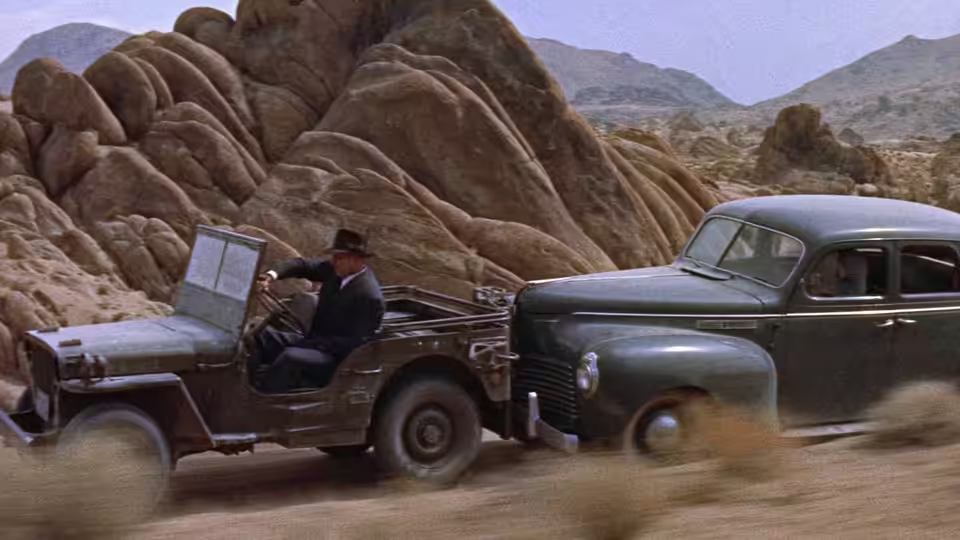
John J. Macreedy sits in a pickup truck beside towering rocks in the desert
Film review

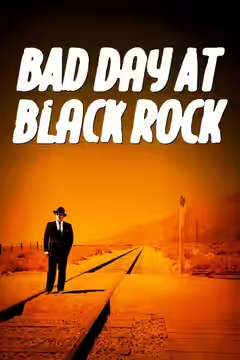
Bad Day at Black Rock

1955 · Directed by John Sturges · 1h 21m

In a sentencePlenty of open country, nowhere we would care to be alone with the locals

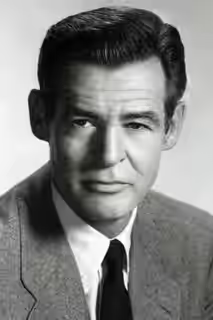
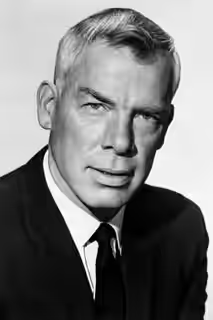
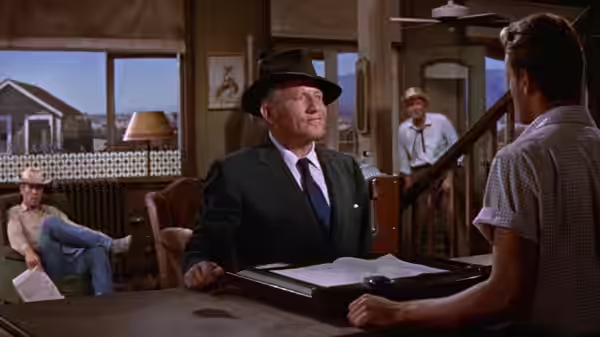
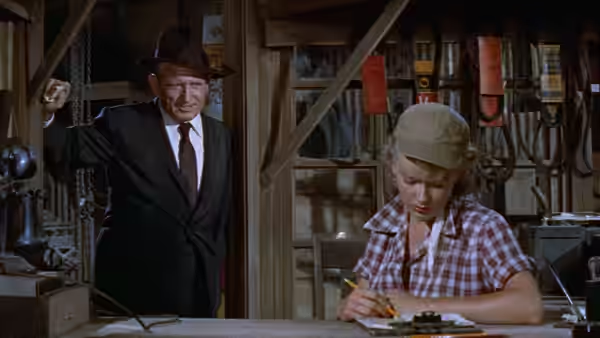
In a small town, John J. Macreedy (Spencer Tracy) meets a community with secrets it wants to keep. A one-armed stranger, he needs answers from people who give him little reason to feel welcome. Among them are Reno Smith (Robert Ryan) and Hector David (Lee Marvin), whose presence makes the town’s outward calm increasingly difficult to trust. As Macreedy tries to get people talking, those around him face a choice between speaking and going along with their neighbours. The surrounding open country offers little comfort to a man trying to find someone prepared to help.

Plays from YouTube when you press play; nothing loads from them until then.

Fi1m review

John Sturges makes a lean, unnerving Western in which open country offers no comfort. Spencer Tracy holds it steady; an overinsistent score and a softened finish keep it from being quite as tough as it looks.

John Sturges makes Bad Day at Black Rock into a tense, unusually economical Western, and we recommend it with a reservation about how firmly it underlines its points. Its 81 minutes give a small town just enough time to become somewhere we would rather leave. John J. Macreedy, played by Spencer Tracy, is a one-armed man surrounded by people whose calm is distinctly unwelcoming. The film understands how threatening a group can become without anybody needing to raise a voice.

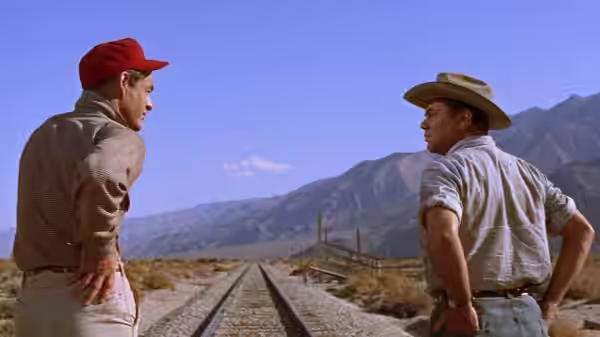
The use of the wide screen is the first pleasure, and soon the main source of discomfort. William C. Mellor’s cinematography keeps the surrounding landscape insistently present, so that the town never seems safely tucked away from it. We felt trapped by all that open country. The scale makes a lone person look exposed, and the director uses the breadth of the frame to keep our attention on the people around him as well as the man himself.

Spencer Tracy is crucial to that unease because his performance does not compete with it. His restraint gives us someone to watch closely, without requiring us to admire every small movement. There is a temptation in a part like this to make the character’s physical limitation the subject of every scene; the performance keeps our attention on his judgement and patience. Robert Ryan, as Reno Smith, provides a disturbing presence because the hostility seems so thoroughly considered.

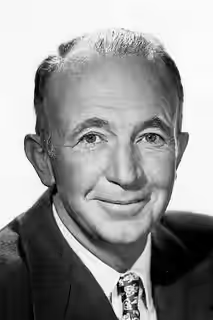
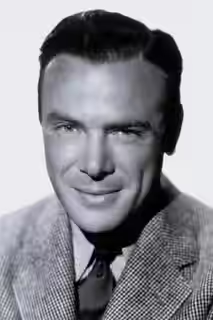
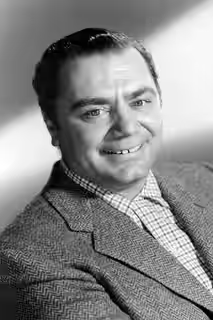
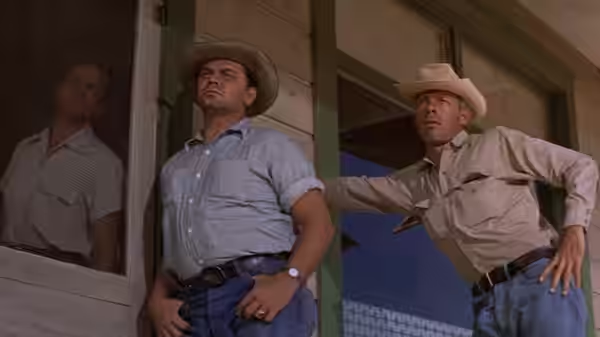
The supporting cast makes the community’s collective unpleasantness persuasive. Lee Marvin’s Hector David has a watchful nastiness; Ernest Borgnine’s Coley Trimble is more openly bullying. Walter Brennan, as Doc T.R. Velie Jr., provides a less aggressive presence without making the place feel comfortable. Some of the supporting parts are drawn broadly, but the actors give us enough individual temperament to keep the townspeople from becoming an anonymous collection of hostile faces.

Newell P. Kimlin’s editing gives the unease time to settle without letting the film grow slack. The move from watchfulness towards action feels like a release of pressure that has been building throughout the quieter passages. André Previn’s music is less discreet, pushing at moments that have already made us uncomfortable. We do not need so much instruction in how ominous the place is, and the score occasionally competes with the quiet work of the actors.

Millard Kaufman’s screenplay is strongest on the ugliness of conformity: the way a community can make its own agreement seem sufficient reason to stop asking questions. That gives the mystery weight beyond the business of finding out what has happened. There are passages, however, when the moral lesson becomes more emphatic than the drama needs. The finish softens matters further, and although we will not describe it, its reassurance is less convincing than the suspicion that precedes it.

As a Western, this has little interest in offering open country as an escape from other people. Its pleasures are closer to those of a compact crime thriller, with the cast and the widescreen staging doing most of the unsettling work. The objections matter, particularly whenever the music insists on a response the actors have already earned. Give those 81 minutes your full attention, and allow for the occasional nudge when no assistance is required.
Critical consensus AI synthesised

87
Positive
4
Mixed
0
Negative
0
Radio Times
★★★★★ · David Parkinson
100

Parkinson praises the film’s simmering suspense and atmosphere of deceptive calm. He also singles out Spencer Tracy’s performance as a career peak.

Read the full review →
Empire
1 January 2000 · Kim Newman
90*

Newman calls it a nerve-shredding masterpiece and Sturges’s best-directed film. He praises its simmering suspense and the way its taut drama builds into CinemaScope action.

Read the full review →
Slant Magazine
19 May 2005 · ★★★½/4 · Nick Schager
88

Schager praises the film as an incisive, tense portrait of intolerance and conformity, despite a soft ending and intrusive score. He singles out Sturges’s widescreen compositions, which make the vast landscape an ever-present menace.

Read the full review →
Time Out
15 March 2012
70*

The available description presents the film as an atmospheric Western, but the full review is unavailable to confirm the critic’s overall verdict. It singles out the small town’s secrets and Spencer Tracy’s one-armed character.

Read the full review →

Straight answers AI written, from our review

Is Bad Day at Black Rock worth watching?
Bad Day at Black Rock is worth watching for its compact thriller tension, Spencer Tracy’s restraint and unsettling widescreen staging; we score it 86. We recommend its lean 81 minutes to anyone who enjoys a mystery built around hostile people, though the music and moral lessons sometimes press harder than they need to.
How long is Bad Day at Black Rock, and what is it rated?
Bad Day at Black Rock runs 1h 21m. It is a western and drama film.
Where can I watch Bad Day at Black Rock in Ecuador?
Bad Day at Black Rock is not on any streaming or rental service in Ecuador at the moment. It is available in 13 other countries; change your country at the top of the page to see where. Availability is checked daily.
How violent or frightening is Bad Day at Black Rock, and is it suitable for children?
Bad Day at Black Rock has a UK PG certificate, but its bullying, threatening townspeople and sustained unease may unsettle younger children. The review describes tension building towards action rather than detailing the violence, so we would not treat that certificate as a guarantee of a comfortable family watch.
How does Bad Day at Black Rock compare to High Noon?
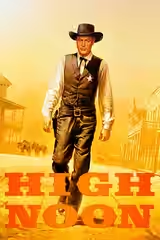
Bad Day at Black Rock and High Noon are similarly strong Westerns about an isolated man facing a town unwilling to help. We would choose Bad Day at Black Rock for compact crime-thriller unease and Tracy’s restraint, or High Noon for the painfully convincing fear of Gary Cooper’s marshal. Both sometimes explain the townspeople’s moral failings more firmly than necessary.
What should I watch after Bad Day at Black Rock?
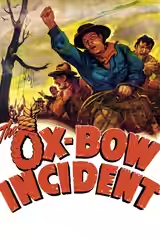
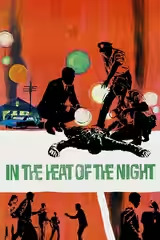
After Bad Day at Black Rock, try High Noon (1952, Fi1m 88): Another isolated man discovers how quickly a town can mislay its courage. Then The Ox-Bow Incident (1943, Fi1m 84): A harsher Western about men mistaking agreement for the right to punish; and In the Heat of the Night (1967, Fi1m 85): Small-town hostility, racial prejudice and two actors who make every exchange count.

Cast

Awards

Academy Awards, 1956

Nominated
Best Actor
Nominated
Best Director
Nominated
Best Writing, Adapted Screenplay

If you liked this, try…

  1. High Noon (1952, Fi1m 88)Another isolated man discovers how quickly a town can mislay its courage.

  2. The Ox-Bow Incident (1943, Fi1m 84)A harsher Western about men mistaking agreement for the right to punish.

  3. The Bad Sleep Well (1960) · not on Fi1m yetA different setting for the same fear of institutions protecting guilty men.

  4. In the Heat of the Night (1967, Fi1m 85)Small-town hostility, racial prejudice and two actors who make every exchange count.

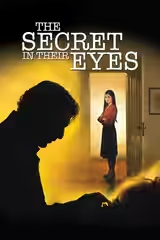
  5. The Secret in Their Eyes (2009, Fi1m 78)An investigation into old wrongdoing, with more romance and the same lingering anger.