John Sturges makes a lean, unnerving Western in which open country offers no comfort. Spencer Tracy holds it steady; an overinsistent score and a softened finish keep it from being quite as tough as it looks.
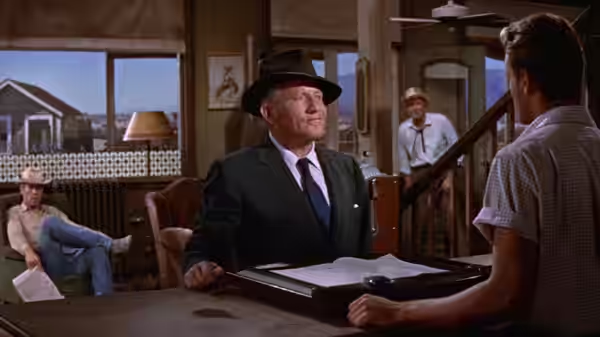
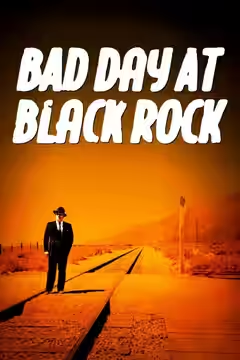
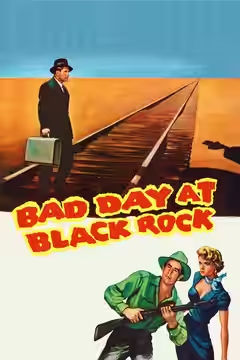
John Sturges makes Bad Day at Black Rock into a tense, unusually economical Western, and we recommend it with a reservation about how firmly it underlines its points. Its 81 minutes give a small town just enough time to become somewhere we would rather leave. John J. Macreedy, played by Spencer Tracy, is a one-armed man surrounded by people whose calm is distinctly unwelcoming. The film understands how threatening a group can become without anybody needing to raise a voice.
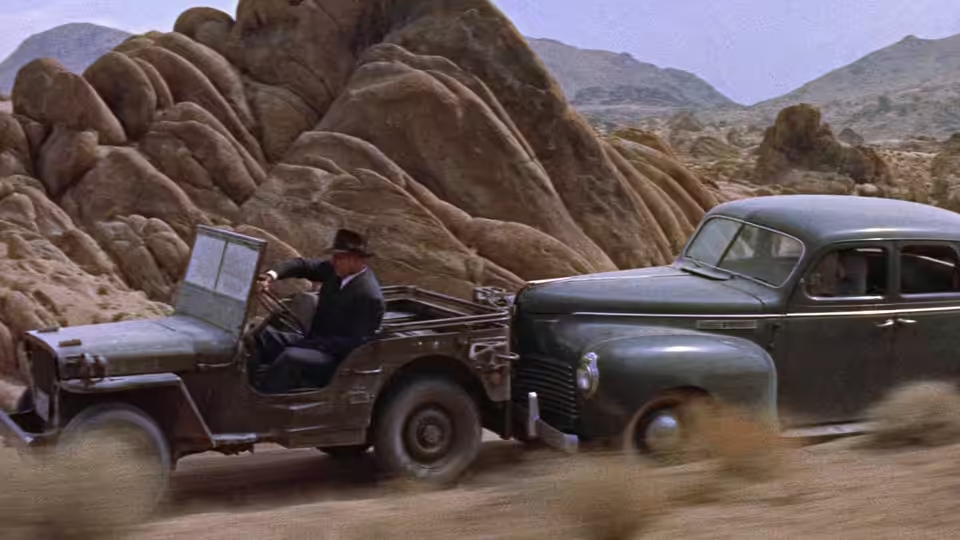
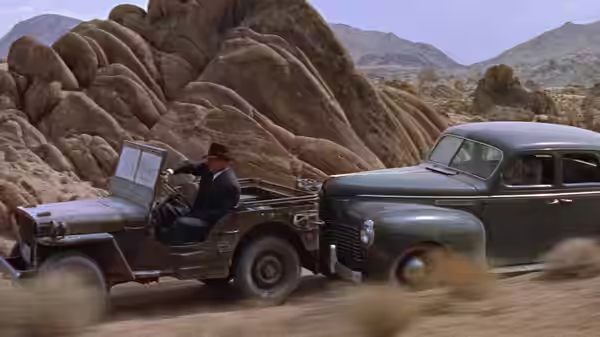
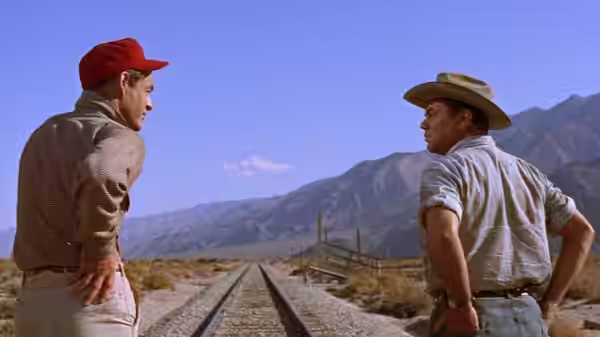
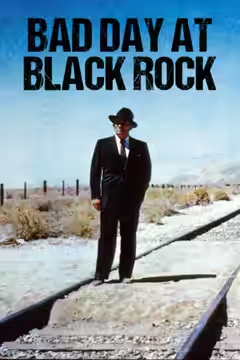
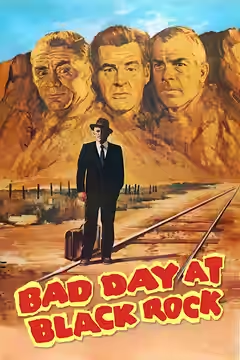
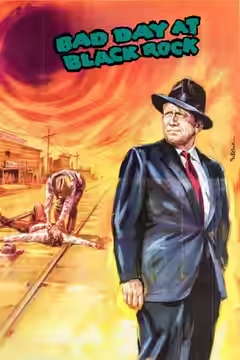
The use of the wide screen is the first pleasure, and soon the main source of discomfort. William C. Mellor’s cinematography keeps the surrounding landscape insistently present, so that the town never seems safely tucked away from it. We felt trapped by all that open country. The scale makes a lone person look exposed, and the director uses the breadth of the frame to keep our attention on the people around him as well as the man himself.
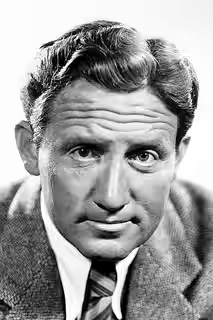
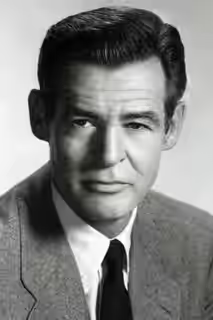
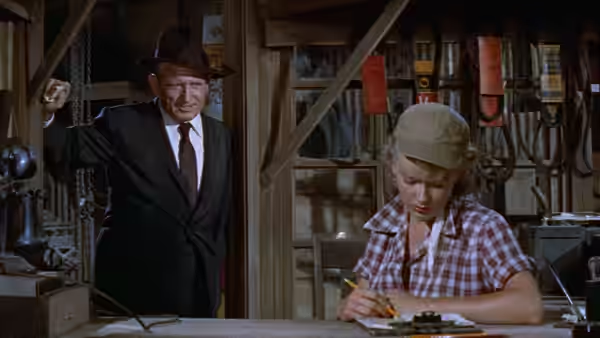
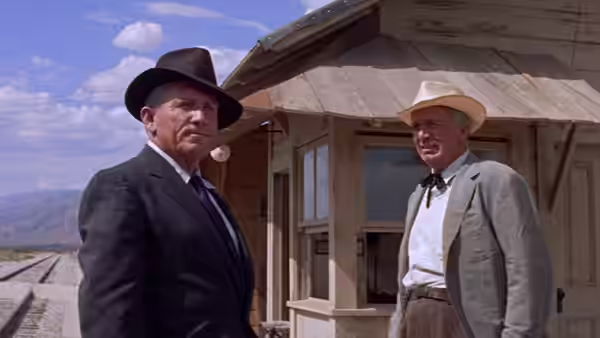
Spencer Tracy is crucial to that unease because his performance does not compete with it. His restraint gives us someone to watch closely, without requiring us to admire every small movement. There is a temptation in a part like this to make the character’s physical limitation the subject of every scene; the performance keeps our attention on his judgement and patience. Robert Ryan, as Reno Smith, provides a disturbing presence because the hostility seems so thoroughly considered.
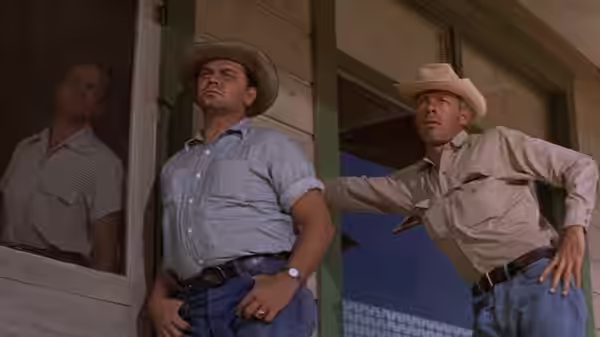
The supporting cast makes the community’s collective unpleasantness persuasive. Lee Marvin’s Hector David has a watchful nastiness; Ernest Borgnine’s Coley Trimble is more openly bullying. Walter Brennan, as Doc T.R. Velie Jr., provides a less aggressive presence without making the place feel comfortable. Some of the supporting parts are drawn broadly, but the actors give us enough individual temperament to keep the townspeople from becoming an anonymous collection of hostile faces.
Newell P. Kimlin’s editing gives the unease time to settle without letting the film grow slack. The move from watchfulness towards action feels like a release of pressure that has been building throughout the quieter passages. André Previn’s music is less discreet, pushing at moments that have already made us uncomfortable. We do not need so much instruction in how ominous the place is, and the score occasionally competes with the quiet work of the actors.
Millard Kaufman’s screenplay is strongest on the ugliness of conformity: the way a community can make its own agreement seem sufficient reason to stop asking questions. That gives the mystery weight beyond the business of finding out what has happened. There are passages, however, when the moral lesson becomes more emphatic than the drama needs. The finish softens matters further, and although we will not describe it, its reassurance is less convincing than the suspicion that precedes it.
As a Western, this has little interest in offering open country as an escape from other people. Its pleasures are closer to those of a compact crime thriller, with the cast and the widescreen staging doing most of the unsettling work. The objections matter, particularly whenever the music insists on a response the actors have already earned. Give those 81 minutes your full attention, and allow for the occasional nudge when no assistance is required.