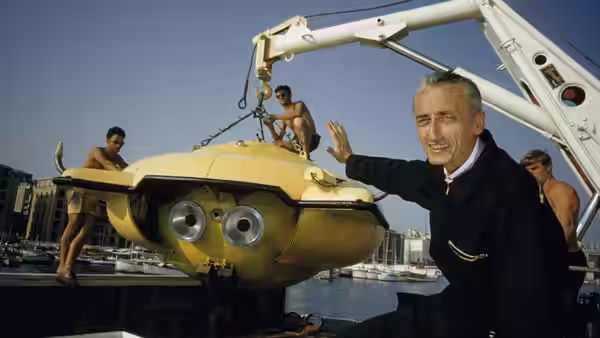
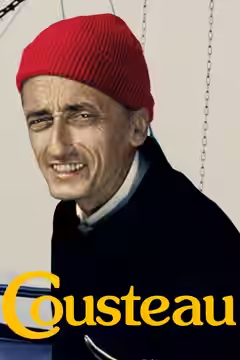
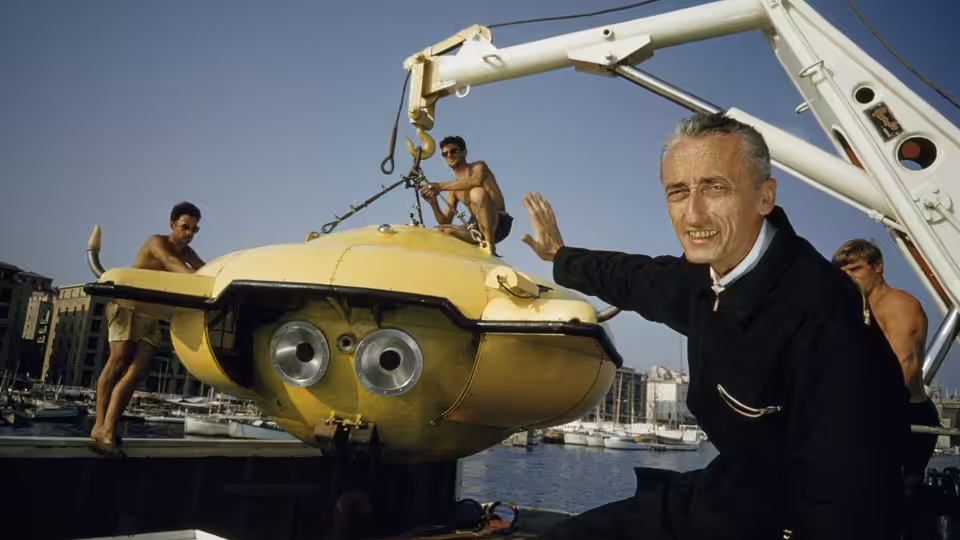
Jacques Cousteau beside a yellow research submersible being lifted aboard a vessel
Film review

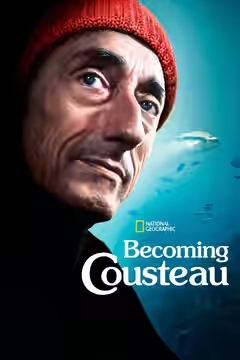
Becoming Cousteau

2021 · Directed by Liz Garbus · 1h 34m · BBFC 12A

In a sentenceNinety-four minutes with Jacques Cousteau is enough to make our sofa feel disappointingly far from the sea

Jacques Cousteau appears in archive footage as an explorer trying to bring the ocean to an audience on land. Underwater films and journal entries trace his fascination with the sea, while Philippe Cousteau and Jean-Michel Cousteau also appear as themselves and Francine Cousteau is heard in archive audio. Liz Garbus brings this material together to follow the work behind a public life of exploration and filmmaking. The account follows an explorer and entertainer whose growing concern for the ocean begins to change the purpose of his work, with family voices contributing to the portrait.

Plays from YouTube when you press play; nothing loads from them until then.

Fi1m review

Liz Garbus makes a warm, absorbing introduction to Jacques Cousteau, with underwater archive footage that earns the admiration. The biography is less satisfying when it needs to question him.

Liz Garbus makes Becoming Cousteau an absorbing introduction, though anyone hoping for a searching biography should lower their expectations. Jacques Cousteau’s movement from exploration and entertainment towards environmental campaigning gives the film a clear story to follow. The underwater archive makes the appeal of that life easy to understand. This is a film for the curious, requiring little prior knowledge and supplying plenty to look at, but its admiration sometimes gets in the way of asking enough questions.

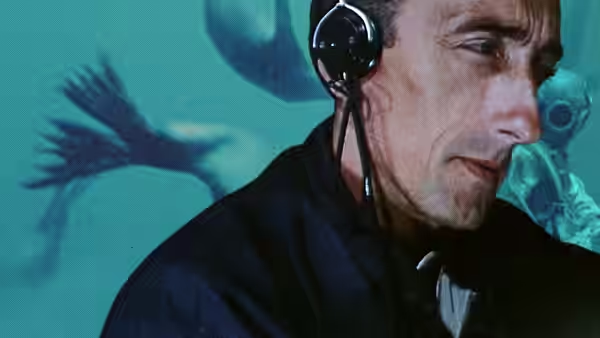
The underwater footage is the strongest reason to watch. The director lets those images establish why people would listen to her subject, and they make his attachment to the ocean understandable without requiring much explanation. We were moved by them because they make his concern for the sea feel like a response to somewhere he knows and loves. The pleasure of looking matters here. A documentary about environmental campaigning needs to show what is worth protecting, and this one gives us time to enjoy it before asking us to worry.

Editor Pax Wassermann has the difficult job of fitting exploration, filmmaking, campaigning and family into 94 minutes. The film remains easy to follow, and the archive gets enough attention to reward watching for the images alone. But the compression has a cost: subjects arrive with more promise than the film has time to fulfil. We wanted it to pause and ask a second question. The efficient pace sometimes makes an important complication feel dealt with before it has been properly considered, particularly when the account turns towards family.

The family material is where that limitation becomes most apparent. Philippe Cousteau and Jean-Michel Cousteau appear in the archive, while Francine Cousteau is heard in archive audio; these contributions widen the portrait without making its domestic side feel fully examined. The director acknowledges flaws and regrets, which saves the film from simple celebration. Yet the attention given to public achievements leaves us wanting a fuller sense of what life around this man involved, and how the people close to him understood his work.

The writing, credited to Mark Monroe and Pax Wassermann, is good at keeping the environmental concerns connected to its subject’s curiosity. It does not require us to arrive already invested in his reputation. Danny Bensi and Saunder Jurriaans provide music that suits the film’s sympathetic tone, without being its principal source of feeling. The images do most of that work. That makes this approachable for anyone drawn to the sea who has little interest in a full account of a public career, and helps the campaigning material avoid feeling like homework.

Among biographical documentaries, this follows a familiar route and benefits from unusually inviting archive material. Jacques Cousteau’s films deserve attention in their own right, and we would have welcomed more examination of how he made them. There is enough here to encourage that interest, even if the documentary is too courteous to satisfy every question it raises about its subject. Watch it for the underwater films, then seek out a few more of them.

Critical consensus AI synthesised

75
Positive
12
Mixed
3
Negative
0

Most critics welcome Becoming Cousteau as an engaging, informative portrait, with praise concentrated on Garbus’s use of archival footage. The underwater images are a particular strength, conveying Cousteau’s attachment to the sea and the appeal of his filmmaking. His development from explorer and entertainer into environmental advocate gives the documentary its clearest emotional thread. The reviews generally find it an accessible introduction to his work, with several also valuing its attention to his flaws and regrets.

Reservations concern how far the film probes beneath its admiration. The Guardian wants closer scrutiny of Cousteau’s family life and influence, while The Playlist finds the treatment too respectful and insufficiently curious about his films. Vulture, by contrast, credits its willingness to acknowledge his shortcomings. The spread runs from enthusiasm to qualified approval rather than outright rejection: the archive earns broad praise, but the depth of the biography remains the dividing point.

Variety
21 October 2021 · Owen Gleiberman
90*

Gleiberman praises the documentary as an ardent, transporting portrait whose most moving force is Cousteau’s environmental awakening. He especially singles out its archival footage and the way it immerses viewers in Cousteau’s love of the ocean.

Read the full review →
The Hollywood Reporter
3 September 2021 · festival review · Frank Scheck
85*

Scheck finds the documentary consistently engrossing and informative, offering a richly humanistic portrait of Cousteau. He praises its intimate use of archival footage and its reminder of Cousteau’s legacy in exploration and environmental activism.

Read the full review →
The AV Club
19 October 2021 · B+ · Noel Murray
83

Murray finds the documentary fascinating and thoughtful, showing how Cousteau evolved from explorer and entertainer into an environmental advocate. He praises Garbus’s curation of archival footage and storytelling, especially the arresting underwater imagery.

Read the full review →
Vulture
27 October 2021 · Bilge Ebiri
82*

Ebiri finds the documentary informative, admiring, and admirably willing to show Cousteau’s flaws and regrets. He especially praises Garbus’s use of archival footage to convey the beauty and originality of Cousteau’s filmmaking.

Read the full review →
Radio Times
★★★★ · Caroline Frost
80

Frost gives the documentary a positive verdict, praising its archive-rich account of Cousteau’s life and influence. She singles out the singular experiences and accomplishments that shaped his environmental legacy.

Read the full review →
Los Angeles Times
21 October 2021 · Robert Abele
78*

Abele finds the documentary smart and moving, though not as deep a journey as some might hope. He praises how Garbus uses Cousteau’s archival footage to portray both his adventurous curiosity and evolving environmental convictions.

Read the full review →

Straight answers AI written, from our review

Is Becoming Cousteau worth watching?
Becoming Cousteau is worth watching for its underwater archive and approachable account of Jacques Cousteau’s life; we score it 74 out of 100. We recommend it to anyone curious about the sea or his environmental campaigning, though its warm admiration leaves the family material and harder biographical questions insufficiently examined.
How long is Becoming Cousteau, and what is it rated?
Becoming Cousteau runs 1h 34m and is rated 12A by the BBFC in the UK. It is a documentary film.
Where can I watch Becoming Cousteau in the UK?
Becoming Cousteau is streaming on Disney+ in the UK. Availability is checked daily; the links above go straight to each service.
How violent or frightening is Becoming Cousteau, and is it suitable for children?
Becoming Cousteau has a UK 12A certificate, so children under 12 need an accompanying adult at the cinema. The certificate alone does not tell us how violent or frightening particular passages are; we would not treat its ocean subject as a guarantee of suitability for younger children.
How does Becoming Cousteau compare to Grizzly Man?
Becoming Cousteau is the warmer, more approachable archive-led portrait, while we recommend Grizzly Man for a tougher examination of its subject’s relationship with nature. Cousteau’s underwater films reward simple curiosity about the sea; Herzog’s funny, disturbing account offers more searching scrutiny, although we find that its narration sometimes presses the case too hard.
What should I watch after Becoming Cousteau?
After Becoming Cousteau, try Grizzly Man (2005, Fi1m 85): Another archive-led portrait, much tougher on its subject’s relationship with nature. Then The Red Turtle (2016, Fi1m 84): For the attachment to the sea, explored through animation and little speech; and Fire of Love (2022, Fi1m 76): Archive footage makes scientific curiosity, shared obsession and physical danger feel immediate.

Cast

If you liked this, try…

  1. The Silent World (1956) · not reviewed yetCousteau’s earlier underwater filmmaking, with attitudes towards wildlife that can unsettle.

  2. Grizzly Man (2005, Fi1m 85)Another archive-led portrait, much tougher on its subject’s relationship with nature.

  3. The Pearl Button (2015) · not reviewed yetWater connects personal memory and national history in a more questioning documentary.

  4. The Red Turtle (2016, Fi1m 84)For the attachment to the sea, explored through animation and little speech.

  5. Fire of Love (2022, Fi1m 76)Archive footage makes scientific curiosity, shared obsession and physical danger feel immediate.