Liz Garbus makes a warm, absorbing introduction to Jacques Cousteau, with underwater archive footage that earns the admiration. The biography is less satisfying when it needs to question him.
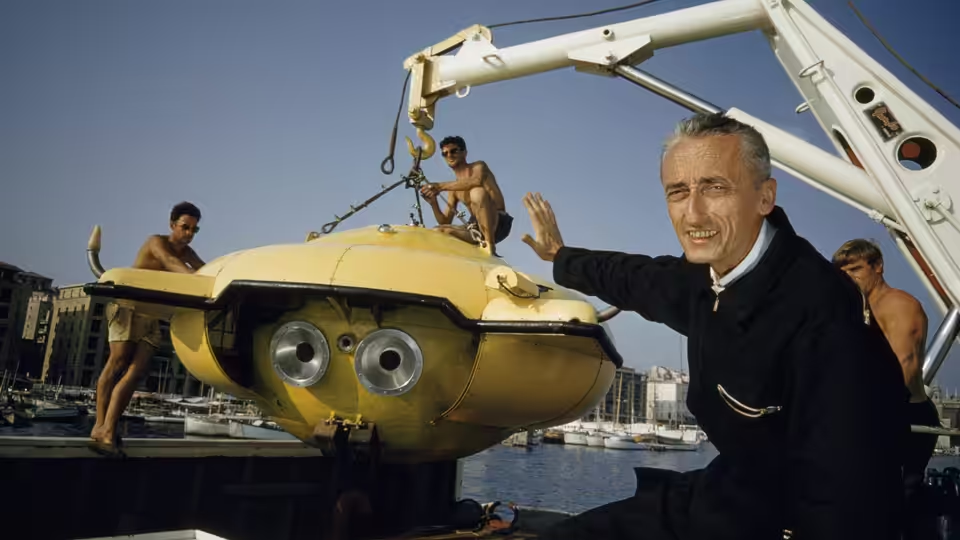
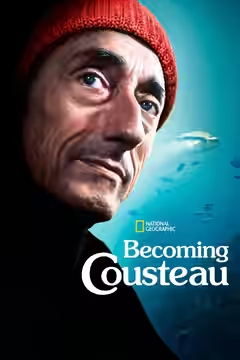
Liz Garbus makes Becoming Cousteau an absorbing introduction, though anyone hoping for a searching biography should lower their expectations. Jacques Cousteau’s movement from exploration and entertainment towards environmental campaigning gives the film a clear story to follow. The underwater archive makes the appeal of that life easy to understand. This is a film for the curious, requiring little prior knowledge and supplying plenty to look at, but its admiration sometimes gets in the way of asking enough questions.
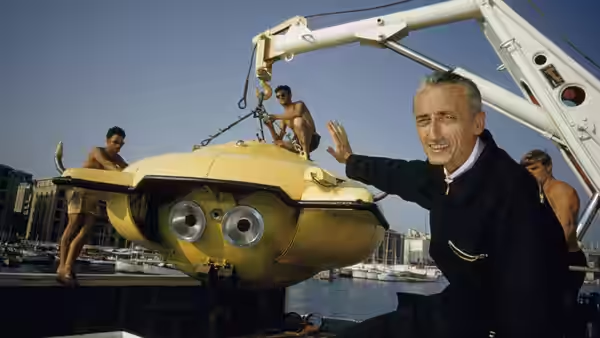
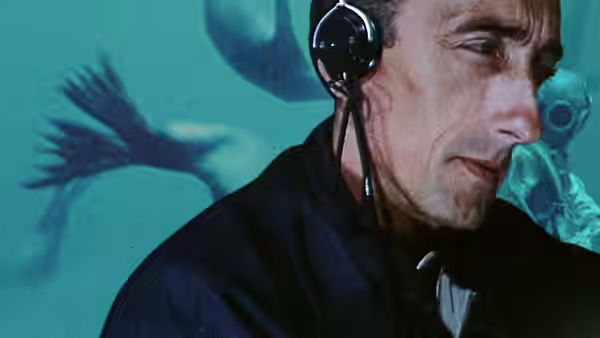
The underwater footage is the strongest reason to watch. The director lets those images establish why people would listen to her subject, and they make his attachment to the ocean understandable without requiring much explanation. We were moved by them because they make his concern for the sea feel like a response to somewhere he knows and loves. The pleasure of looking matters here. A documentary about environmental campaigning needs to show what is worth protecting, and this one gives us time to enjoy it before asking us to worry.
Editor Pax Wassermann has the difficult job of fitting exploration, filmmaking, campaigning and family into 94 minutes. The film remains easy to follow, and the archive gets enough attention to reward watching for the images alone. But the compression has a cost: subjects arrive with more promise than the film has time to fulfil. We wanted it to pause and ask a second question. The efficient pace sometimes makes an important complication feel dealt with before it has been properly considered, particularly when the account turns towards family.
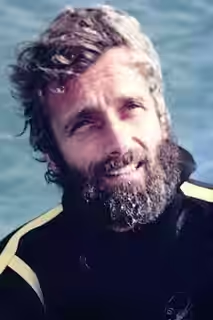
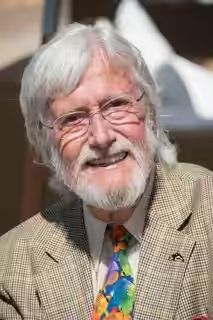
The family material is where that limitation becomes most apparent. Philippe Cousteau and Jean-Michel Cousteau appear in the archive, while Francine Cousteau is heard in archive audio; these contributions widen the portrait without making its domestic side feel fully examined. The director acknowledges flaws and regrets, which saves the film from simple celebration. Yet the attention given to public achievements leaves us wanting a fuller sense of what life around this man involved, and how the people close to him understood his work.
The writing, credited to Mark Monroe and Pax Wassermann, is good at keeping the environmental concerns connected to its subject’s curiosity. It does not require us to arrive already invested in his reputation. Danny Bensi and Saunder Jurriaans provide music that suits the film’s sympathetic tone, without being its principal source of feeling. The images do most of that work. That makes this approachable for anyone drawn to the sea who has little interest in a full account of a public career, and helps the campaigning material avoid feeling like homework.
Among biographical documentaries, this follows a familiar route and benefits from unusually inviting archive material. Jacques Cousteau’s films deserve attention in their own right, and we would have welcomed more examination of how he made them. There is enough here to encourage that interest, even if the documentary is too courteous to satisfy every question it raises about its subject. Watch it for the underwater films, then seek out a few more of them.