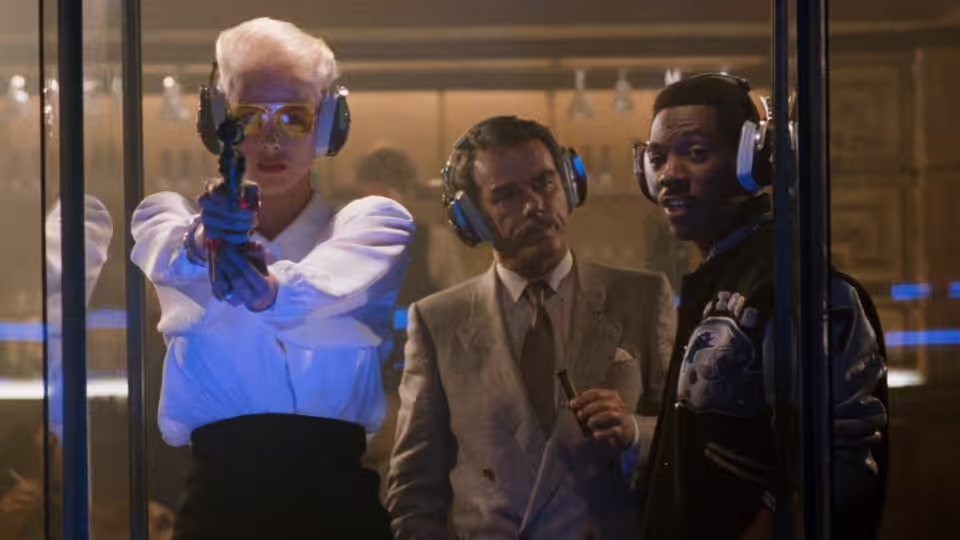
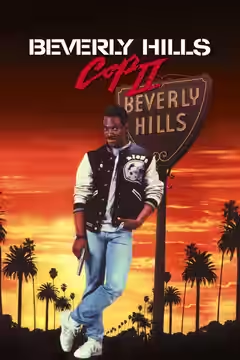
Eddie Murphy and Judge Reinhold provide scattered laughs in Tony Scott’s glossy, tiring sequel. The comic chemistry survives, but the mechanical script and relentless pace make it difficult to recommend.
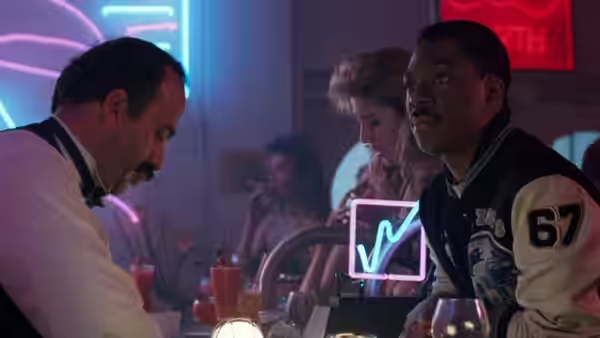
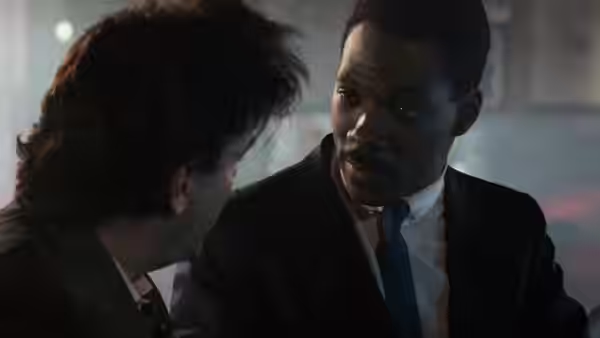
Beverly Hills Cop II has Eddie Murphy, a returning comic partnership and enough confidence to assume that these will do the work. Tony Scott directs as though any pause might be mistaken for a loss of nerve, pushing the action harder than the jokes need. The result is a mixed sequel with scattered pleasures and long stretches of business that never becomes interesting. Eddie Murphy can still make self-assurance funny, but we kept wishing the film would give him a better reason to exercise it.
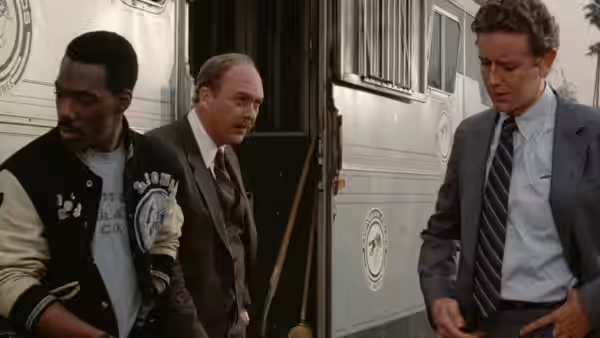
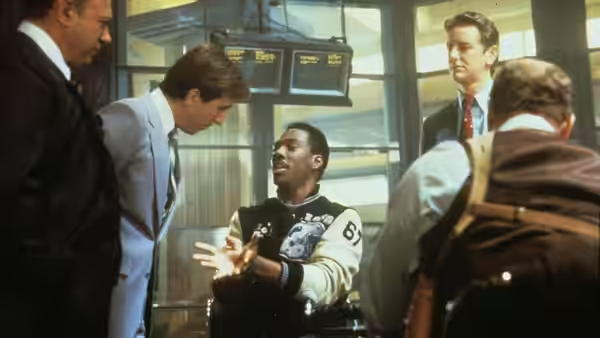
The strongest reason to stay is the company around him. Judge Reinhold gives Billy Rosewood an eagerness that makes a useful contrast with Axel Foley’s confidence, while John Ashton’s John Taggart helps keep the familiar comic exchanges grounded. We laughed at the gap between Axel Foley’s certainty and Billy Rosewood’s sunny willingness to go along with him. That eagerness makes the partnership feel companionable even when the film around it grows aggressive. There is pleasure in watching performers who can find a joke together without each demanding the whole scene.
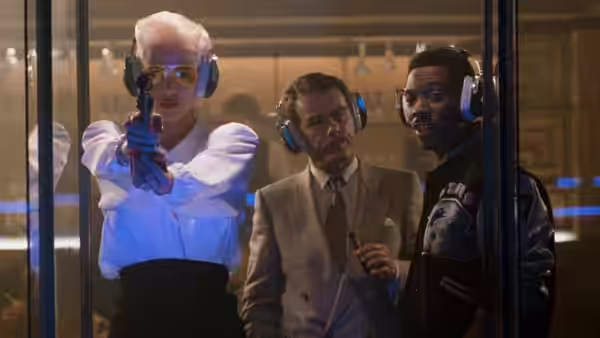
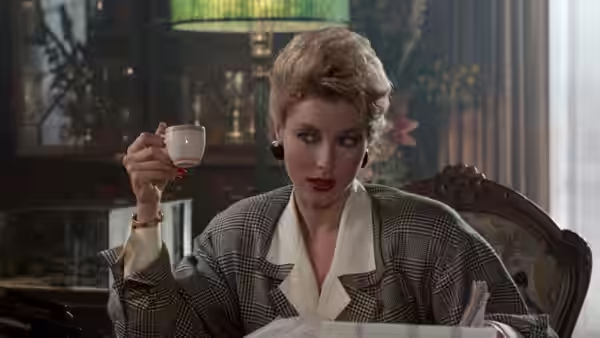
Larry Ferguson and Warren Skaaren’s screenplay does not give that chemistry enough help. The plotting is mechanical, and the humour too often depends on Eddie Murphy supplying an attitude where a sharper line or a more awkward situation should have been written. His resourcefulness gets individual exchanges through, though the performance also has a self-satisfaction that becomes wearing. When the script already assumes Axel Foley is the most entertaining person present, he has less to play against. Jürgen Prochnow and Brigitte Nielsen have presence, but neither is given enough to make the crime story matter.
Tony Scott’s handling of the action is more assured than his handling of the comedy, although the insistence on keeping both at the same pitch is tiring. Jeffrey L. Kimball’s cinematography gives the film a polish that makes individual passages enjoyable even when we have little interest in their outcome. Ken Davis’s production design fits that glossy approach, although the surroundings seldom feel like places worth remembering. The action is competently presented, but looking at it becomes a less appealing prospect each time the film hurries away from its performers.
Editors Billy Weber, Michael Tronick and Chris Lebenzon keep the film moving, but momentum becomes a substitute for comic timing. A reaction needs time to register, and a change of pace can make an interruption funny; here, the general hurry makes too much of the material feel equally urgent. Harold Faltermeyer’s music adds further propulsion when the film could use a little less encouragement. At 103 minutes, it should be brisk company. It feels longer because the quieter pleasures of the cast keep losing out to the demand for more activity.
For an action comedy, this is a frustrating way to use a funny ensemble. The familiar characters remain its strongest asset, yet the sequel seems more interested in making the action forceful than in finding fresh difficulties for them. The occasional laugh is enough to stop the evening becoming a complete chore, and Eddie Murphy’s energy deserves some credit for that. Those already fond of these characters may be willing to tolerate the rest; we would not recommend staying for the crime plot.