Steve McQueen’s Blitz film is built with real skill, from the firehose that opens it onward, and it never settles on whether it is a fable, an argument or an adventure. See it for Clementine and the first half hour.
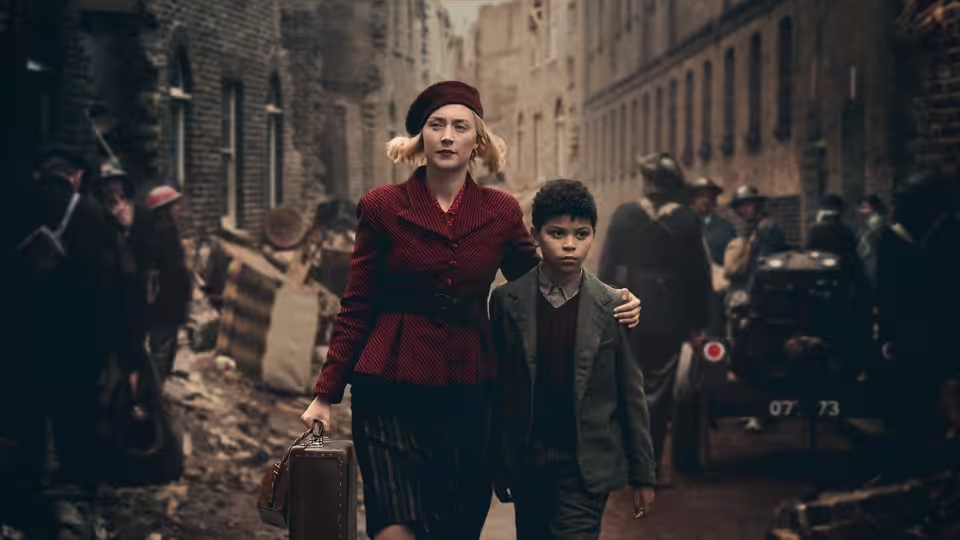
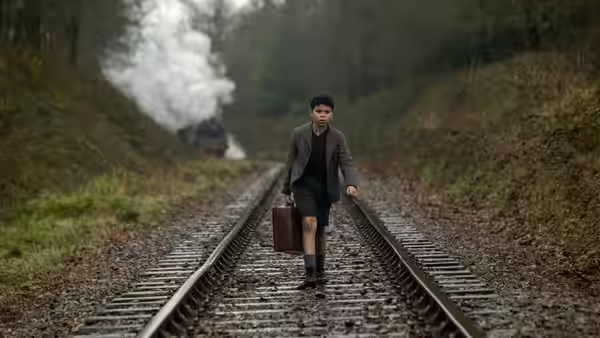
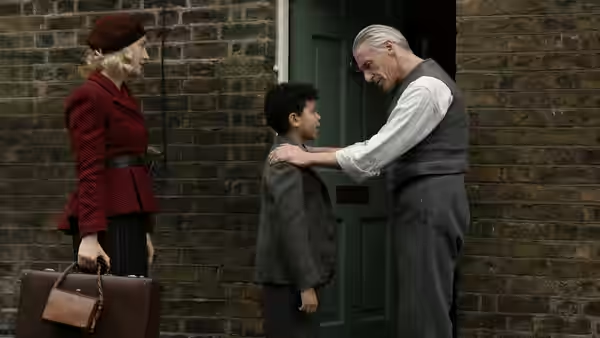
Steve McQueen, who wrote, directed and produced, begins with a decision most Blitz films take for granted. Rita (Saoirse Ronan) puts her son George (Elliott Heffernan) on an evacuation train out of London, and George, who has not been asked, gets off it and starts walking home. She works her shift, then goes looking for him. Between them are 120 minutes of burning city, and the film follows first one and then the other through it. It is built with great care, it is angrier than its poster, and it never settles on what sort of film it wants to be.
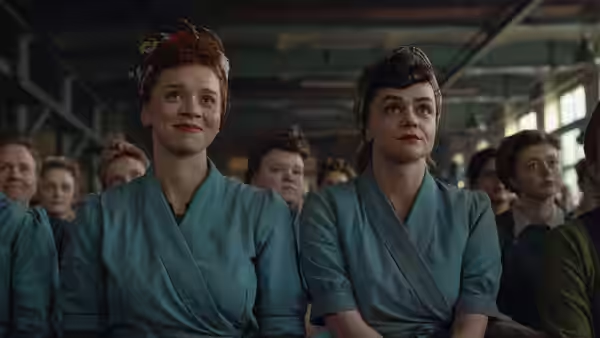
The opening is as good as anything McQueen has shot. Firemen lose control of a hose in a bombed street and it whips across the cobbles like something alive, and Yorick Le Saux keeps the camera low and close so that the men are small and the water is not. Adam Stockhausen’s London is terraces, a factory floor, a shelter, a nightclub, each one solid enough to be knocked down, and Jacqueline Durran dresses the factory women in headscarves and overalls that have been washed too often. For the first half hour we were held completely, and slightly afraid, which is rarer than it should be in a film about bombs.
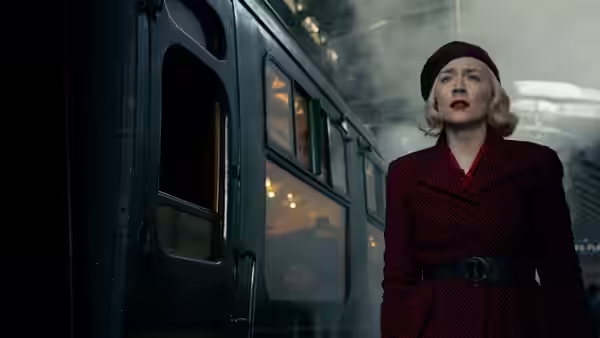
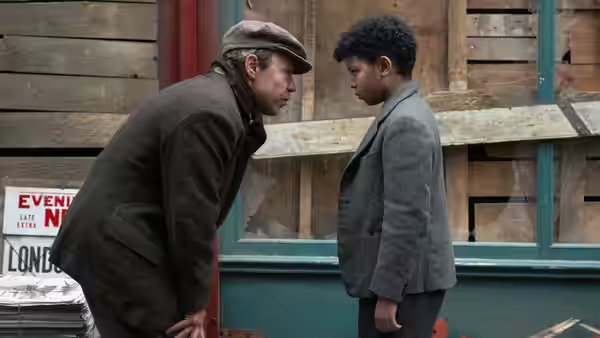
Heffernan, in his first film, plays George with a stillness that reads as stubbornness rather than blankness. He watches adults and decides, mostly correctly, which ones to trust. Ronan gives Rita a plainness we have not seen from her before, a woman who sings well and knows it and would rather be at home; her scenes on the factory floor with Mica Ricketts are the film’s warmest. Paul Weller, as Gerald, says little and means it.
The best stretch belongs to Benjamin Clementine. His Ife finds George in the dark and walks him through the night. Clementine never raises his voice, and he is the only person through whom McQueen’s case about who the Blitz belonged to is made, rather than by a set piece. We would have watched a whole film of the two of them. The film has other plans.
Those plans arrive in episodes. Stephen Graham and Kathy Burke turn up as Albert and Beryl, and the tone changes so hard that for ten minutes it is a different genre. Harris Dickinson’s Jack is given about three scenes and a look. Peter Sciberras cuts between mother and son, and every time we leave George the mother’s half has to start again from a standstill; Rita’s search is mostly Ronan asking people questions in corridors. Hans Zimmer’s score is at its best when it is barely there, a low drone under the sirens, and at its worst when it climbs to tell us that what we are watching matters.
By the second hour we had stopped being frightened and started counting. A flooded station, a nightclub, a raid, a rescue, each staged with skill, each delivered and cleared away before the next. None of the pieces is bad. The trouble is that the boy at the centre of them stops driving anything and is carried from one to the next like luggage.
Against McQueen’s own record, this is the odd one. Hunger (2008) and 12 Years a Slave (2013) trusted one body in one place for as long as it took. Lovers Rock, from Small Axe (2020), spent most of its length in a single front room and lost nothing. Blitz keeps moving as if it were nervous of standing still, and the two scenes where it does stand still are the two we remember.
Most critics have been kinder than we are, and their case is fair: this is a wartime film that puts a mixed-race boy and the London that raised him at its centre and refuses the story that everyone pulled together. We agree that it says so. We are less sure it shows it, except when Clementine is on screen. See it in a cinema if you can, where the hose and the sirens do their work, and expect to admire it more often than it moves you. It carries a 12A, and the certificate is honest.