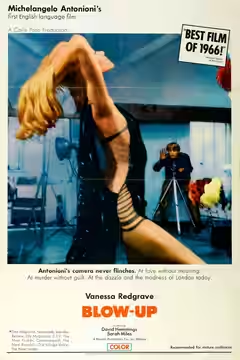
Antonioni’s first English-language film puts a bored fashion photographer in front of a wall of enlargements and, for twenty minutes, makes looking at grey shapes the tensest thing imaginable. Around that sequence sits a film that despises the London it is filming and shows it.
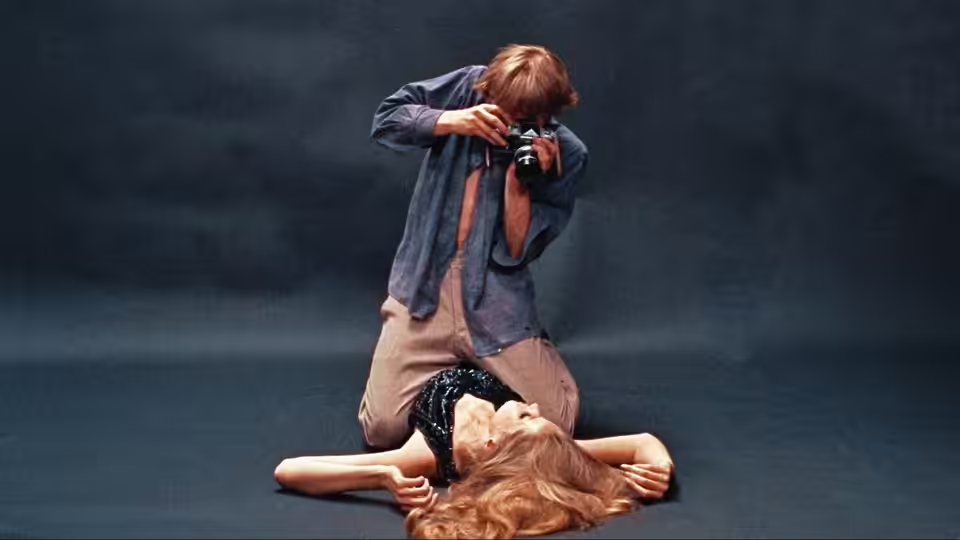
Michelangelo Antonioni spent the early 1960s making Italian films about handsome people who could not feel anything, L’Avventura, La Notte, L’Eclisse, and in 1966 he came to London to make his first in English. He found a fashion photographer, a park and a roll of film, and built Blow-Up around what happens when the photographer looks too closely at what he shot. It is a good film with a bad party in it. The good is nearly all in the middle.
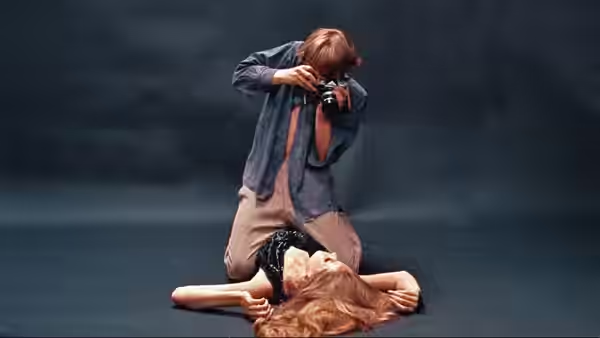
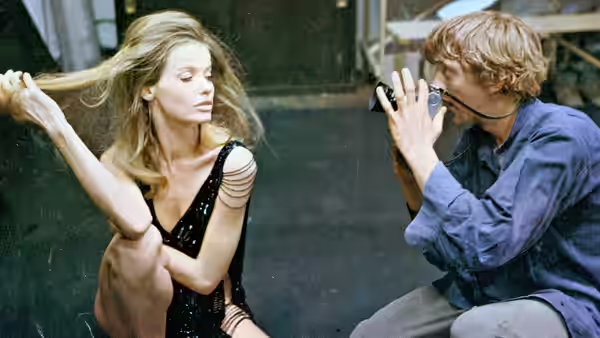
David Hemmings plays Thomas as a small, sulky prince of the King’s Road, calling grown women “love” and walking away mid-shoot to take a phone call. He drives with a two-way radio in the car and never seems to be going anywhere. Hemmings does not ask us to like him, and we did not. What he does instead is make Thomas’s boredom exact, so that when the man finally becomes interested in something we sit up with him.
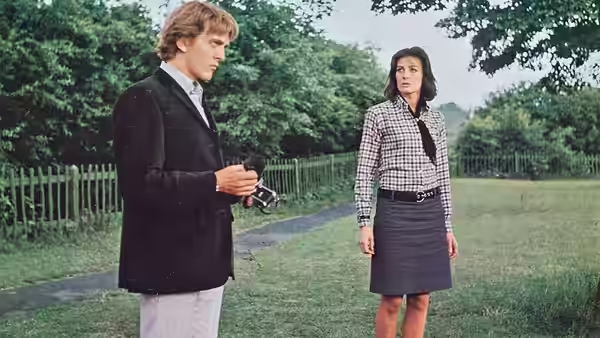
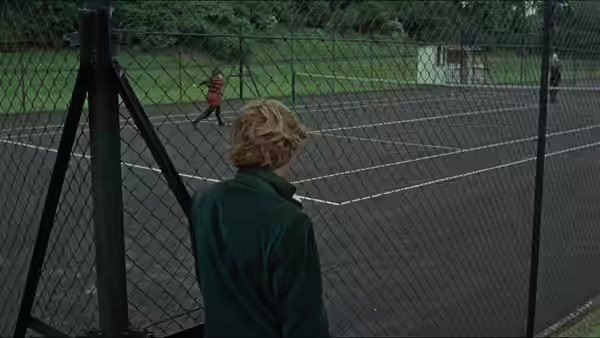
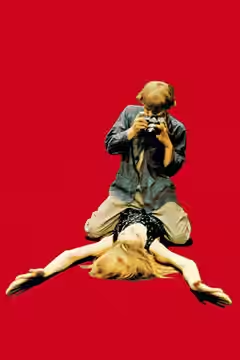
That something is a park. Thomas wanders in, hears the wind, sees a couple among the trees and starts shooting. Later, at the studio, he pins the prints to the wall and blows up a detail, then a detail of the detail, and Frank Clarke cuts between Hemmings’s face and the grain until the still photographs start to behave like a film. There is no music, only the wind from the park, which should not be audible in a studio and is. We were, to our surprise, frightened. Nothing happens except a man looking at grey shapes on a hedge, and we found we were holding our breath waiting for the shapes to resolve. It is the best stretch of the film by a distance.
Carlo Di Palma shoots the park in a green so even it looks laid on with a roller, and the rest of London in the flat, clean light of a colour supplement: red brick, blank shopfronts, a row of houses painted the same dark grey. Jocelyn Rickards puts Vanessa Redgrave’s Jane in a check shirt and a skirt too short for her nerves, and Hemmings in white jeans that never get dirty however many gutters he crouches in. Herbie Hancock’s jazz comes mostly out of the record player in the studio, so that when Thomas lifts the needle the silence has weight. The result is a London that nobody who lived there quite recognised, and that is the intention: a tourist’s city, seen by a tourist who is not sure he likes it.
Redgrave is the film’s other great asset. She plays Jane tall and awkward, arms folded across her chest, trying to keep time to a record and failing, asking for the negatives in the voice of someone who rehearsed the line in the car. She is not on screen for long, and the film is emptier once she has gone. Sarah Miles has less to do as Patricia, the woman from next door who watches Thomas with something between want and pity, and the script by Antonioni and Tonino Guerra never decides which. John Castle’s Bill paints abstracts and says he only works out what they mean afterwards, which is the film telling us how to watch it. It is not subtle, but it is quick.
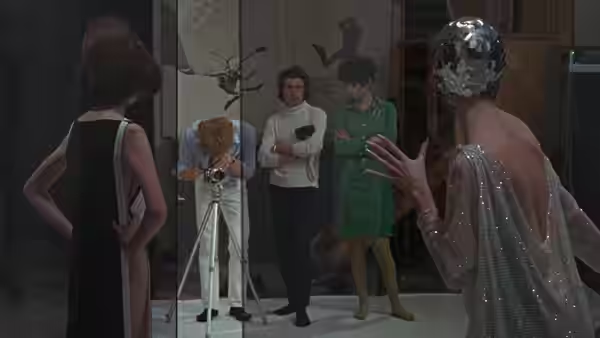
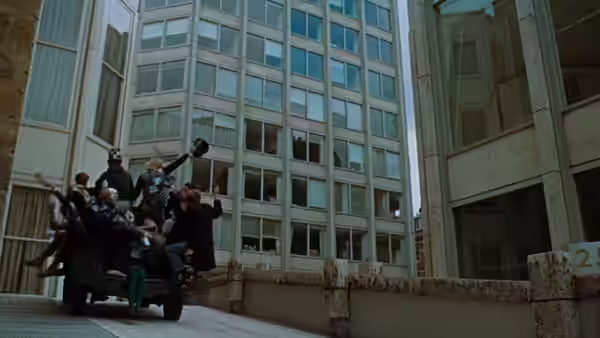
Now the party. Late on, Thomas goes looking for his agent, Ron (Peter Bowles), and finds him in a flat full of people smoking and lying on the floor. Antonioni plainly regards swinging London as a waste of everyone’s time, and he is entitled to, but he films the club and the party from the doorway, like a man who has been dragged along, and it shows. The club scene, with Jimmy Page and Jeff Beck of The Yardbirds playing while a roomful of young people stand as still as a photograph, has a point to make and makes it. The party has no point and takes ten minutes not making it. We were bored, and after the park we resented being bored.
Set against Antonioni’s Italian films, this is the one where his patience meets a plot that can bear it: a man looks and looks and the world does not oblige. The mystery does not resolve the way a thriller’s would, and anyone who needs it to should be warned. Watch it for the park, for Redgrave and for the wall of photographs, and forgive it the dope. It reached British cinemas on 16 March 1967, runs 111 minutes and carries an 18 certificate.